verysmallkitchen

Archive for the ‘Uncategorized’ Category

THE FESTIVAL OF NEARLY INVISIBLE PUBLISHING IN EDINBURGH: DISPERSALS by MIRJA KOPONEN

In Uncategorized on September 7, 2010 at 1:34 pm


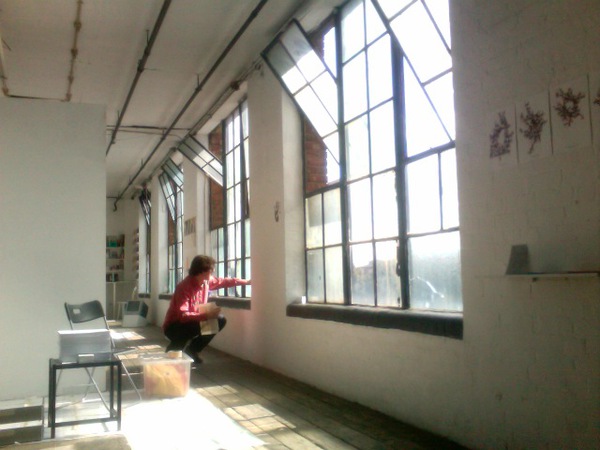
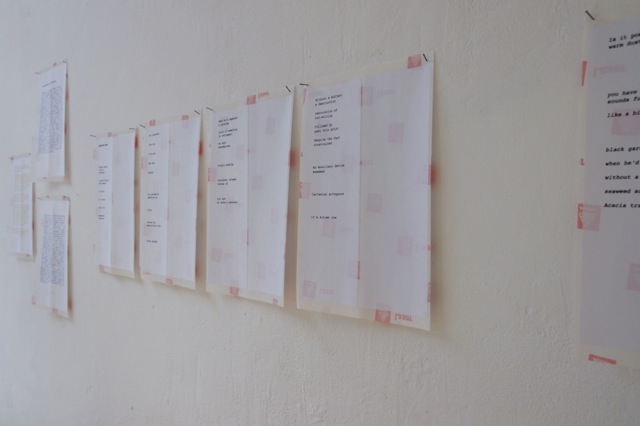
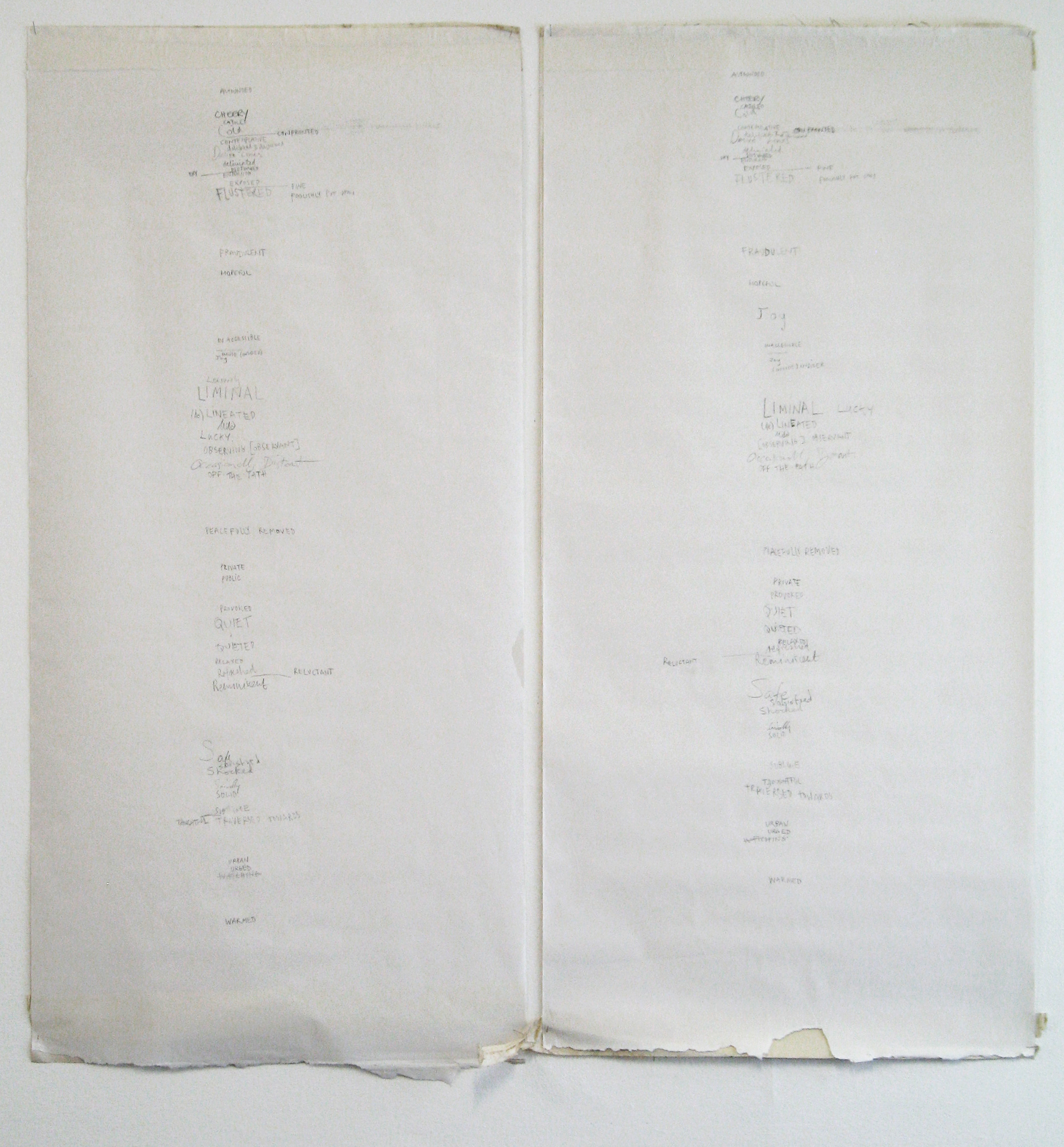
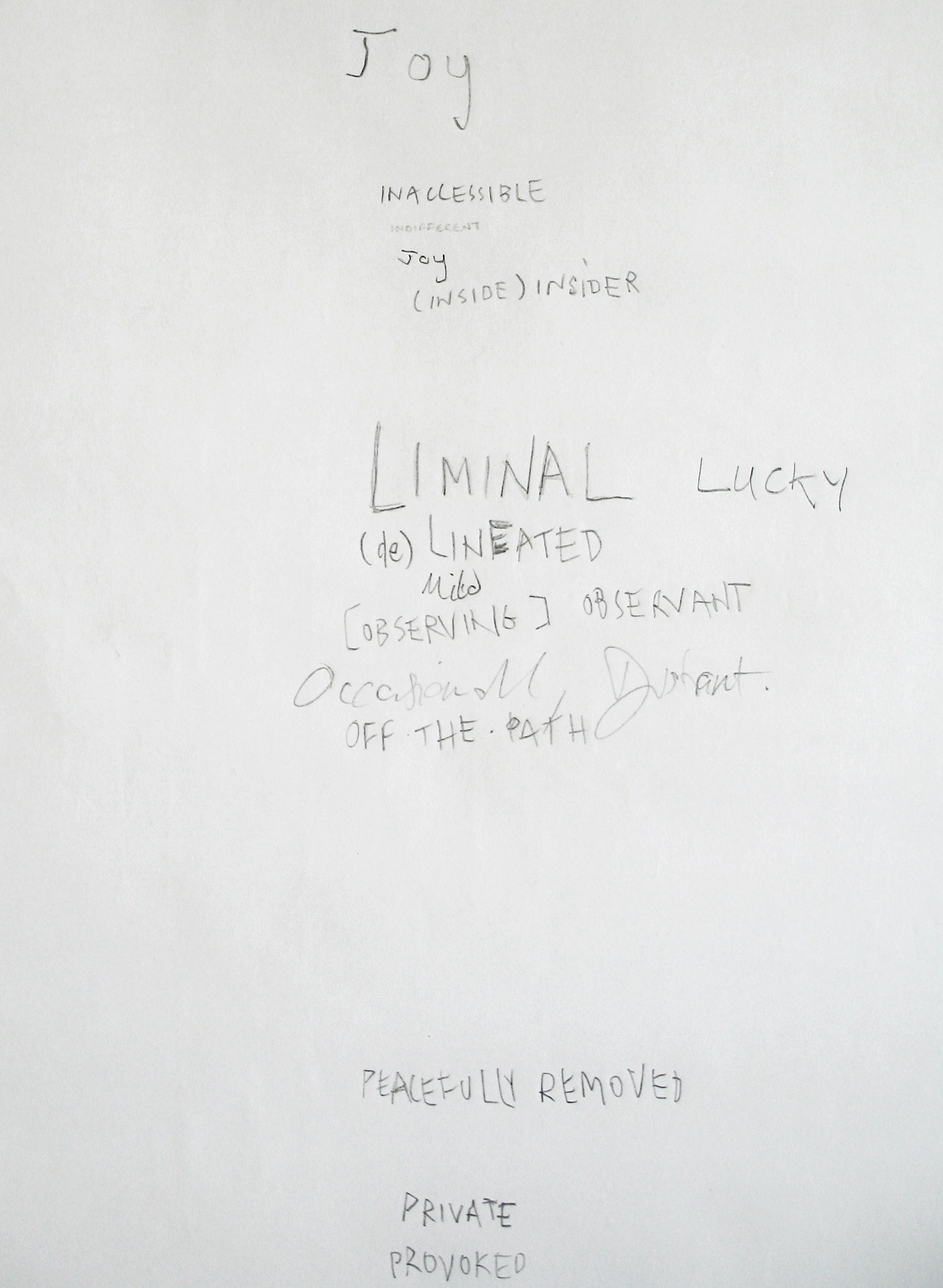
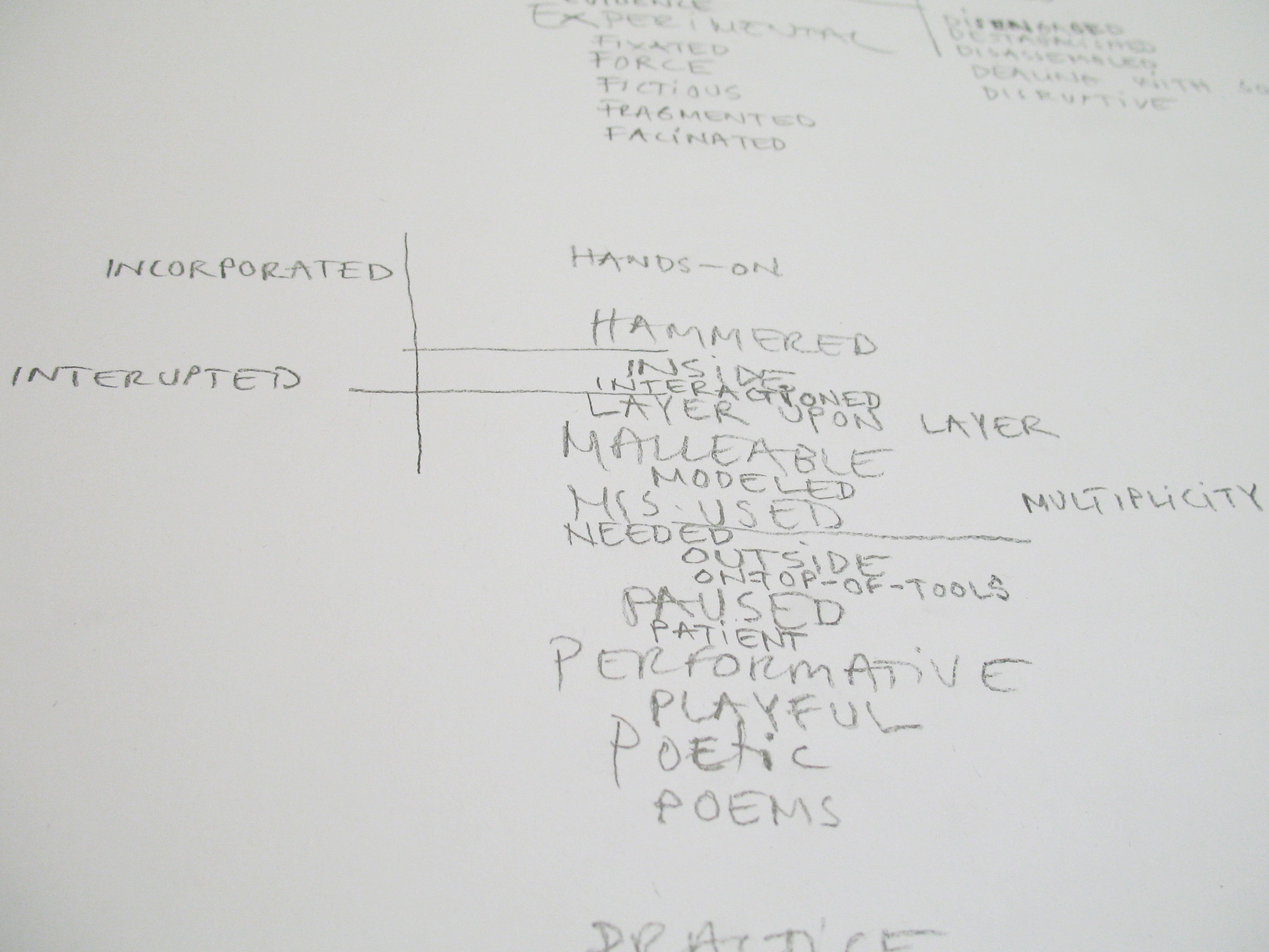
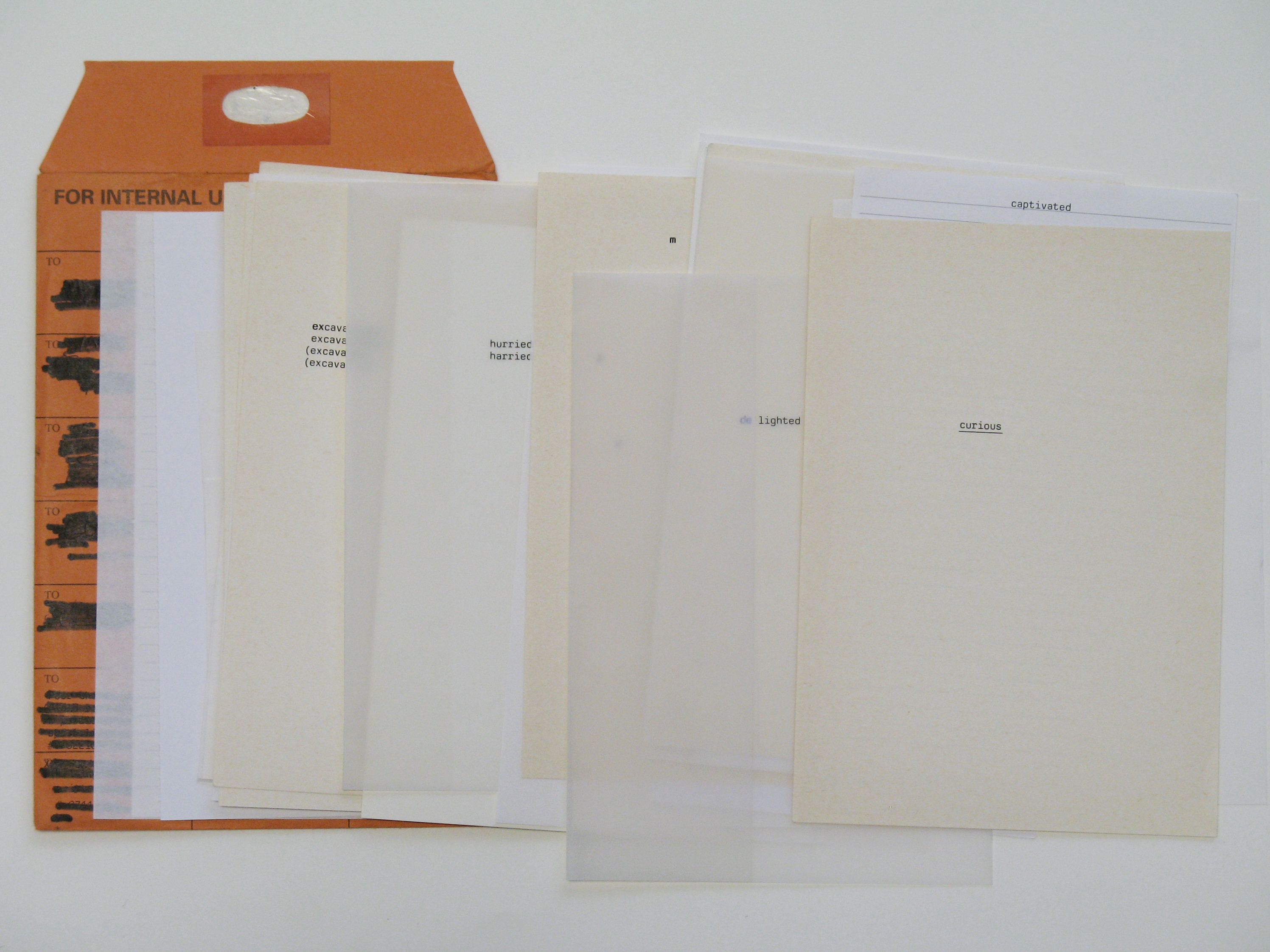
Today and tomorrow are the last chance to see DISPERSALS, an action at the Totalkunst Gallery in Edinburgh that is part of the FESTIVAL OF NEARLY INVISIBLE PUBLISHING. Actually, you might already be too late, if Mirja Koponen’s sticker-poem distribution has gone to plan, and small language pieces have already been taken and dispersed. Or you will encounter the work as it will feature when it arrives at The Pigeon Wing: a sheet testifying to what has been removed and what remains.

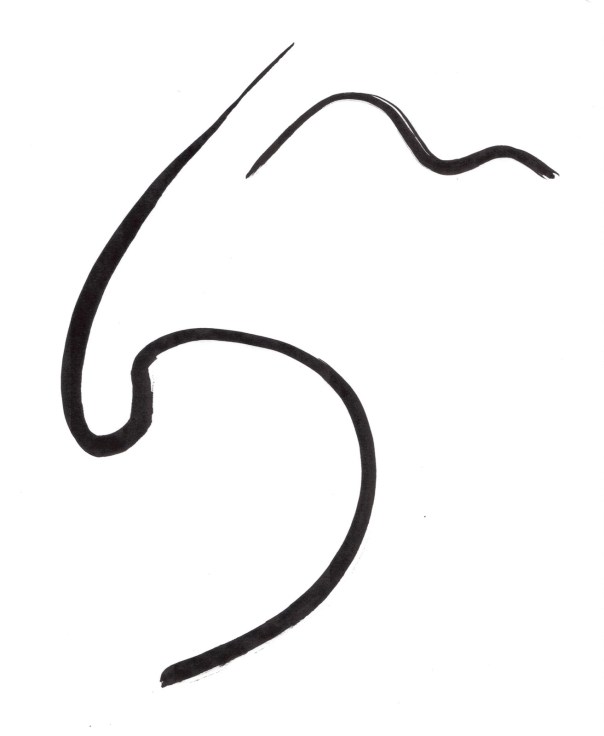
This micro-exhibition develops out of THE SHADOW OF A TRAIN project that was a collaboration between myself and Mirja in the summer, in which numerous artists responded to my script for an exhibition, itself unfolding from two paragraphs by the Russian writer Arkadii Dragomoshchenko. As Mirja has written of this new project, which unfolds the dialogue in the context of the FESTIVAL OF NEARLY INVISIBLE PUBLISHING: 

The first dispersal is in the gallery right now. It’s a short event, a burst really, and I think I’m going to send the sheets to you after they have been picked over by the TK audience. I think there is a geographical suggestion here as much as there is an actual dispersal, a belief that the labels with words still will exist there somewhere… an oddly incomplete feeling. 

And earlier, conceiving of the project, Mirja wrote: 

… is simply an attempt to literally disperse the text of ‘The Shadow’. I’d like to print the text of the shadow on sheets of labels ( but as pages of the text as they visually appear in the score) and these are set out  for the audience to peel off and attach to their diaries, notebooks, bags. There is something inherently magical about selecting your favourite words ( or blanks…!), it makes them special in that moment and thereby fixes them onto your life (literally).

This Dispersal turns the work into a series of personal mementoes, gifts, passwords into the exchange   – between the words and the audience – and spreads these out into the space. I like the idea of reversing the process of what we did in june, bringing the words in to the space, and also the idea of materialising the work of the first day of the Shadow in Edinburgh, where the aural experience of the text was the only thing to ‘take with’ from the space. I felt that every line, two lines, combination of lines was potentially meaningful,  in theory a simple thought of course, but  when I was listening to people reading the text in so many different ways when left to their own devices, I was suddenly  quite struck by this.

So, the first Dispersal, a small and quiet piece, makes the Shadow disappear, move on, little by little, perhaps in parts, perhaps entirely.

I would like to do it in the Totalkunst space of course, as the text has materially been there, but it could also travel into The Pigeon Wing through a wormhole in the universe and be dispersed from there. Perhaps there could be somewhat different circumstances for doing this… some sort of augmentary framing of the project. What you think?  More could be written/thought about this approach of course, too. Other ways of dispersing?

The materials and traces of this event, when received, will be added to the unfolding array of material at The Pigeon Wing. Submissions are welcome for the festival. Please see the call for works here.

THE DEPARTMENT OF MICRO POETICS IN NEW YORK: JILL MAGI IN RESIDENCE

In Uncategorized on September 5, 2010 at 9:10 am

Jill Magi will be the first artist in residence at the DEPARTMENT OF MICRO-POETICS, VerySmallKitchen’s long distance residency at the AC Institute, New York. Jill will be in the space on Sat 11th, Wed 15h, Thurs 16th, and Sat 18th September, conducting her project SMALL TALK SMALL BOOKS.

Jill’s description of the project is as follows: 

SMALL TALK SMALL BOOKS is a four-day residency/poets retreat taking place in the DEPARTMENT OF MICRO-POETICS. Jill Magi will be in residence for four days, inviting four New York area poet publishers and editors to come and talk informally about poetry, respond to the text works installed in the DEPARTMENT, discuss the relationship between publishing and writing, and chit chat about other topics perhaps not related to poetry. 

A cross between coffee klatch, talk show, cooking show (where something is made together), and workshop, each SMALL TALK SMALL BOOKS session culminates in Jill and her guest making a small book together. The text for the small book—it may be prose, poetry, a survey, an essay or manifesto—comes out of the time they spend together talking, responding, and doing some writing together. 

The small book will be formatted there on the spot, printed out in a small batch, and stapled together.  Copies of these books–a small box set–will be kept at the DEPARTMENT “on file,” and sent to the U.K. for The Pigeon Wing sister exhibition. Others will be distributed under the auspices of SONA BOOKS, a chapbook press organized by Jill Magi, and also according to the poets’ desires.

The SMALL TALK SMALL BOOKS schedule is as follows:

 11th: with Stephen Motika, poet and editor at Nightboat Books

15th: with Jennifer Firestone, poet and editor of Letters to Poets

16th: with Paolo Javier, poet and editor of 2nd Avenue Press

18th: with Sara Jordeno, visual artist/writer 

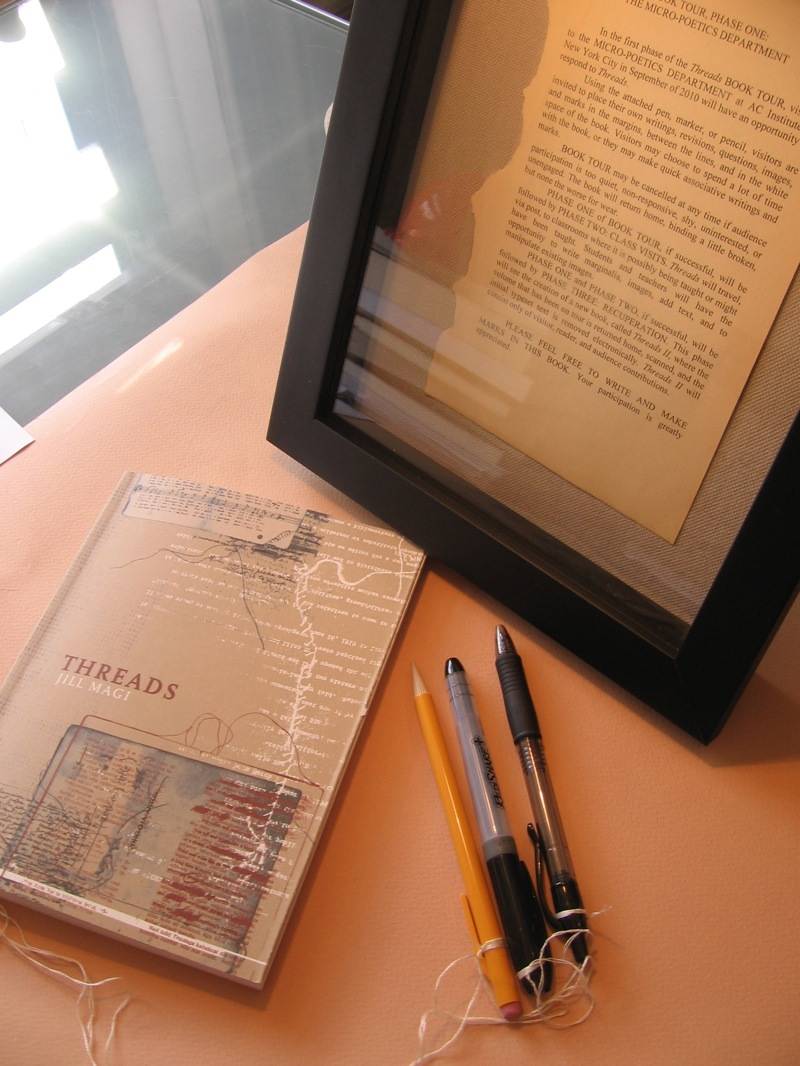
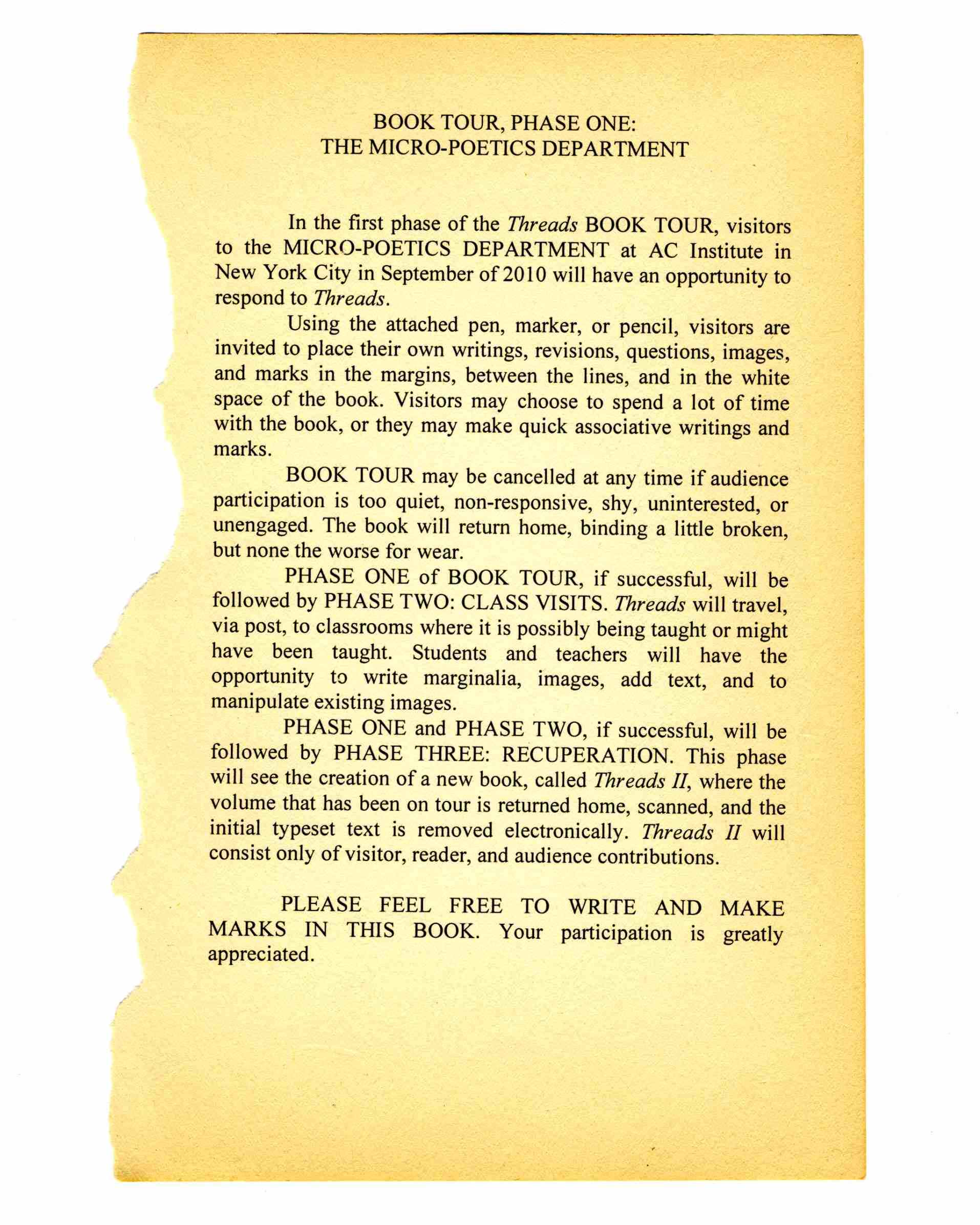
Jill has also contributed an installation work, that will be present in the space throughout the exhibition, which runs from Sep 9- October 16th. This invites reworkings to her book THREADS, according to the following score:

More about Jill’s work can be found on her website here, which documents both her own written and visual work and that of her small press, Sona Books. Her book TORCHWOOD is published by Shearsman books. Recent projects include the unfolding “text-image work-in-progess” LABOR, excerpts from which can be seen in PEEP/SHOW and Critiphoria

A correspondence with Cecilia Vicuna, part of the Letters to Poets project, can be seen here

More information on The Department of Micro-Poetics can be seen here.  Future residencies will include Kai Fierle-Hedrick and Rachel Zolf, and Paolo Javier.  More info to follow.

WRITING/ EXHIBITION/ PUBLICATION: FIVE MONTH LONG PROJECTS (AND A SECRET PERFORMANCE INSTALLING MATT DALBY’S VISUAL POEM BOXES)

In Uncategorized on September 4, 2010 at 10:32 am

Márton Koppány, Csend (Silence), from Endgames (Otoliths, 2008)


WRITING/EXHIBITION/PUBLICATION began last night at The Pigeon Wing ,and the opening featured readings by Julia Calver, Tamarin Norwood, myself (reading a text by Helen Kaplinsky) and Press Free Press. Pippa Koszerek was also documenting the event in shorthand. 

All of these artists have projects unfolding throughout the month. Here are short statements by each artist on their project, followed by a coda on the “secret performance” of installing Matt Dalby’s Visual Poem Boxes before last night’s opening (and a statement by Matt on the project):

Julia Calver

SUNBEAM and FOREST exist inside an interminable argument which takes place at the level of the forest floor. They argue over who forms the ultimate frame for their ongoing dialogue. This work switches on and off through various iterations as SUNBEAM slips into periods of silence and then ‘reawakens’ in new ideas. Performances throughout the exhibition; texts in the space to take away.

Pippa Koszerek

Inoperative Minutes. In the two weeks leading up to the opening of WRITING/EXHIBITION/PUBLICATION Pippa Koszerek will intensively study Shorthand from notes passed on to her by secretarial support staff during her recent residency in Dundee. In an act of public/private recording Pippa will act as the sole documenter of the opening reading/performance event taking place at the Pigeon Wing on 3 September. The resulting notes will be displayed in their original form throughout the month for visitors to decode and re-interpret.

During this month Pippa will be concurrently taking up her acting role as Secretary of the Dickens Museum as part of the three month Island Projects exhibition Beyond the Dustheaps where part of her position will include the exploration, study of and adaptation of Dickens journalistic use of Gurney’s Shorthand system.

Considering both secretarial and journalistic uses of shorthand and the latent potential of the space between notes and official records, Pippa will participate in The Festival of Nearly Invisible Publishing, undertaking a three day residency at the Pigeon Wing in the first weekend of October culminating in a presentation of her findings for the approval of Pigeon Wing visitors.

Helen Kaplinsky

The text which I read last night was entitled Script for the Initiate which Helen describes as follows:

Script for the Initiate. A script will be read on the opening night of the exhibition by writer and curator David Berridge. The text has been collaged from multiple press releases for exhibitions seen by the artist over the past year.

Her project throughout the month is a collaboration with Hammam  Aldouri:

The Artists Assistant: Acts of Obedience (Nebulous Readings). Premised upon a contractual agreement, this collaborative work sees the artist employ an assistant who is granted conceptual authority. For the period of the exhibition the assistant will give instructions to the artist. In this case the assistant will task the artist each week to read a given text in gallery space. These readings will not be announced but the scripts will be available to view, alongside the contract which binds the collaboration.

Tamarin Norwood

I want to look at writing in terms of ‘writing into existence’, and specifically in terms of writing not approaching its object but rather pushing it away, and instead approaching a represented version of that object which exists only because the representation writes it into existence. In this context, the prospect of ‘writing live’ presents contradictions I would like to explore both in writing and through a video intervention into the space. By intervening in the ‘liveness’ of the writing residency, I hope to present and contextualize some of the productive contradictions that arise in the practice of live and site-specific writing. 

Press Free Press

Press free press present A TIME FOR WORK, a month-long durational activity.  Within the space, they mark their non-space. This is their office. Two workers will operate under conditions of increased and decreased resistance, navigated by voices communicating from outside the city. They will attempt to map the exhibition through the means at their disposal: by writing, processing and editing a document that exists in constant flux. 

press free press is a poetic collective: finding, constructing and demolishing language following the invitation of language poets and performance artists; writing language that is poetry or performing poetry that is language.  

The rota for A TIME FOR WORK can be seen here

*

Installing Matt Dalby's Visual Poem Boxes at The Pigeon Wing, Sep 3, 2010


One other “secret performance” that took place yesterday was the installation of Matt Dalby’s Visual Poem Boxes. Matt’s instructions on installing the boxes had indicated:

The boxes should be distributed in small clusters of perhaps no more than three of each  size in locations where they may not be immediately obvious. They should perhaps seem to be incidental to larger works around them.

So when the show was installed I opened the box containing 18 6cm x 6cm boxes and wandered the space deciding where to place them in accordance with this instruction. 


Matt Dalby, Mill 24 Visual Poems, May 2010


A smaller set of 3cm x 3cm boxes are also part of DEPARTMENT OF MICRO-POETICS project at the AC Institute, New York (where the curators of the space will conduct a similar performance of installation) and for this context Matt wrote the following statement about the project:   

The visual poem boxes grew out of a series of visual poems. The visual poem boxes grew out of card constructions. The visual poem boxes grew out of a collection of street cutlery.

The visual poems were created in ink on paper and derived from letter forms. Derived from ascemic writing. Derived from Chinese characters. Derived from Caroline Bergvall’s Plessjør.

Caroline Bergvall’s earlier book Fig provided Matt with a first glimpse of innovative poetry at the beginning of 2008.  His first experiments were in visual poetry and were unsuccessful. Most of the next year was spent concentrating on sound poetry.

Plessjør provided a clue to approaching visual poetry in a more physical way. The boxes originate with an earlier project to construct card forms with otherwise conventional poetry covering the faces.

The construction project was revived as a way to present street cutlery. That is abandoned cutlery collected from the street. 

Critical discussions of work with friends, the work of a friend who had cut a deep slash in the pages of a book led to the decision to transfer the visual poems to boxes, to cut them from one face of each box. 

The boxes are absences and ambiguities. The letter forms, the reasons for choosing the letter forms, the possibility of the letter forms constituting part of a word or utterance, any mark on paper recognizable as print is missing. 

The visual poems are absences. The space inside the boxes is absence. The darkness inside the boxes mimics ink. It is ambiguous if the visual poems are cut or drawn.

There is tension between the handmade and the manufactured. 

The visual poems they come from are made by hand. The boxes are made by hand. The visual poems on the boxes are cut by hand. But it is not apparent how the boxes are made.

The boxes could be produced in volume with existing manufacturing techniques. The slow transformation of the visual poems by copying from sketches to inking from inked version to visual poem box would stop.

Without whom: Helen, Gary, Lou, Graham, Jen.

NOTEBOOK ON LANGUAGE IN THE LANDSCAPE

In Uncategorized on August 30, 2010 at 10:32 am

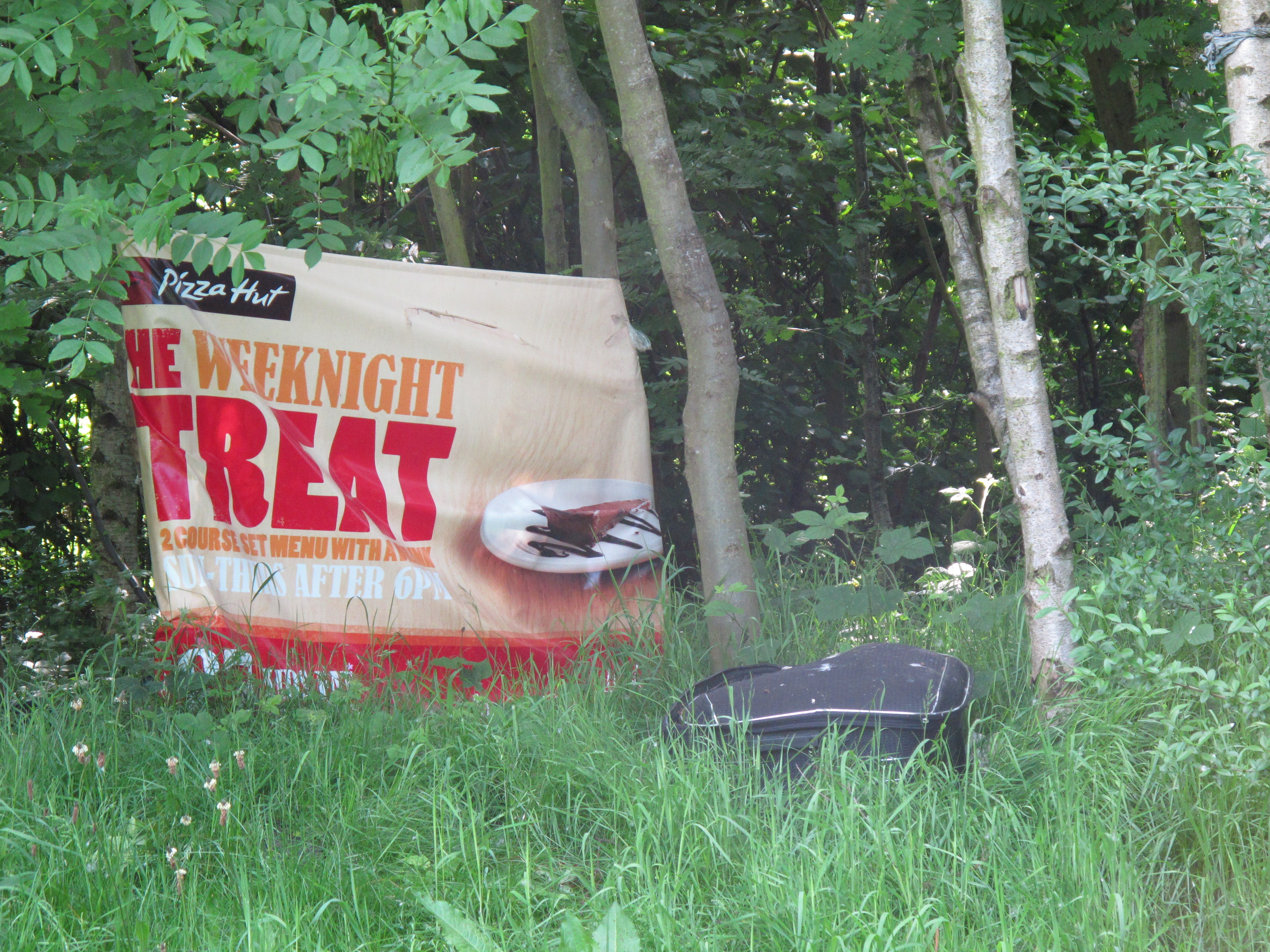
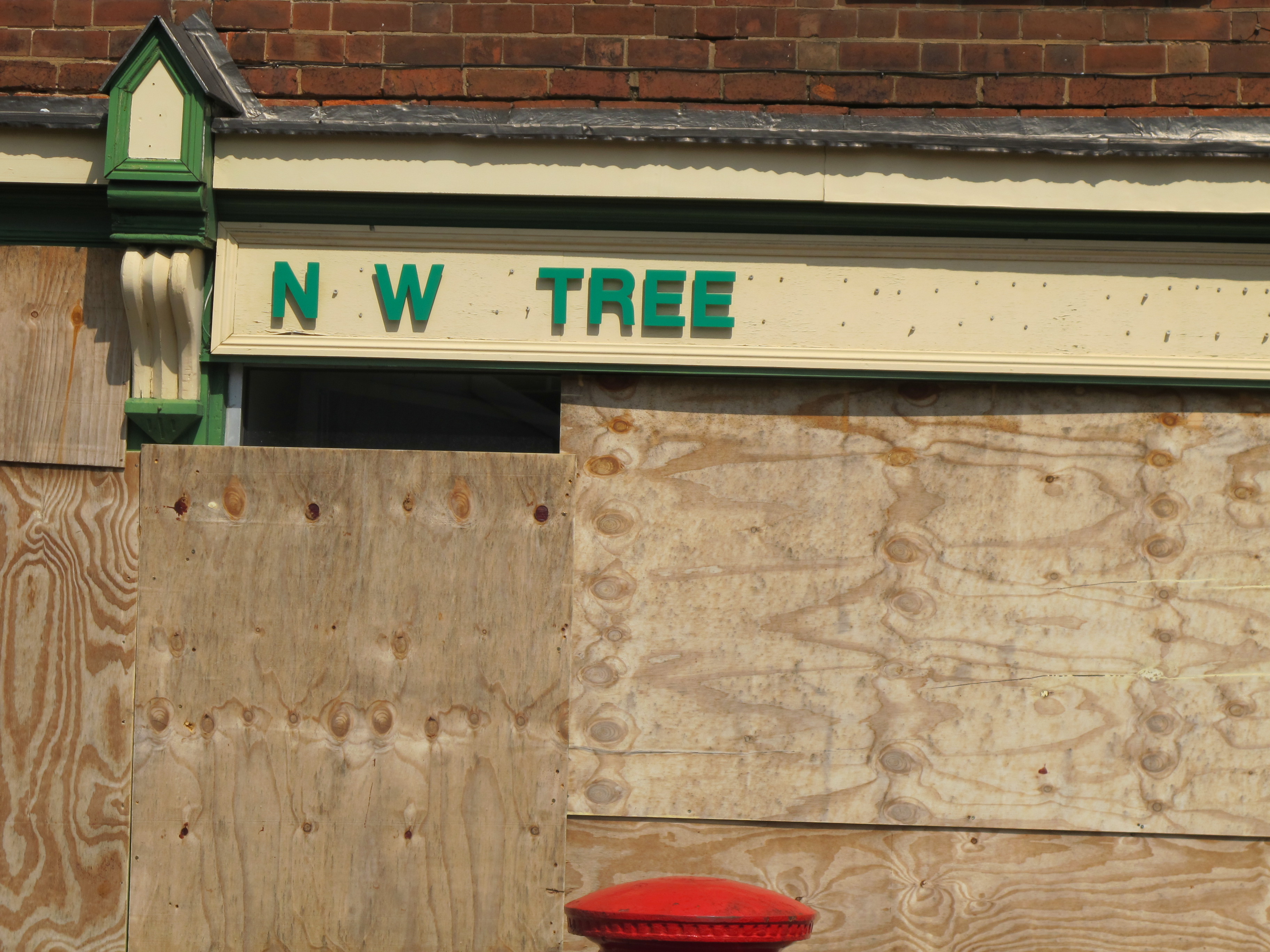
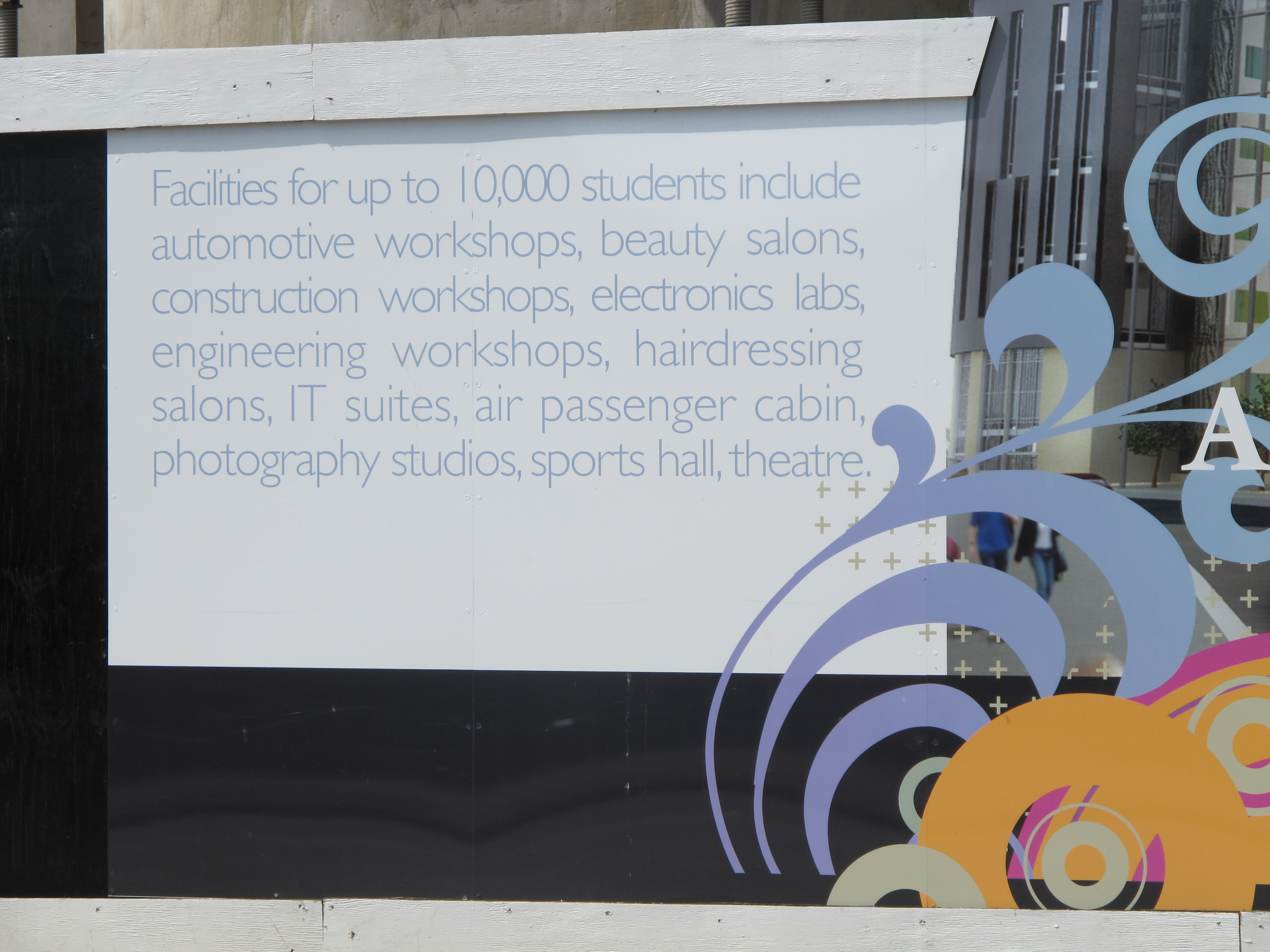
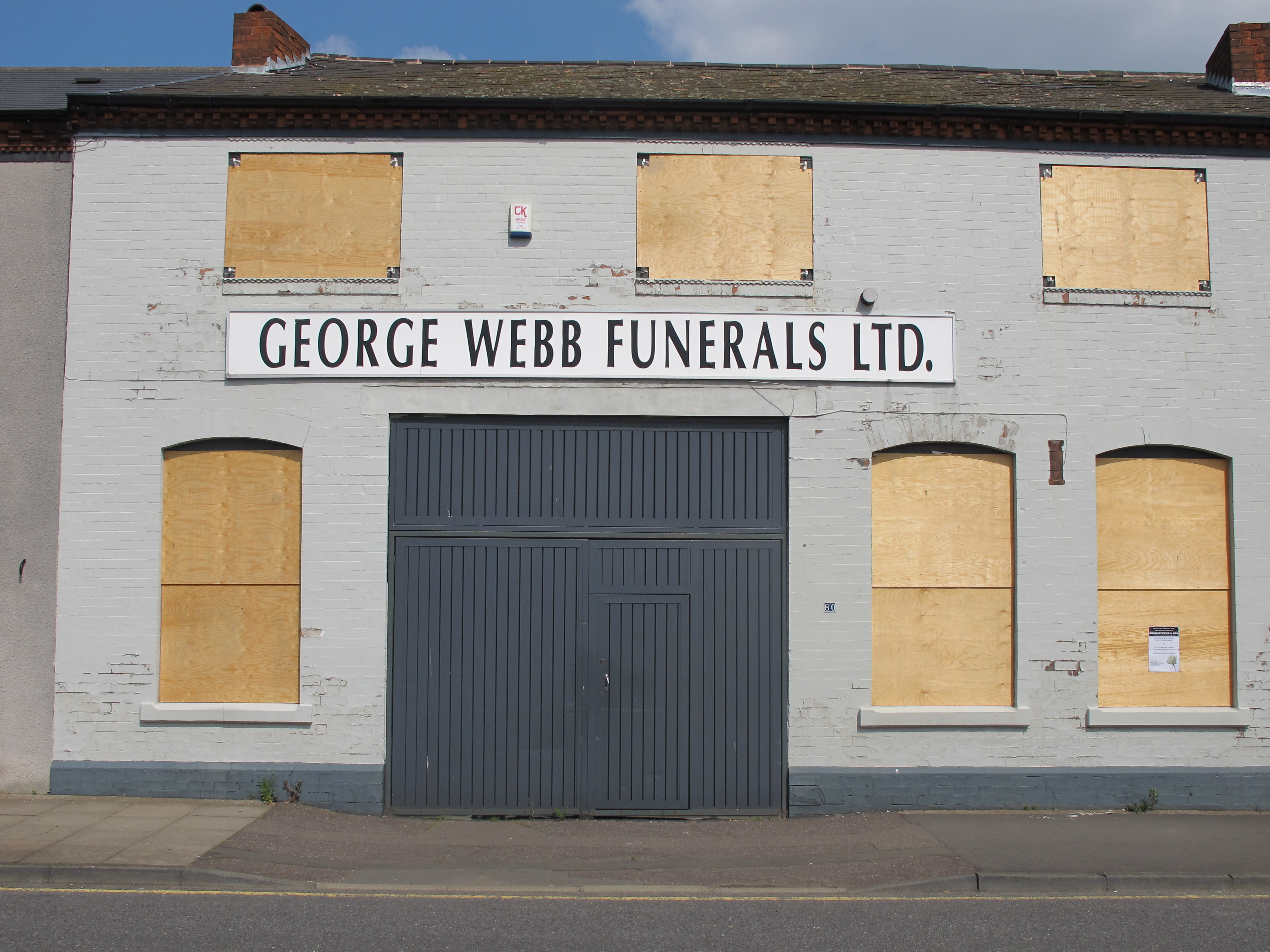
PHOTO: David Berridge, West Bromwich, June 4, 2010


In her essay “Language in the Landscape” Johanna Drucker observes:

“Language in the landscape, whether roads signs, billboards, or graffiti, shapes our relationship to the landscape in many ways. Language can be explicit (DO NOT ENTER), deceptive (THE ONLY REAL BEER), enigmatic (EDY’S CHARACTER CANDIES), confusing (PARKING THIS SIDE ONLY BETWEEN 4PM AND 6PM ON ALTERNATIVE TUESDAYS EXCEPT WHERE INDICATED), and elucidating (WINDOW 6 FOR TAX FORMS ONLY). In every case, written language represents an invisible conversation: someone is speaking, someone is being addressed, the message has a purpose, and the message is delivered in a particular way. Language is a symbolic system, full of implication. It allows us to discuss things that are not present. We cannot dismiss language in the landscape as auxiliary or duplicative. The relationship between linguistic statement and physical object influences every encounter we have with out environment.” 

Drucker’s essay, originally published in Landscape. Vol.28, no.1, 1984, offers a preliminary classification of language in the landscape. Drucker begins by focussing on the forms of written language itself:  “The forms of written language are twofold: first, the visible features of the method of production, such as the style of typography or calligraphy, and medium employed; second the forms of the language per se, such as current slang, obsolete jargon, newly coined words, and unconventional spelling. Form affects meaning.” She then considers language in the landscape by means of the following categories:

Information

Beyond Information

Instructive Language

Language as Advertisement

Language as Identity

Language as Evidence

Language Creates Speculation

Language as Edification

Language as Context

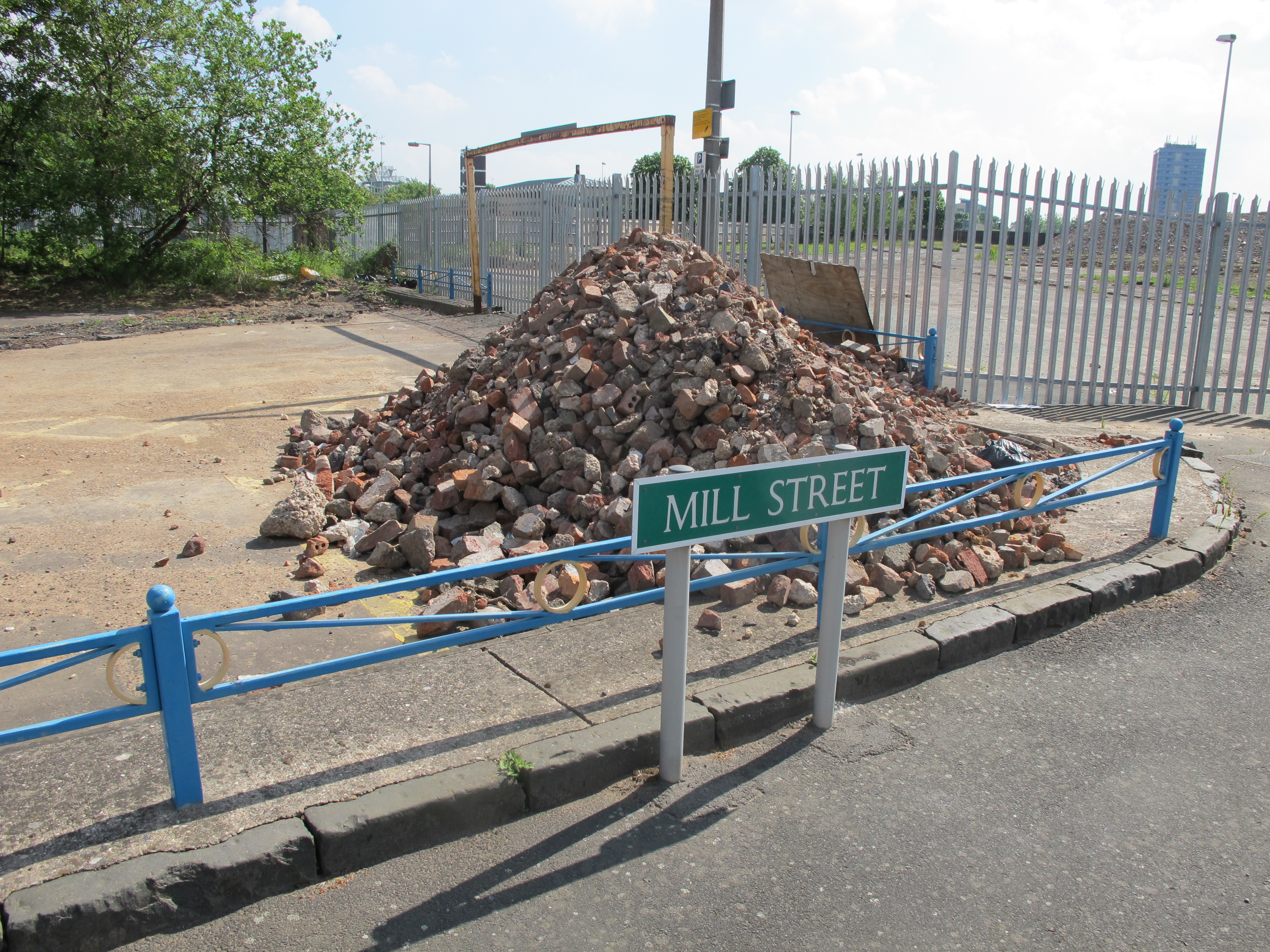
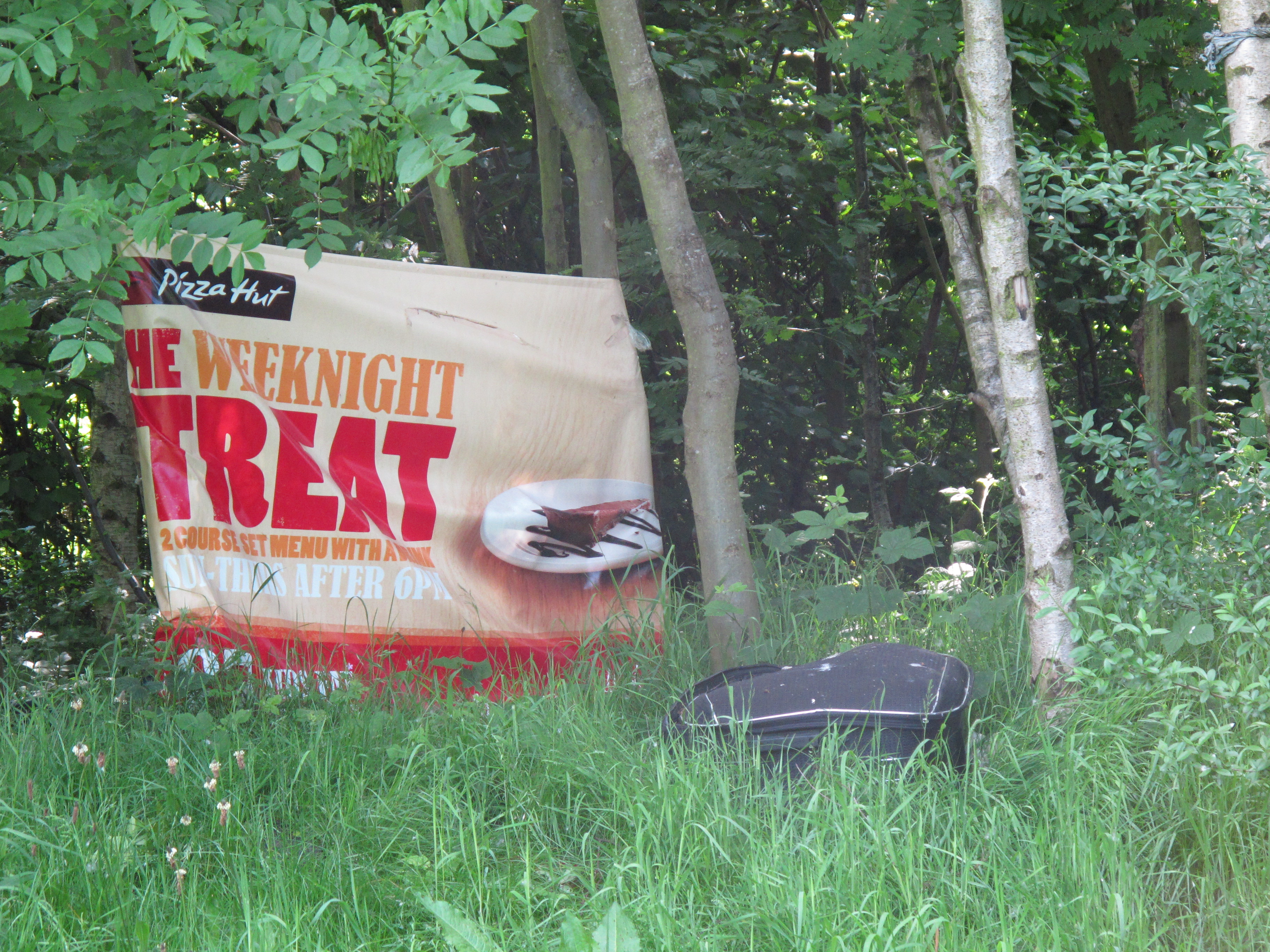
Drucker’s comments on this final category also serve as the essay’s conclusion. They relate, too, to the photographs above, which were taken on walks around West Bromwich on June 4 2010, as part of my residency at the Black Country  Creative Advantage. My written response to the language in the landscape can be seen here. As Drucker observes:

“Landscape serves as the context for the language in it. Written language does not simply identify objects in the landscape. Language changes our perception of the very situation in which it acquires meaning. As we observe words in the landscape, they charge and activate the environment, sometimes undermining, sometimes reinforcing our perceptions. For us, language is full of culture and history, but it is also full of ambiguity and enigma. Because it is a set of symbols we use to invoke concepts, we may  find it divorced from the very objects it aims to identify, posing the issues of definition and identity as distinct from the material in which they are embodied.” 

SOURCES: Johanna Drucker, “Language in the Landscape” in Figuring the Word: Essays on Books, Writing and Visual Poetics (Granary Books, New York City, 1998), 90-99.

GET A FREE POT OF COLESLAW: INVESTIGATIVE POETICS OF WEST BROMWICH NOW PUBLISHED

In Uncategorized on August 29, 2010 at 10:15 am

In June I spent two days in West Bromwich as a writer in residence with the Black Country Creative Advantage. Some notes on the origins of this project, particularly thinking through  and around ideas and practices of INVESTIGATIVE POETICS can be seen here.

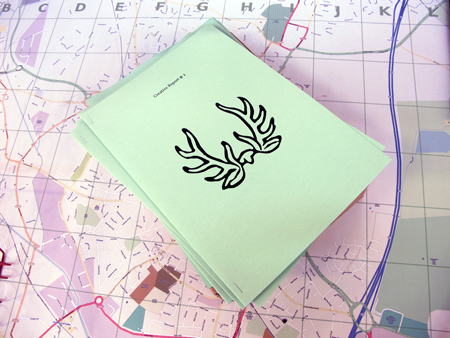
During the residency it was decided that I would write an issue of the BCCA CREATIVE REPORT newsletter, whose format comprises a 20 page A4 publication stapled into cardboard covers. 

My text has now been published as CREATIVE REPORT #2. It can be downloaded as a PDF here. If you are in West Bromwich then you can pick up a hard copy at the BCCA stall  (stall 42, New Market Hall, King’s Square) or at the following locations:

African Caribbean Resource Centre; Charlemont Community Centre, Beaconview Road; The Fox & Hounds; Guru Nanak Community Centre; Hill Top Library; Kenrick Park Community Centre, Glover Street; Lodge Road Community Centre, Lodge Road; Sandwell College Student Association; Stone Cross Library; The Vine; Yemeni Association; YMCA; Wood Lane Community Centre, Greets Green.

This project offered the chance to think through a whole set of questions about relationships of writing to site, and the role writers can play in urban regeneration projects. 

What kind of intervention could I usefully make in the time I had been given? What did it mean to focus on my own writing and poetics as a way to explore a location and issue with which I was unfamiliar? 

I decided to focus on the role of written language, encountered, both in the streets and in the array of printed documents on the BCCA stall in which the debates of urban regeneration are partially conducted. I read through this material – how exactly such documents are read or not  was one of the questions that interested me – and gathered material on a series of field trips throughout West Bromwich. 

The resultant 20 page document includes notes, micro-essays, one word poems, poems awaiting development, pages cleared like areas awaiting development, street notations, quotations, scripts for plays and an opera, along with resources/ quotations from a range of other art projects/ poets/ thinkers….  unfolding the intention of an object of use, provocation and entertainment….

Language in the urban environment, West Bromwich, June 4, 2010


BCCA have commissioned the actor/writer Suzan Spence to record her own one person version of the text. I’m interested how one voice could approach the polyvocality of the text, assembling and re-assembling its components in each read through. When Suzan contacted me by email about her project I replied:

…I think of the text as batch of material/ ideas for use. I think some bits of it are likely to be more suitable read aloud than others, and perhaps a structure for the recording can be found by moving backwards and forwards in the text, following your interest. 

One thing that interests me about this kind of script is that the normal categories get confused – so anything could be stage directions, dialogue, notes and so on. Anything could be read aloud or not. 

In projects since – such as the serial writing project I am doing for BEYOND THE DUSTHEAPS exhibition – I have continued to think through INVESTIGATIVE POETICS, both as a particular way of working with language and within a broader realm of performative gesture and forms of social relation. 

OTHER SOURCES: Sat in my room in the West Bromwich Premier Inn I also watched the video of Laura Elricks’s STALK  – see here – and read David Wolach’s essay on the project and its “poetics of spatial practice” in JACKET magazine here. Also valuable here was Elrick’s “Poetry,Ecology and the Re-Appropriation of Lived Space, published in Brooklyn Rail here

Finally, whilst all this reading relates to a distinct constellation of concerns, wanting last night to list the books that have recently informed my unfolding sense of what is at stake in an INVESTIGATIVE POETICS produced the following diverse range of titles:

Falke Pisano, FIGURES OF SPEECH (JRP Ringier, 2010).

Geof Huth, NTST: The Collected Pwoermds of Geof Huth (If P Then Q, 2010).

Raqs Media Collective, SEEPAGE (Sternberg Press, 2010).

Viktor Shklovsky, Knight’s Move (Dalkey Archive Press, 2005 [1923]).

Pierre Guyotat, COMA (Semiotext(e), 2010).

Sean  Reynolds and Robert Dewhurst, WILD ORCHIDS: HANNAH WEINER (Issue 2, 2010).

Thanks to the BCCA curator, Monika Vykoukal, for her help and support on the project. Each issue of the CREATIVE REPORT takes for its cover an element of the West Bromwich city emblem. The full set of newsletters, published throughout 2010, will offer a symbolic, methodological, and literal reconstruction of this emblem ,and the urban realm it both visibly and invisibly delineates.

OPENING SOON: DEPARTMENT OF MICRO-POETICS at AC INSTITUTE, NEW YORK Sep 9- Oct 16 2010

In Uncategorized on August 28, 2010 at 10:12 pm


Emma Cocker, Field Proposal (2010)


THE DEPARTMENT OF MICRO- POETICS will be in long-distance residence at the  AC Institute, New York as part of Exchange Value (Sep 9-Oct 16 2010). Co-ordinated from London by VerySmallKitchen, the Department offers ongoing research into the histories and contemporary manifestations of  micro-poetic practices, conceived of both as a form of writing and a quality and practice of invitation, economy and relation.

For EXCHANGE VALUE the Department compiled an exhibition in the form of a box of ideas, scores, drawings, maps, lists, books and wall texts, sent from London to be installed by curators at the AC Institute space in New York.  

The Department currently includes projects by Rachel Lois Clapham, Emma Cocker, Matt Dalby, James Davies/ If P Then Q, The Festival of Nearly Invisible Publishing, Marianne Holm Hansen, Márton Koppány, Marit Muenzberg/ LemonMelon, Tamarin Norwood, Mary Paterson, Seekers of Lice and Mary Yacoob.  The DEPARTMENT is a working space and new works and texts will be added throughout the month, along with updates on the departments research. 

Marianne Holm Hansen, For The Record (2010)


The Department has also extended an invitation to New York based poets, editors, and artists to consider how they might make use of the Department as a work, exhibition and/or performance space. Residents are invited to make an intervention in the space for gallery visitors, and to have a correspondence (in any form) with the Department in London. New York Artists in residence include Kai Fierle-Hedrick and Rachel Zolf, Paolo Javier and Jill Magi. More information about their projects – including events, publications, installations and performances – will be available soon.

On gallery opening days, THE BULLETIN OF THE DEPARTMENT OF MICRO-POETICS will be published in London, emailed to the AC Institute and distributed in the space. Copies of the template will be available in the space for visitors to contribute their own issues of the bulletin, exploring an open model of publication and research, and how diverse forms of exchange and distribution can be represented in the gallery space. 

THE DEPARTMENT OF MICRO-POETICS participates in the possibilities and crisis of poetries non-monetary economy of gift exchange.  It is  curated/ Assembled by David Berridge/ VerySmallKitchen. For more information contact David at verysmallkitchen@gmail.com. More to follow….

WRITING/ EXHIBITION/ PUBLICATION: VerySmallKitchen at THE PIGEON WING 3 Sep – 3 Oct 2010

In Uncategorized on August 15, 2010 at 8:41 am


Márton Koppány, The Secret, from Endgames (Otoliths, 2008)


WRITING/EXHIBITION/PUBLICATION

Opening Event Friday 3rd September 6-9pm.

Exhibition/ reading room open every Fri-Sun 12-5, or by appointment.

See The Pigeon Wing website  for new additions and full program of events.

For their residency at The Pigeon Wing, VerySmallKitchen presents a month long exploration of how writing moves (or not) between the locations of WRITING/ EXHIBITION/ PUBLICATION.  Throughout September The Pigeon Wing will be both work space and exhibition,  with a program of exhibitions, readings, performances, research projects, libraries, and screenings, exploring an abundance of forms and practices at the interface of writing and art practices.  

Notes, essays, scripts, scores, propositions, live writings, scrawls, appropriations, assemblings and dissemblings, accretive structures and/or deletions,  are some of the strategies to be explored by a range of contemporary practitioners from the UK, Hungary, Ireland, the US and elsewhere. Throughout the exhibition, the gallery will also provide a focal point for the THE FESTIVAL OF NEARLY INVISIBLE PUBLISHING, a programme of self-organised events happening throughout the world, evidence of which are submitted to the gallery for archive and display.

The unfolding exhibition is organised around four key areas: WRITING LIVE, THE DEPARTMENT OF MICRO-POETICS, EXHIBITION/ PUBLICATION, and ASSEMBLING (the last presenting a remarkable exhibition-within-an-exhibition from Franticham/ Red Fox Press’s unique archive of rare assembling publications from 1970-2010).  Whilst many artists have created texts and installations specifically for the space, others will produce work that unfolds at each of the live events, whilst other scores and contractual arrangements unfold at times not publicly announced.  As part of Deptford X a final weekend will see artists working in the space leading up to a final performance event and feast. 

See the website for full timetable of events.  As well as opening and closing performance events, the schedule currently includes: Ignite and Reprise: Films by Matthew MacKissack; LemonMelon Publishing Seminar; DISSASSEMBLING CANNON by Phil Baber; Aphorism as Art Practice seminar; conversations with Simon Cutts and Francis van Maele; and month long writing residencies from Press Free Press, Julia Calver, Hammam Aldouri (assistanted by Helen Kaplinsky) and Tamarin Norwood.  

THE PIGEON WING also operates an open house/ reading room on Friday, Saturday and Sunday.  Individuals and groups whose work relates to the research topics of the exhibition are invited to present their work, join us for an informal conversation, come read and consult the library and other materials.  Projects unable to make it the gallery at these times, may submit materials online. Viewing by appointment outside these times. 

CONTRIBUTING ARTISTS:

Hammam Aldouri

Phil Baber

Bagazine

Julia Calver

Maurice Carlin

Anne Charnock

Rachel Lois Clapham

Emma Cocker

Simon Cutts

Matt Dalby

James Davies

Sonia Dermience

Karen Di Franco

Marianne Holm Hansen

Sarah Jacobs

Joy as Tiresome Vandalism

The Knives, Forks and Spoons Press

Helen Kaplinsky

Mirja Koponen

Márton Koppány

Freek Lomme/ Onomatopee

Matthew MacKisack

Marit Muenzberg/ LemonMelon 

Tamarin Norwood

Pippa Koszerek

Mary Paterson

Press Free Press

Red Fox Press

Colin Sackett

Seekers of Lice 

Mary Yacoob

WRITING/EXHIBITION/PUBLICATION is curated by David Berridge.  The event includes the FESTIVAL OF NEARLY INVISIBLE PUBLISHING, open for submissions throughout the month. 

EVENTS

Fri 3rd September  6.30-9.30 OPENNING: WRITING/EXHIBITION/PUBLICATION

Performances by Julia Calver, Press Free Press, Helen Kaplinsky, Tamarin Norwood

Fri 17th September  7pm Matthew MacKisack: Initial and Reprise. Three films.  

Sun 19th  September 2pm Aphorism as Art Practice Sunday

Sat 25th September  2pm LemonMelon Publishing Seminar with Marit Muenzberg  and James Davies,  including Phil Baber’s performance DISASSEMBLING CANNON

Sat 2nd- Sun 3rd October LIVE WRITING

Artists in residence in the space throughout the weekend include  Matt Dalby, Rachel Lois Clapham, Marianne Holm Hansen, and Press Free Press.

Sun 3rd October  7pm closing meal/ performance event

Performances include Julia Calver, Matt Dalby, James Davies, Marianne Holm Hansen, Press Free Press, and Helen Kaplinksy. Plus- 

THE FESTIVAL OF NEARLY INVISIBLE PUBLISHING meal by Mada Fabiancyk.

NOW ONLINE: IT WAS RUNNING INTERFERENCE: ON POETRY AND (ART-) WRITING

In Uncategorized on August 3, 2010 at 11:17 am


Photo: Eileen Myles


My essay  IT WAS RUNNING INTEREFRENCE: POETRY AND (ART-)  WRITING is now online in the latest issue of Jacket, edited by Pam Brown and John Tranter. Read the full article here.  

The essay began as a review of Eileen MylesThe Importance of Being Iceland: Travel Essays in Art (Semiotext(e) 2009). Written between 1983 and 2008, the book offers powerful testimony of how poetry  and arts practices relate to one another, both in Myles own practice and in the New York arts scene of which she is a part.

Myles’ subjects include the New York School poet art-reviewers such as James Schuyler, through Robert Smithson and Carl Andre – and a generation of sculptors whose practices are in many ways formed around the material of language – to more recent art-poetry fusions in the work of, say, Kenneth Goldsmith and Jenny Holzer.

Myles writes of her involvement in several projects organised by Hans Ulrich Obrist, also responsible for last years Poetry Marathon at the Serpentine Gallery. I had been thinking about Caroline Bergvall’s critical comments on the marathon – in which she participated.  Starting with Myles and Bergvall’s thoughts, the essay became a broader consideration of the role of poetry and language in historical and current arts practice.

The essay also includes the publication of two photos by Myles, which are also reproduced here. For a fascinating take on many of the issues raised in this essay, see the wonderful Laura Moriarty edited anthology of A Tonalist Poetry, also in the current issue of JACKET.   

The essay begins: 

It’s almost too much, as a starting point: William Carlos Williams delivering Robert Smithson in his role as GP, in Passaic, New Jersey, 1938. If genealogies of art and literary history are usually less direct, Williams-Smithson remains a useful starting part for a history of art-poetry connection, both for its bodily immediacy and as metaphor. The New York School and the conceptualists would be key points on most narratives, and Williams-Smithson are but a step away, not central parts of either narrative, central to others, connections back and forth and askance. Such off-steps are a key part of this story.

One contemporary manifestation of this relationship was the Serpentine Gallery’s Poetry Marathon in October 2009. The event was criticized by one participant, Caroline Bergval, who concluded that “whilst amazing… the pink elephant in this open-air enclosure was language itself. Or rather, a fear of language, a fear about not controlling a knowledge of language that demands its conscious, careful, and studied semiotic and semantic manipulations across a whole range of environments.” Another participant, Eileen Myles, seems more relaxed, testifying to a profound uncertainty principle underlying the relationship of art and poetry on both aesthetic and infrastructural levels:

But when the event was over it was clear that nobody really knew what a poem was but the Serpentine was behind it, this poem thing. It was a usefully baggy approach to the meaning of the poem thing, making its existence known to the world, again. It seemed the art world was wavering towards us in some watery way. Splashing and moving their flippers and making bubbles. All we had to do as poets was accept this love. And I do. I think our acceptance of this unknowing love is the pretext for poetry’s new relationship to art in the 21st c. It’s all around us. It’s not us around them. Trying to slip our tentacles into their party. 

Myles’ relationship to the art world’s octopus seduction technique is unfolded throughout The Importance of Being Iceland: Travel Essays in Art, a collected essays in which the art-poetry question, amongst others, unfolds through a series of encounters, with artists (the work and the person), places (mostly New York, Provincetown, and Iceland), and with her own mind-body and its ongoing process of expression into language. The essays here were written between 1983 and 2008, then collected together — through another recent art-poetry interface — when Myles received a grant in the Warhol/ Creative Capital foundation’s first art writing cycle. It was through this that the long title essay was written. Ditch Smithson-Williams’ umbilical moment, New Jersey, 1938. Iceland is where the artists and the poets really combine.

It was from Myles I got the Smithson-Williams story. In her 2000 essay on Robert Smithson’s The Collected Writings, Myles writes:

… all of these guys were writing [Smithson, Judd, Carl Andre, Sol LeWitt], words were the ground of the work, even more than the material it was “made of,” and seeing these writings explains a missing link in how we wound up with the poetry and art culture of today. No one who knows the 70s really has to ask where Language poetry comes from. It was part of the work. Language was sculpture and vice versa.

Extracted, some of this paragraph appears like Sol LeWitt’s much anthologized “Sentences on Conceptual Art”, notably Words were the ground of the work and Language was sculpture and vice versa. But the tradition of art and poetry Myles explores doesn’t have that (even retrospective) certainty. I also found myself needing to spoil the party right away with some more problematic art and poetry examples. Like Lawrence Weiner’s oft repeated declaration that poetry is not what he is doing; or Carl Andre avoiding the term. A necessary cautionary note, then, as texts by Andre, Acconci, Graham and others continue to be re-published.

Photo: Eileen Myles


Maybe, following Myles, I should splash and make bubbles. For many contemporary practitioners — and archival projects such as Ubuweb — these histories are part of a broader gathering of experimental language practices. Perhaps, I imagine Myles saying cheerfully, I should lighten up and focus instead on what can be learned from Smithson’s writing style:

Smithson’s method of writing is unique — where a quickly engineered set of associations begins to build language as you would build buildings, a quick suggestion that “the skyline is a sentence.” Smithson urges “ why not reconstruct one’s inability to see? Let’s give passing shape to the unconsolidated views around a work of art, and develop a type of anti- vision or negative seeing.” Writing is such blindness, I think he meant. 

If Smithson’s art writing is one founding moment in the art-poetry relationship as we might conceive of it today, then poets writing art criticism is another. This, too, is a fraught history. After all, Smithson’s generation, and the criticism of, say, Artforum, is in contempt of all the poets earning a few pounds writing for Art News and, more broadly, the subjectivity of their response (and prose)…

Continue reading here.

NEW VSK CHAPBOOK IS PUBLISHED: WORK IN PROGRESS by MARY PATERSON

In Uncategorized on August 2, 2010 at 9:17 pm

Mary Paterson’s WORK IN PROGRESS is the third chapbook to emerge from the ART WRITING FIELD STATION. It is available for online consumption and PDF download here.

As Mary explains in her introduction:

This text is written by Mary Paterson, with memories by Simon  Zimmerman.  The text is a work in progress for Mary Paterson’s writing residency at the Live Art Development Agency.  It was read aloud by Simon Zimmerman at Art Writing Field Station, curated by VerySmallKitchen, at East Street Arts, Leeds on Saturday 27th April 2010.  During the speech, Simon was invited to insert his own memories into the text, and  they appear hear as verbatim transcriptions of the words he spoke on that day.

A description of the Art Writing Field Station in Leeds can be seen here. Mary’s own notes on the project can be seen here. Another text by Mary, comprising “a field analysis of Art Writing Field Station according to Instruction, Memory, Performance, Quotation and Time” – and written within the time constraint of the train journey from Leeds back to London – can be seen here.

Mary’s text reveals what can be at stake in the notion of WORK IN PROGRESS: the texts, books, writings such WORK-PROGRESS is constituted by, and the libraries, book cases, and archives that they become part of; the relation of material objects to memory; written and oral; private thought and event; transformations wrought when one process, person, media makes space for and invites another into its own WORK-unfolding.  Other PROGRESS-ions, too, for the reader to decide. 

RECALL: At the ART WRITING FIELD STATION in Leeds, Simon reads Mary’s text aloud. He stops at moments where the text asks him to choose his own memory. He pauses, decides what to tell and speaks on. The result is a shift to a different kind of language, presence and concentration in both reader and listener. He returns to reading the text before him, but it seems somehow different, trajectories scrambled and multiplied…

Now another set of transformations occur as both Mary’s script and Simon’s memories take the form of an online chapbook. For this reader, the text is more continuous, more a whole WORK-between Mary’s voice and Simon’s, combined in a shared written script, separated only by font shift…. 

But, as the title tells us, it’s only one moment in an ongoing PROGRESS, and the continuity of words on the page offers uniform foil to the transformations of each reader and each act of reading, the potential up-rising of our own memory interjections…

Mary Paterson’s MEMORY EXCHANGE was recently part of VerySmallKitchen’s FIVE SCORES FOR WANDLE PARK. Read the score for that project here and for more about Mary’s work see here.

ADVANCE NOTICE AND CALL FOR PROJECTS: THE 1st FESTIVAL OF NEARLY INVISIBLE PUBLISHING

In Uncategorized on August 1, 2010 at 7:35 pm

3 September – 3 October 2010 

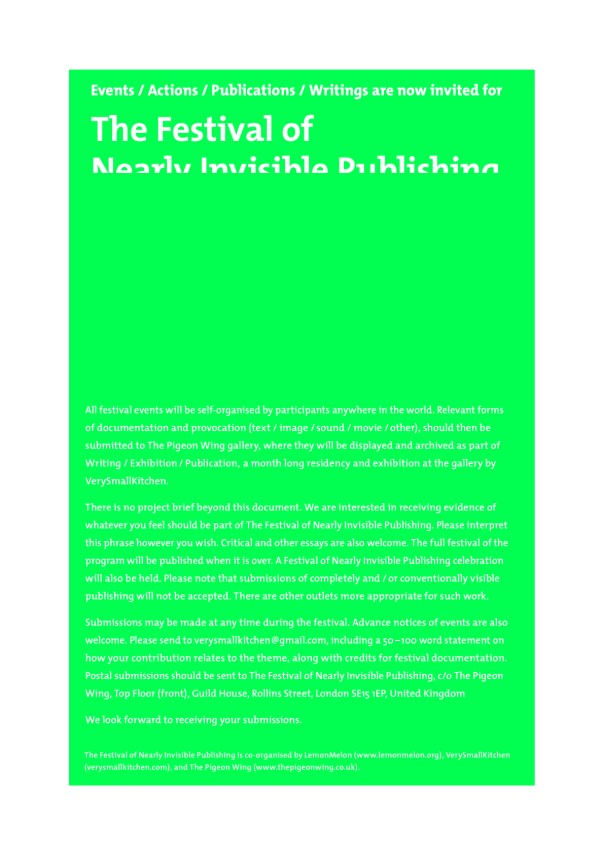
Events/ Actions/ Publications/ Writings  are now invited for THE 1ST FESTIVAL OF NEARLY INVISIBLE PUBLISHING.  

All festival events will be self-organised by participants anywhere in the world.  Relevant forms of documentation and provocation (text/ image/ sound/ movie/ other), should then be submitted  to The Pigeon Wing gallery, where they will be displayed and archived as part of WRITING/EXHIBITION/PUBLICATION, a month long residency and exhibition at the gallery by VerySmallKitchen.

There is no project brief beyond this document.  We are interested in receiving evidence of whatever you feel should be part of THE 1ST FESTIVAL OF NEARLY INVISIBLE PUBLISHING.

Please interpret this phrase however you wish. Critical and other essays are also welcome. 

The full festival of the program will be published when it is over. A 1ST  FESTIVAL OF NEARLY INVISIBLE PUBLISHING celebration will also be held. 

Submissions may be made at any time during the festival. Advance notices of events are also welcome. Please send to verysmallkitchen@gmail.com, including a short  50 word description/ credits for the Festival catalogue.  

Postal submissions should be sent to:

THE 1ST FESTIVAL OF NEARLY INVISIBLE PUBLISHING

c/o The Pigeon Wing

Top Floor (front)

Guild House

Rollins Street

London

United Kingdom

SE15 1EP

Please note that submissions of completely and/or conventionally visible publishing will not be accepted. There are other outlets more appropriate for such work. We look forward to receiving your submissions. 

THE 1ST FESTIVAL OF NEARLY INVISIBLE PUBLISHING is co-organised by LemonMelon, VerySmallKitchen, and The Pigeon Wing.