verysmallkitchen

Posts Tagged ‘art writing’

NEXT WEEK AT WRITING/ EXHIBITION/ PUBLICATION AT THE PIGEON WING

In Uncategorized on September 10, 2010 at 6:22 am


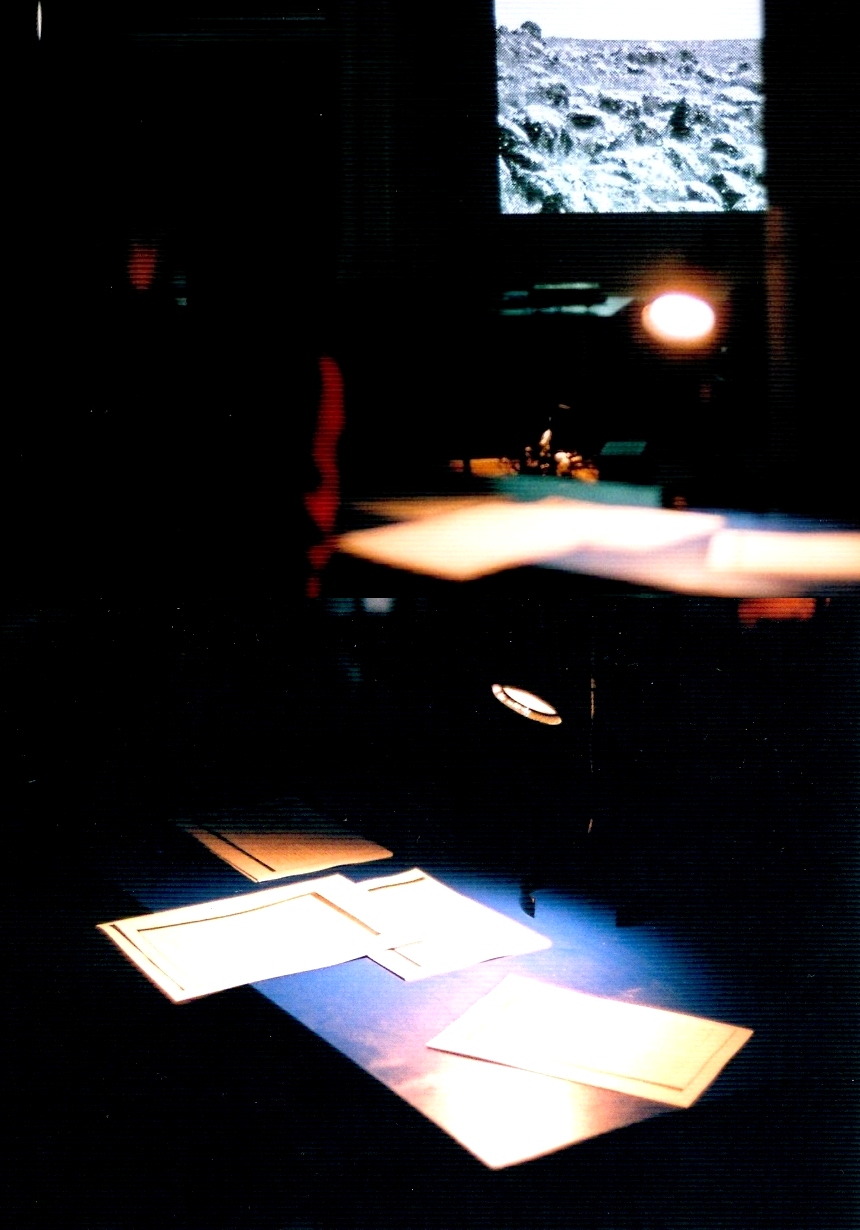
Photo: Matthew MacKisack


WRITING/ EXHIBITION/ PUBLICATION presents Initial and Reprise, an evening of films by Matthew MacKisack, 17 September, at The Pigeon Wing, 7pm.  Matthew writes: 

For Initial and Reprise three works will be presented, each with two parts, one verbal and one audio-visual. Each part explicates and exemplifies the other.

The works concern visions – ecstatic, dreamt, utopian – what has been and what is to be done with them: decoded, co-opted and ejected, what remains is negotiation, that is, initial and reprise.

The evening will also include the second installment of Julia Calver’s month long performance/ writing project. Julia describes the project as follows: 

SUNBEAM and FOREST exist inside an interminable argument which takes place at the level of the forest floor. They argue over who forms the ultimate frame for their ongoing dialogue. This work switches on and off through various iterations as SUNBEAM slips into periods of silence and then ‘reawakens’ in new ideas. Performances throughout the exhibition; texts in the space to take away.

ALSO THIS WEEK: A participatory installation by the Eindhoven based project space Onomatopee, specifically commissioned for WRITING/ EXHIBITION/ PUBLICATION. Freek Lomme described the project, and the work of Onomatopee as follows:

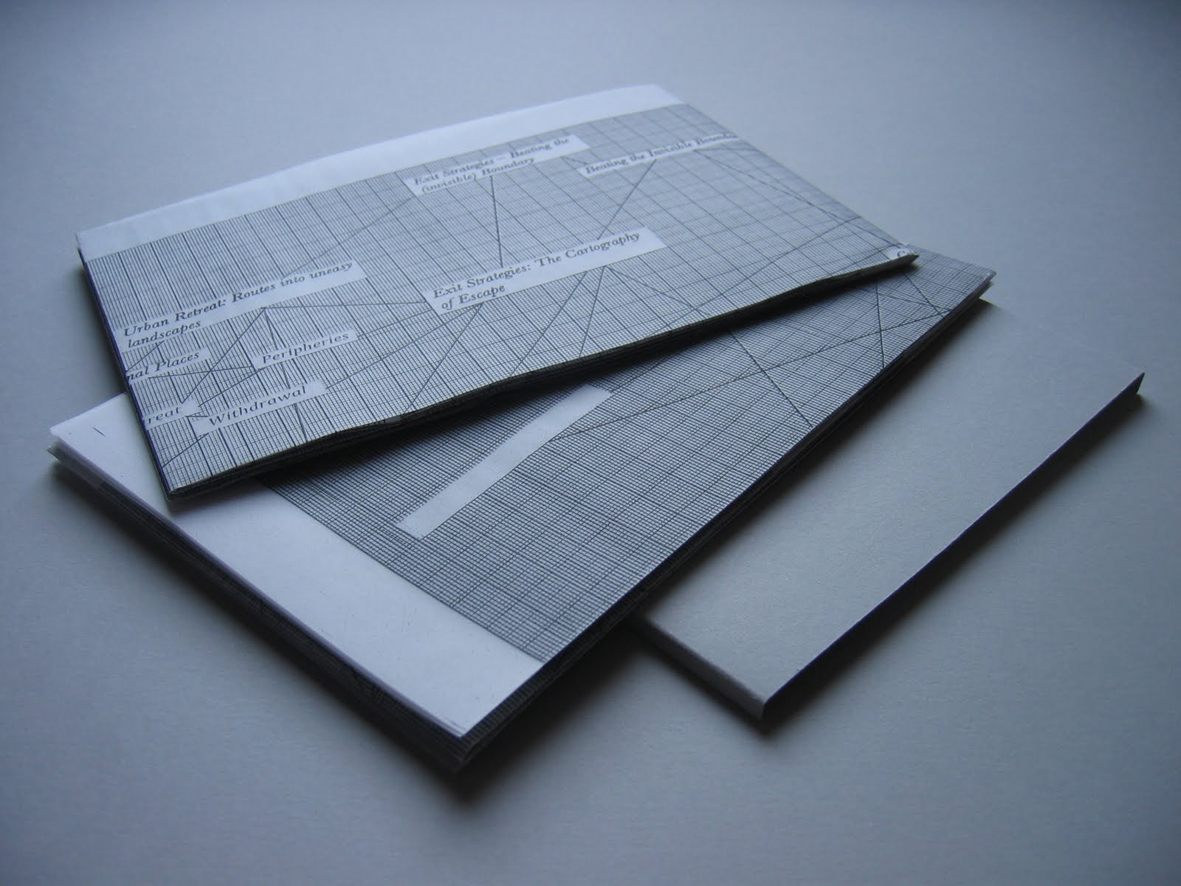
In response to David Berridges request to participate in his research project concerning WRITING/ EXHIBITION/ PUBLICATION, Onomatopee proposed to realize a participatory work; a tablecloth utilizing a grid of information and about some of their projects related to this quest. Books posited upon this cloth enable participants to experience and engage with the parameters involved!

Onomatopee operates in between theory and praxis, in between design and art, combining sense and sensibility. Operating this way, Onomatopee often releases progressive textual communication as part of this play. The sum of their projects parameters wishes to create a vibrant, coherent yet fragmented, overview on such specified fields of designed culture, linking up knowledge and experiences. 

Sunday 19th September, 2-4pm, APHORISM AS ART PRACTICE. An informal conversation, writing session, and sharing of material around the use and practice of aphorism. Participants include David Berridge, Julia Calver, Matthew MacKisack, and Mary Paterson. Participants welcome, but places are limited, so please reserve a place by emailing David on verysmallkitchen@gmail.com

COMING UP: Phil Baber will be working in WRITING/EXHIBITION/PUBLICATION on 22-24 September, exploring relations of installation, essaying and geology. He will launch the work on the 25th, and also participate in the LemonMelon Publishing Seminar. See here  for the full line up which also includes a performance lecture by seekers of lice, and contributions from James Davies/ If P Then Q and Marit Muenzberg/ LemonMelon.

WRITING/EXHIBITION/PUBLICATION will conclude on Oct 2 & 3 with two days of performances, installations, discussions and residencies. Full details to follow. And…

Some of the projects unfolding throughout the month of WRITING/ EXHIBITION/ PUBLICATION do not feature in a list of public events. Press Free Press’ A TIME FOR WORK will conclude with a performance on the final weekend, which is one part of a project that sees Ryan Ormonde and Becky Cremin working writing-shifts in the gallery every day, in response to instructions received from their collaborator-employers.

Tamarin Norwood is unfolding a new writing project collecting methodologies from other practices and disciplines, some of which is documented on her Homologue blog here:

So I’ve been trying to approach the birds via the smoother detours of other non-writing practices: human practices rather than avian ones, but physical, material, manual practices distinct from writing by their direct interaction with the physical properties of the world. Writing like bottle collecting. Writing like potholing. Writing like ornithology. Writing like repairing drains… manhandled into instructions for writing.

Pippa Koszerek continues to document the event in shorthand; Hammam Aldouri is coming to the space to find out what tasks Helen Kaplinsky has asked him to perform as part of their contractual arrangement (you can read the contract on the gallery wall); and myself and Marit Muenzberg have also been working in the space on our book project BIG LUSH NIP, a pseudonym for the FESTIVAL OF NEARLY INVISIBLE PUBLISHING.

As one of our generative phrases for the book has it: “A book that…. a book could ruin everything…”

A PRIMER IN CONCRETE: AN EXCHANGE BETWEEN DAVID BERRIDGE AND MÁRTON KOPPÁNY

In Uncategorized on September 9, 2010 at 7:42 pm


Márton Koppány, Ellipsis No.8


In July 2010 I invited the Budapest based poet Márton Koppány to contribute to WRITING/EXHIBITION/PUBLICATION, a month long exhibition and residency project at The Pigeon Wing gallery in South London (3 Sep-3 Oct 2010).

I first encountered Márton’s work through his 2003 collection Investigations & Other Sequences and the online version of the Institute of Broken and Reduced Languages. Thinking about how writing moves (or not) between the different locations of the exhibition title, I returned often to Investigations and Márton’s more recent work, much of it available online.

The following is an edited version of an exchange that took place by email between 22nd July 22nd and 18th August 2010. 

1.

DAVID:  Hi Márton. In thinking through your contribution to the exhibition, perhaps we could also have a dialogue by email. Looking at your work, I’ve been thinking about connections between poetry, conceptual art, and the absurd.

MÁRTON: In some sense you’ve summarized my own interests/inclinations as well!   

DAVID: Perhaps we could focus on that phrase.  

MÁRTON: We could start from any point, and than go where the whims of our self-reflexivity lead us. My short comment on your phrase didn’t mean anything more special than a nod. (By the way, how will we note our metacommunicational reactions?) (How will we replace poetry with essay?) 

Generally speaking I’m very careful with generalisations and labelings also because I’ve never been good at them. I prefer comments that remain close to a text or situation or a mental condition – and “visual” poetry is a good example of it.  

You write: “Making connections between traditions of poetry, conceptual work, and traditions of the absurd.” Yes, but they’ve never been separated in a fine work like that of, let’s say, Finlay’s. He had a basic feeling or recognition, which we can analyze now, but I don’t imagine that he ever wanted to add, say, a hint of conceptual flavor to his poems. 

I mention Finlay here because you respond to his work in your Otoliths piece. Finlay says: “Just so, ‘concrete’ began for me with the extraordinary (since wholly unexpected) sense that the syntax I had been using, the movement of language in me, at a physical level, was no longer there…”  And of course nobody wants to sound “absurd” (except for those, perhaps, who participated in a literary movement a few decades ago). I dare to say this because Kafka is my favorite writer. 

DAVID: The phrase that came to mind today was A PRIMER IN CONNECTIONS OF POETRY, CONCEPTUALISM AND  THE ABSURD. By which I mean we could gather some examples, incidents, case studies of each, seeing how each word functions for you, and for me in response. Tentative, working definitions of each word… final text maybe a mix of essay/ interview/ anthology… 

MÁRTON: I don’t want to hide behind my limitations with English and explain away my other limitations through it, but my English is really an obstacle (as you can see). I ask for your (and the potential reader’s) patience. For me it is almost impossible to talk of these kind of things, especially in English – but also in Hungarian. Yes, we should refer to concrete works (of ours and others) as we go ahead, and put them in the focus of our discussion!

How does the word “absurd” function for us? Is it an intrusion and a threat or rather a kind of relief? It was both for Kafka, I guess.

DAVID:  Send me twelve images. Think of it as a selection of the  work you would like to make as an intervention/ contribution to this project.”

MÁRTON: Good. (I feel as if I’d always been writing the same poem.) I’d like to do something similar with your work. Could you please send me something over?

2.

MÁRTON: I should specify/try to tell again a lot of matters I mentioned yesterday but the core of the thing is that I would like us to begin with the concrete works (with one concrete work that you select from the dozen pieces I’ll be going to send you?), ask you first to comment on it or ask me about it, and then go on with the dialogue.

And it should be YOU who choose a label/frame for my collection in the show. It should reflect YOUR experience with them. I have nothing against “conceptualism” (on the contrary), and “absurd” is as good as “mysterious”. But why don’t we wait a bit with the frame and examine first the concrete works?

It is always difficult to decide where to start. Please let me know what you think. 

DAVID: Yes, lets start from the specifics. 

MÁRTON: Yes, absolutely. I’m looking VERY much forward to our dialogue – which has already started. (We can find a lot of examples of first step last step “dilemmas” in Kafka, Beckett, George Brecht, Bern Porter, and of course in any dialectic logical system, old or new, and we can perhaps deal with them as we go ahead…) Unfortunately I couldn’t open your zip file for some reason. Could you please send your work again as a Word or PDF document? I’m VERY curious about it! 

The twelve images Márton sends are: From “Endgames”, Otoliths, 2008:  Csend (Silence); The Secret; Ellipsis No. 8; Forecast; Waves No. 2. From “Modulations”, Otoliths, 2010: fish 1-3; or; Translation; Vacation; Asemic Table No. 2; Still. I email Marton the manuscript of Kafka Thinking Stations: A Chora(l) Song Cycle.  

3.

MÁRTON: Your Chora is great! Here I send a quotation (you may know it) for your italicized Kafka-crows: while translating Fluxus stuff for an art institute in Budapest, I found a footnote by Dieter Roth which immediately sounded familiar. It was nicely hidden in Spoerri’s Annotated Topography of Chance and was related to a third person: “At this point Josef Albers would say: I have nothing to do with variations: I make variations!” (And a small coincidence: I have a piece, titled “Italics”, in the new issue of Otoliths.) “Please clarify ‘impossibility’” (Chora) Do you know Bern Porter’s “impossible”? (It is the phonetic transcription of the word.) 

Márton Koppány, Waves No.2


DAVID:  I started making these comments after looking at all the images you sent me. Then I picked one, [Waves No.2] as they seemed to fit most specifically around it. Then my thoughts became specifically about this image. I tried to follow a chain of thoughts but – in a way that maybe relates to the images – I think such chains endlessly stopped. I had to re-write, start again, express a similar concern in a different way or through a consideration of some other aspect of the image…. 

MÁRTON: I’m VERY grateful for your comments, I found them intriguing! But I was in trouble with my responses.

DAVID: But the point of starting with an image was to be more concrete! Sorry! Please pick whatever interests you from the rather lengthy notes that follow. 

MÁRTON: I tried several things in the last couple of days but nothing worked well enough. Whenever I start exposing something to generalizations it becomes very soon unmanageable. (Of course it is my English but not only that.)  I have been retreating from textuality for a long time. Even in my Hungarian textual period (several decades ago) my inclinations had directed me toward the (actual, ever-changing) limits of verbal communication.

The last half of the sentence is quoted from an interview included in my book of 1993, Investigations. I will use my earlier notes written for different occasions when they are relevant, and when I can’t put it any better. 

DAVID: I thought about how, in your poems – should I say images? poems? –  there are objects at the point of becoming letters. And letters at the point of becoming an object, and what happens when we have this balance.

MÁRTON: I started writing something that turned out (?) to be “visual poetry” thirty years ago because by the late seventies I’d understood that if I didn’t want to give up the faint hope of communicating, I should “get rid” of my mother tongue.  So the main source of my way is a deficiency, which makes things simple in some sense. 

I don’t respect/need/enjoy words more OR less than the empty spaces between them, or the sheet of paper they are written on, the rhythm of the turning of the pages, unknown and forgotten symbols, fragments, natural formations like clouds and “objects” found on the internet – each of them and any combination of them may be an invitation. When I feel easy (and ready to make something) I experience their complete equivalence.

DAVID: One thing that happens is we smile. Sometimes we smile, and sometimes we laugh out loud. Different kinds of humour, although whether this is something we can control, in the creation of such works, I don’t know. I sometimes think it is your humour , as maker of this, that the poem evidences, – and  when we smile or laugh we recognise how much we participate in your humour.

MÁRTON: Hope you’re right. Concerning humor, what I think in this quite humorless period of my life (I wrote in 2001)  is that I have two basic states of mind. One is the suffering/confused, when I can’t write at all. The other one – which is more exceptional and keeps sometimes only for a few moments – is the happily confused one, when I can somehow cling to the air and enjoy the panorama. 

But if I write (or more exactly: take) down what I see (which doesn’t happen too frequently), the composition generally gets humorous because suffering and confusion are still present and I see myself in the air. The only relief is that I can accept all those contradictions, at least for the moment, and humour is perhaps just accepting contradictions.

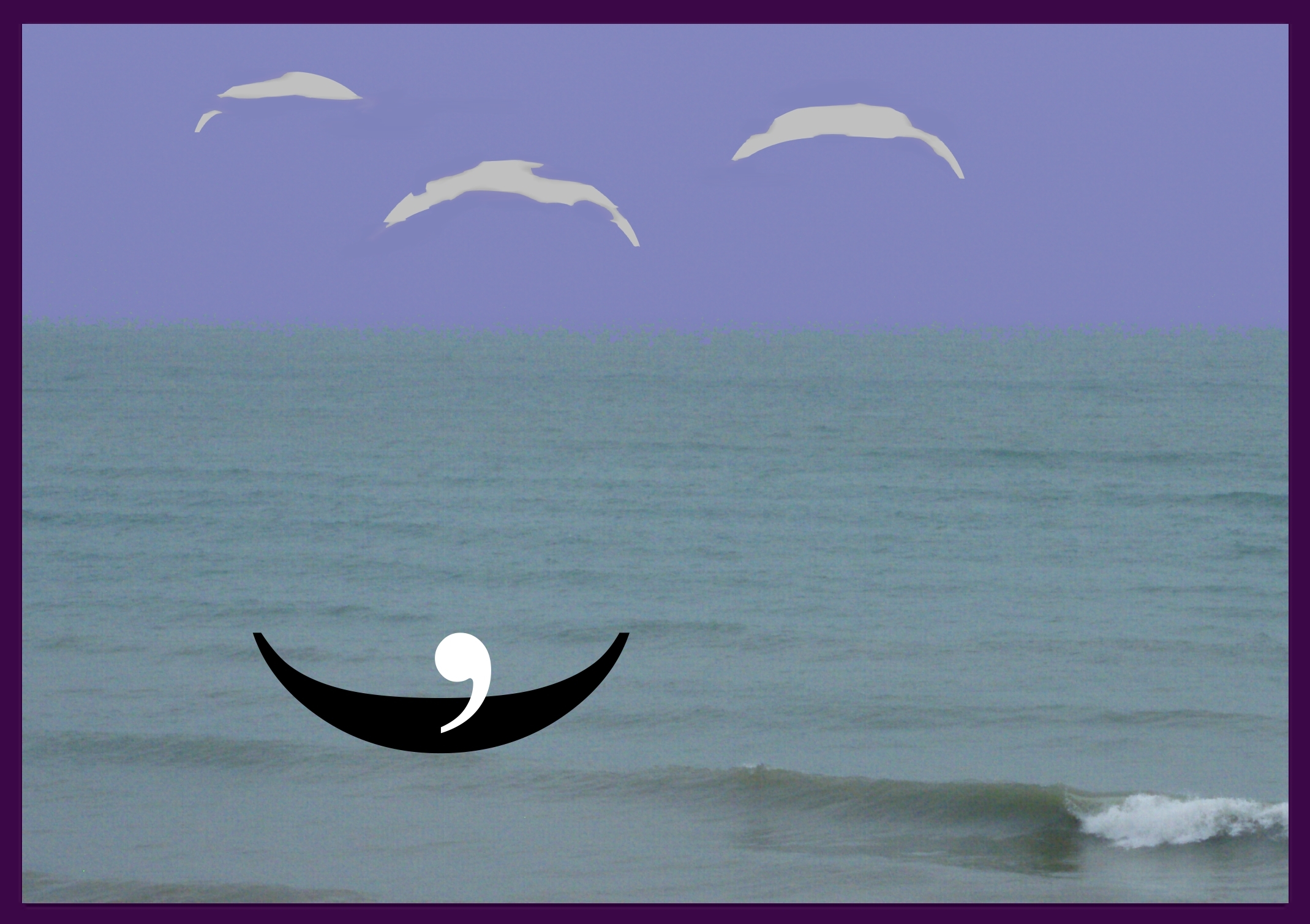
DAVID: Another thing that happens, as objects become letters and letters become objects,  is that we make a picture.  A boat on the sea. Sort of.

We also make a setting. A photo of sea. An artificial sky. Now the balance is between things we think of as landscape and nature, and things that seem a flat surface of colour, something made on the computer. 

The  image is called WAVES. Perhaps this highlights that the zone of importance is more than letters and punctuation, which could otherwise be the figure to the seas ground. 
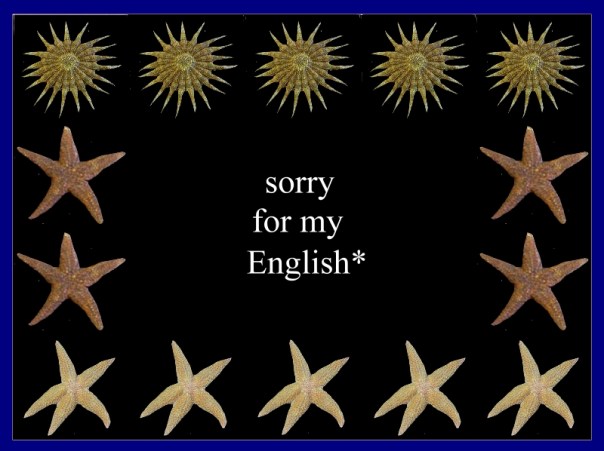
Márton Koppány, Csend (Silence)


Is this more all over focus where the desire to work in colour came from, after the black and white work of INVESTIGATIONS? Do you still work in black and white? I suspect not. It feels to me, without knowing if this is so, that some definite break happened.

MÁRTON: I’m still working in black and white as well, but you’re basically right, most of my pieces since 2005 have been in colour. When I understood how isolated I was in (or rather out of) the state-controlled culture, I felt I should “leave” my mother tongue behind and reach out. 

That was at the end of the 70’s. I got involved in mail art, started making collages and writing extremely minimalistic poems on small cards. I tried to metacommunicate with the potentials of the sheet of paper itself (it can be torn etc.) and with sequentiality. Color visual poems date back only to 2005, when, all of a sudden, I started seeing color punctuation mark landscapes during a walk. 

Generally I have a basic image first which just emerges. But most of my visual poems significantly (or completely) change in the process of their elaboration, thanks to the call coming from the unexpected “blemishes” of their digital carriers. It is a dialogue, I hope.

Could you please explain to me, what kind of break you meant? When you’re doing something day after day (in my case rather month after month because I’m very slow and produce far fewer items than most visual poets do), you don’t recognize the shift which might be evident for an attentive observer. 

I do feel that my “images” are even more silent than my similarly minimalistic conceptual sequences were. And they might seem in some cases a bit less “poor”. But my “problems” are basically the same. I was thirty years younger when I wrote the bulk of my black and white sequences. Well, that’s a real difference.

DAVID: If we try to row away in the boat, we discover that it is made of punctuation! (Of course, we always knew this really) If we find a way of making this punctuation boat work, we discover this bit of sea isn’t connected to anything else, although it sort of promised it was, or we kidded ourselves that this was the case.

MÁRTON: I can only add that since this is a visual poem and has two dimensions (I framed it to emphasize the fact) (although recently I’ve stopped using frames), it has a vertical reading as well: a white (erased?) (already “missing”?) comma-man is sailing, quietly, in a small black boat consisting of an opening bracket, and under a series of opaque closing brackets consisting of some fleecy clouds in motion.

DAVID: I’ve started writing my notes as “We…” Perhaps “we” navigate into such an images as this on the basis of what we share (punctuation, colour, sea), not on the basis of our individual personalities.

MÁRTON: Yes, you’re absolutely right as far as my intentions are concerned. I don’t want to express anything more than a balance and the lack of it, the mystery “and” absurdity (they’re not “and”, not separated) of… (You know this “of”: you made it talk in your Chora.) What remains if I abstract away from the anecdotical and psychological details of my personal history? Certainty of Death and Certainty of Nothing at All are playing ping-pong in the final of an elimination tournament.
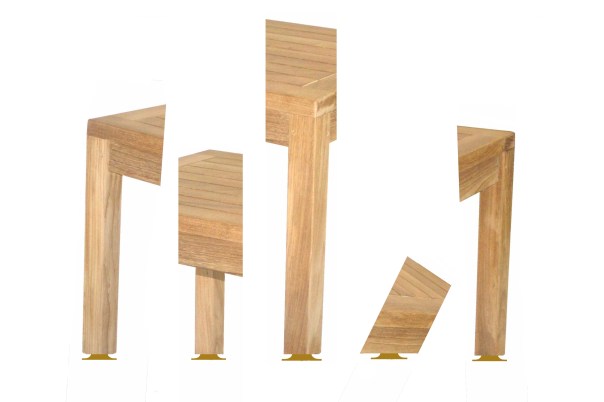
Márton Koppány, Asemic Table No.2


DAVID: … the poem attains life as its own system, maybe. But what kind of system is it?”

MÁRTON: I have no idea. But – how to put it? – it is certainly not about language. (My intuition, based on “Chora” is that your main interest is also different. They spring directly from a strong sensation (recognition) (or a sensational feeling of no recognition). They “talk back” in the process of realization and (in good case) surprise me. At that point I’m done. The less is the better.

DAVID: … Simultaneity and development. Between surface and depth, 2D and 3D.

MÁRTON: Yes, the surface. We need it, don’t we? I don’t want to imitate 3D (to compete with computer games etc.), but some of my pieces suggest three dimensionality – or use its concept. Nothing can be repeated: the original version of Waves was done in an early period of my digital activity when I had no idea what pixels mean. (I’m still low-tech.) So that version doesn’t exist in higher resolution. In  2008 I reshaped it, and the resolution of the new picture is much higher. It is a bit different / it is the same. Generally speaking my works are rather conceptual but not completely.

DAVID: I did a theatre workshop once where they said to move slowly means having an attention that is very fast and moving all over the body. To move fast requires that attention be very still and slow. 

MÁRTON: Yes, that’s absolutely true!

DAVID: In trying to be concrete I’ve emphasised the positive, playful side of these images, but they could also be read as about impossibility: the disaster of making a boat from letters. What determines whether we read such images for their positive or negative meanings?

MÁRTON: They’re the two sides of the same coin in motion. “Our” total collapse is always at arm reach. I’ve been interested in Judaism (first in Hasidism, later in Talmudic J) and in Buddhism (first only in Zen, later also in Madhyamika, San lun and Hua-yen) and a few other religious and sceptical traditions for more than thirty years, but I can’t say anything wiser. (Perhaps because I’ve remained an ignorant.) 

It really depends on the reader. It will sound idiotic but I vote for harmony. To “work” on these poems, I mean to catch the basic image in the air,  has always been a positive experience for me. I can never create anything when I’m depressed or angry. I need momentary easiness to be able to present that coin – on whatever side of it is more emphasis at the moment. What does it mean?

DAVID: Perhaps the clue is in the title. WAVES. As in “someone waving.” Poem as greeting.

MÁRTON: Yes. Thanks!!!

DAVID: I am thinking about a scene near the end of Tarkovsky’s Solaris. Have you seen it?  If so, maybe you know the scene I am thinking of? 

MÁRTON: I’m a bit ashamed but I left it out. And on top of it all I worked as a film critic for many years in the late eighties and early nineties! I’ve hardly gone to the movies (or watched video) since then.

I skipped a few parts of your letter because I couldn’t relate to them for the moment. 

MÁRTON: Erratum: “I was thirty years younger when I wrote the bulk of my black and white sequences. Well, that’s a real difference.”

I was twenty five years younger…

DAVID: I am at my parents house tonight. My mum shows me a small notebook belonging to  her grandfather. She says all it contains is some blank pages on which are written his union membership number and names of some horses he wished to bet on. This is the only writing or object that remains of her grandfather.

In response to Márton’s email I sent a long response in which I unpacked some ideas – about the education and practice of the writer, how a writing practice sustains itself and develops, and how Márton’s work positioned itself regarding different locations of writing, exhibition, and publication. It felt close to the concerns of Márton’s poetry although, in its 1800 words, it did not once mention a poem…

Márton Koppány, Forecast


MÁRTON: I could relate to several comments of yours, because our dialogue is potentially open in many directions. But we are getting farther and farther from the concrete pieces. (Only one of them has been touched yet.) I must repeat that I’m totally sceptical about general talk over art. My reactions would be meaningless without the momentum (if any) of the concrete poems. If that momentum doesn’t exist, my ideas have no importance. I’d like to stay as close to the poems as possible. 

We could turn back to them. But since both of us have other obligations we could also claim that our text is done – at least for the time being. 

DAVID: I’m sorry if my letter seemed inappropriate. I was uncertain how to engage with the materiality of these images, when it is precisely that materiality these images put into play in different ways (what is natural/ digital, representational/abstract, how parts relate to wholes…) 

MÁRTON: No, no, nothing has been “inappropriate” at all! I’m simply not good at general talk – I lose the thread quickly.  

DAVID:I have begun editing our emails, but I would also like to try and stay with this little “knot” or “crisis” in our dialogue. 

MÁRTON: Others might be different, and that’s fine. I’m happy to talk about any topic (also about poetry and exhibitions) as far as we remain in (or at least close to) the context of the concrete work(s).

DAVID: I feel trapped in a somewhat paradoxical activity: trying to articulate in language that which is at the “limits of expression” and moving beyond the verbal. But not wanting to have a sense of “reclaiming” it, or simplifying it in any way, nor to set up a “mystery” of the image…. 

MÁRTON: You are right, it is a paradoxical activity, but even walking is a paradoxical activity according to Zeno. Some Chinese sources call this use of language “liminological speech”. But the limit is always “somewhere else”. What I mean is that there’s no “beyond” (at least not in my vocabulary, but it can be fine and meaningful in other cases). 

Seeing is still reading, reading is seeing. Words can be mute, while clouds, table legs and water waves, subatomic letter particles can easily start speaking because they’re words AGAIN, signs among signs. I’ve been inclined to use less and less verbal elements, but it is a mental process, which I’ve experienced and also witnessed. 

There’s no methodology involved. Perhaps I’m simply getting older. And as I wrote you in my previous message, I have NOTHING against verbality: if there’s anything I really admire it is first class, pure textual poetry!!! Unfortunately I can’t afford it because I’ve lost my mother tongue and the capacity of articulate speech. No “mystery”. I’ve remained (or would like to be) a writer.

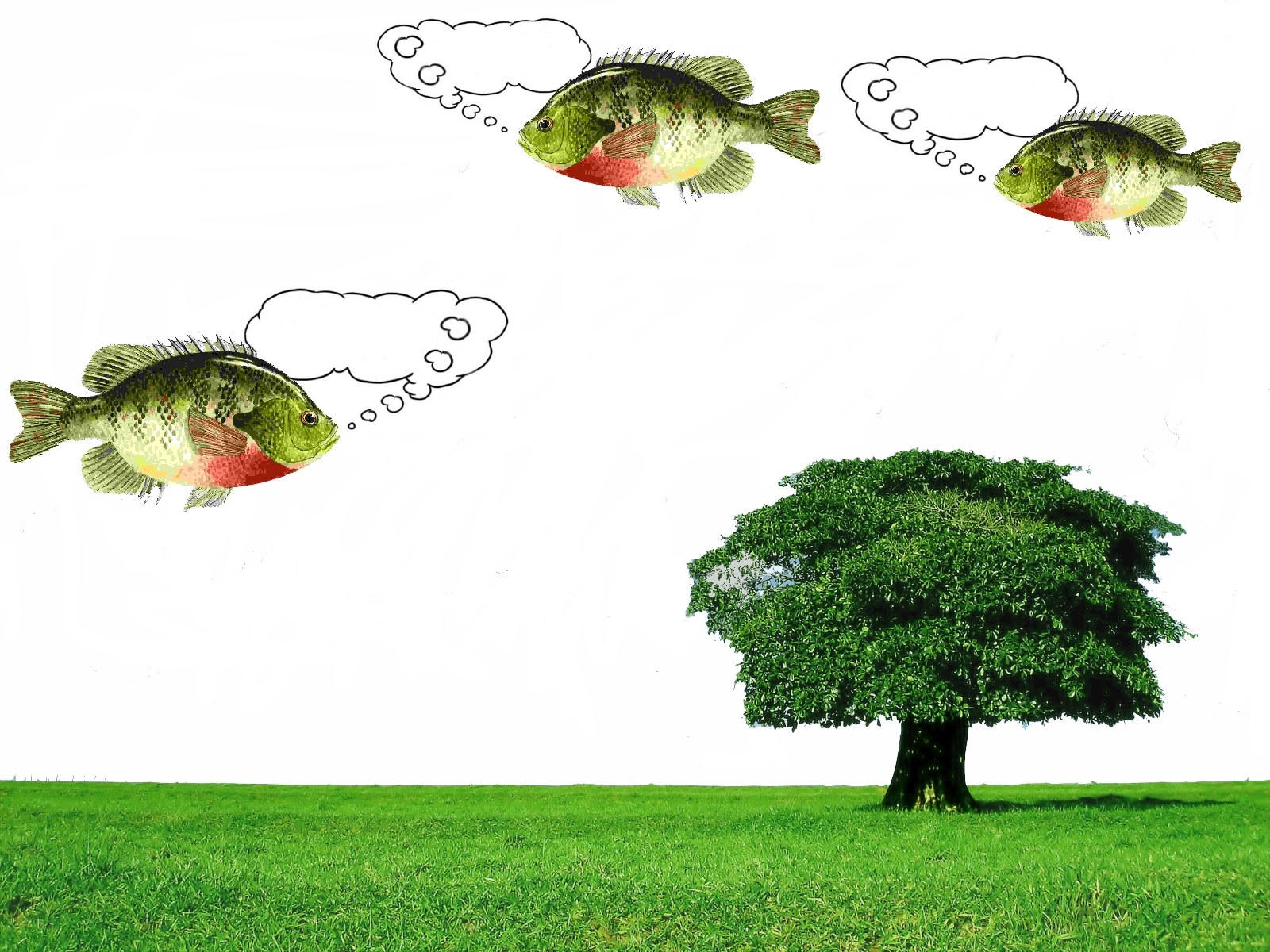
DAVID: So I shall write down what has been persistent for me each time I looked at your twelve images. There is, for example, the element of constructions. Aside from your own sense of form and structure, there are the specific machines of Ellipsis No.8 ,the boat we talked about before, and the fish in, aptly, Fish 1-3:

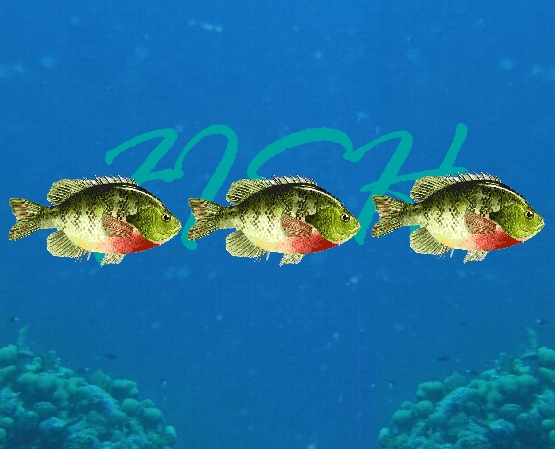
These are are given an order and movement that is also like that of the metronome in Ellipsis – it has a pace, a measure, a rhythm  – things with a tone, also an instruction for another activity. 

MÁRTON: My work is rather conceptual but my concepts are completely intuitive (there’s no theory behind them), and I’d like to show both. That might have a (dysfunctional) machine-like precision effect in some cases.  

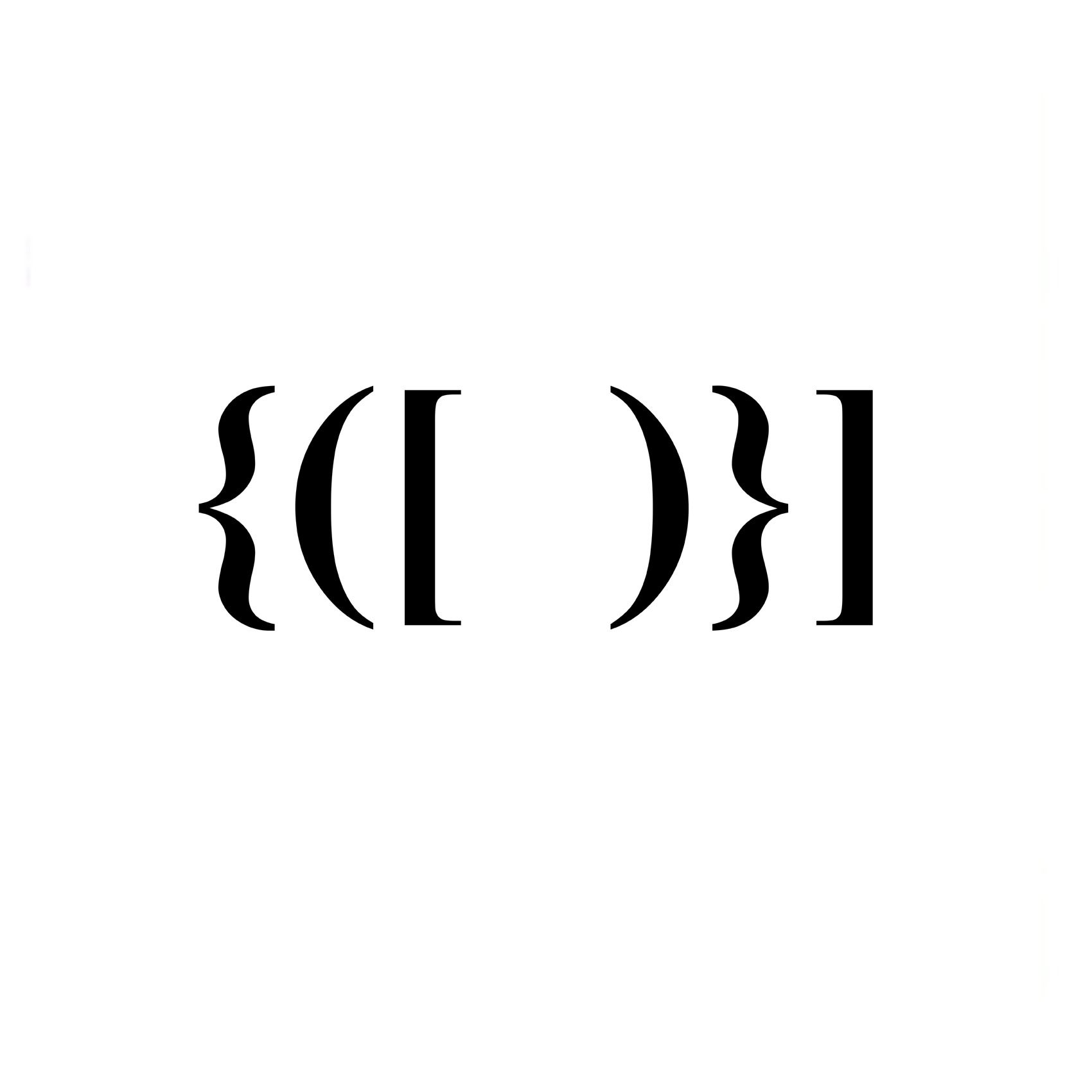
DAVID: Or the brackets of THE SECRET – a spectrum, offering a set of variations, repetitions of a kind, but also that other structure of a mirror in the middle, that offers a reversal, an echo…

MÁRTON: The brackets of the Secret are asymmetrical. (Most people don’t realize it first.) I tried to represent how we construct a secret. (That’s a real secret as Kafka would say.)

Márton Koppány, The Secret


DAVID: It makes me think about seeing and not seeing, refusing perception in some way, not allowing an easy apprehension of the form as object. Sometimes your work isn’t this at all ( the punctuation boat, where the punctuation is evident). But other times it is. I found it hard to decode the reflection in STILL. It evokes figure-ground, op art, perceptual psychology tests…  
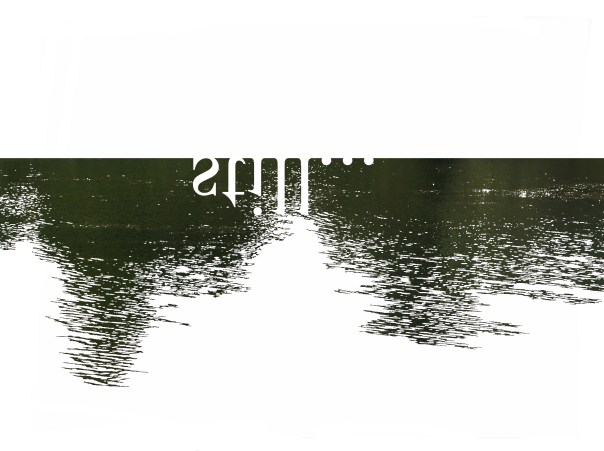
Márton Koppány, Still


MÁRTON: “Still” is the reflection (in the water) of something which can’t be seen anymore. “Still” is its only presence. And it is “still” present!!!

DAVID: A shifting sense of “nature.” What do categories like nature and artifice mean when brought into the image? It is something to be played with, and also a way of organising the images: Fish in water and fish in the sky; fish breathing and fish having thought balloons/ clouds/ trees, like we associate with cartoons. 

MÁRTON: Yes, some motives – like the fish or the clouds – have been coming back in different contexts. I like to modify (or completely change) their role: against my own expectations with naming, categorizing etc.

DAVID: You talk about “silence” in colour images. I think the silence is to do with these gaps, and your manipulation between them. Fish…sea…sky…thought balloon… cloud…tree… a certain spectrum (of the comedy/conceptual/absurd) maybe?

MÁRTON: I can’t add anything else!

Márton Koppány, Translation


DAVID: Does it feel reductive to you to talk of a grammar? A set of elements that are identified and explored in repeated ways? In your work it seems more intuitive than this. A repeated image (like the comma emergent from a block of colour) has to be found each time?

MÁRTON: You’re absolutely right, my grammar is intuitive and fluid. I don’t want to set up a rigid sign system. (And I don’t believe in an universal grammar or anything like that. But I do believe that cultural barriers can be crossed in any direction in space and time!)

DAVID: And the titles are a curious element in a practice trying, as you say, to “retreat” from the literary. Sometimes – Forecast- they seem to offer a clarification. Other times, Ellipsis or The Secret – it is more transformative to read the title after looking at the image. The titles are a bit like the purple frame perhaps? Have you ever made an untitled work? 

MÁRTON: Yes, the function of the titles is different in each case. Sometimes they’re very neutral, like, say, “Study No. 3” or “Sans Titre No. 1”. I need them only to slow down a little bit. In other cases they’re important (even core) elements of the composition. There’s no rule.

DAVID: I imagine a reversal: the image as the title, and the title as a miniature poem underneath – like Ian Hamilton Finlay’s one word poem issue of Poor Old Tired Horse where the title could be any length!

MÁRTON: Absolutely! I have a sequence in Investigations, titled “Titles”, where the title becomes the picture and vice versa.

Márton Koppány, The Mist


DAVID: It feels appropriate that The Mist got separated off in an email by itself! It has a feeling of ending, opposites, and reversals. The object of the suitcase also highlights something about (human) presence and absence that recurs in these images, a referencing and avoidance of the body; journey/ progress/ accumulation alongside nothingness/emptiness. 

MÁRTON: I like a lot your interpretation!

DAVID: It articulates the paradoxes this exchange often returns to. This “landscape” allows a clear articulation of ideas, of materials in themselves – THE. But there’s also a sense that the individual elements in the image have agency, like that “E”, almost thinking of them as human “characters”…

MÁRTON: Yes, I feel the same. I’m VERY happy that you’ve noticed it! 

DAVID: On the subject of breaks. The colour images removes that discourse of the “white space” and how that is constructed in poetry from Mallarmé through to concrete poetry and so on. There is no white space, although maybe The Mist is a way of trying to articulate how it functions, its claims and its illusions – 

MÁRTON: I still use white space (it has central importance in “Still”, for instance), but it has become one “color” among the others. White, whiter, color.   

My frames, as many things in life, came from a coincidence. In the late 70’s when I started tinkering with my first non-just-textual black and white sequences, I cut the xeroxed A/4 pages into four because I wanted to put my work into normal size envelopes and send it out as mail art. But it was difficult to handle the borders without frames, so I glued the originals on black cardboards, and it was convenient to keep the frames as well. 

Very soon I became conscious of their presence. They started to represent limitations – and the opportunity of changing them into a playfield. I noticed another white layer “behind” the black one – and also that there is no “background” anywhere at all.

4.

MÁRTON: David, now that we have more material on the concrete works, I can turn back to your more general comments, and try to make short reflexions.

DAVID: How would you characterise your education? Did you have an apprenticeship? Is writing solitary?

MÁRTON: I’m an economist by profession. I’ve never used my degree. I worked as a film critic for several years. I’ve been translating and editing for a long while.

DAVID: I’ve been reading the work collected as part of the Institute of Broken and Reduced Languages. Could you talk about this idea of the individual working as organisation? I’ve been organising a project called DEPARTMENT OF MICRO- POETICS, so I’ve been thinking through the implications of carrying out poetic- artistic activities under such a banner. 

MÁRTON: The Institute grew out of exchanging messages with a few friends, especially with Gábor Farnbauer, Clark Lunberry and Peter O’Leary (in Slovakia and in the US) in the second half of the nineties, after coming back from Milwaukee where I’d spent three academic years with my wife who was an MA, and later a Phd student and teaching assistant. (I was officially a “family member”, and had different odd jobs.) 

It came from the wish of finding an umbrella different from labels like “concrete” or “conceptual”. 

DAVID: For myself, I’m not copying an institution, or satirising it, so much as trying to create something which is a container and prompt for my work and can also be an invitation to others. 

MÁRTON: During the nineties I had the opportunity to bring out a series of small books in collaboration with a small press in Slovakia. (And a couple of magazine special issues with the same publisher.) At the beginning of new millennium the Institute went online. Karl Young, the poet and essayist gave it a new home at his Light and Dust Anthology, and agreed to co-edit it. Unfortunately it hasn’t been updated for a long time. 

And one more “organization”: with Nico Vassilakis I coauthored a book titled From The Annual Records of The Cloud Appreciation Society. We needed somehow the bureaucratic base – to leviate. A bit later we (or rather our publisher) had some surrealistic debate with the “real” organization wearing the same name.

DAVID: I’m wondering about poetry in exhibitions, poetry as art, poetry exhibited, and writing as an art practice as opposed to a poetic practice.  Do you have any sense of this in your own work? 

MÁRTON: I’ve participated in several shows (the first one was a group show for Eastern European book artists at Franklin Furnace in 1982) and I would be happy to exhibit more. I like the gallery context as much as the book context. Both have their advantages. I can’t fathom the difference between a “text artist” and a “visual poet” in that respect – why on earth one of them inhabits the gallery place, meanwhile the other one is living in books. It is a social game most of all.

Márton Koppány, or


I don’t see any aesthetic difference. In good case we are motivated by the work to see the pages of the book and read the images on the wall. It shouldn’t be mythologized. And turning (clicking) the page is not so different from moving between the elements of an installation. Both connects and separates.

Kitasono Katue’s Magic (in oceans beyond monotonous space; edited by Karl Young and John Solt) is printed on two pages (and should be read in columns, and from right to left). First we have the block of “ocean of ocean of ocean…”, then a single column follows: “a graceful novel and a graceful novel for a novel and a distance between me and all of you”. 

Next comes  the block of “light on water light on water light on water…”. But the flow of the columns of that block stops at the page break. Then it continues on the opposite page, ending in the middle of it. So where can that “graceful novel” and that “distance” be found exactly?

DAVID: WRITING/EXHIBITION/PUBLICATION asks if writing moves fluidly between these different spaces, and/or if there are blocks, stoppages, distinctions between these different locations. 

MÁRTON: I think it is totally fluid.

DAVID: Someone I met at a discussion on education sent me the following quotation which I have been thinking about a lot. It is by an anthropologist called David Graeber: 

“Bourdieu has long drawn attention to the fact that – always a matter of frustration to anthropologists – a truly artful social actor is almost guaranteed not to be able to offer a clear explanation of the principles underlying her own artistry. 

According to the Godelian/Piagetian perspective, it is easy to see why this should be. The logical level on which one is operating is always at least one level higher than that which one can explain or understand – what the Russian psychologist Vygotsky referred to as the ‘proximal level of development.

MÁRTON: I like this! With the extension that of course it is true about philosophers as well. And that is why we (still) can’t do without metaphors.

Márton Koppány, Vacation


DAVID: I’m interested how much or how little could be satisfying in making an image.

MÁRTON: It is very satisfying! In a sense I’m really grateful for my “deficiency”. 

DAVID: I am thinking again about your phrase “retreating from textuality.” I am interested in what is retreated from, and where one retreats to. I am interested if the micro- engagement of your work with language, signs, punctuation, is usefully a working out of relations on a larger level, of families, then neighbourhoods, then economies, nations maybe. Or whether its a separate realm, with different realities of play and gift and…

MÁRTON: No, it is just the same realm. Or we have been “beyond” from the very beginning.

DAVID: Does writing feel practical to you? I often have a sense of a “utility” of writing, a need for it to be “useful.” But I’m not sure quite what uses I have in mind. 

MÁRTON: It is “the support of contemplation”. Very useful! (Nothing is more useful for me.) It can totally change our initial ideas, or give them an unexpected twist. 

DAVID: Our starting concept for this exchange: A PRIMER ON POETRY, THE CONCEPTUAL, AND THE ABSURD. How do you think we’re doing? 

MÁRTON: Please choose a title for our text: it should be the last phase of your editorial work, I guess, and should reflect your experience with it and with the images… I’m curious.

I’ve already found a couple of things that should be corrected in my last two responses. (For instance: I’m not an economist “by profession”, rather “I studied economics but never used my degree”) etc. etc. You can also find a few details confusing (thanks to my English) – and I’ll try to recompose or clarify those details. 

It would be good to keep the dialogue form, I guess, because each response emerged from a concrete question, and they belong together.

DAVID: I’ll edit this while you are on holiday and send it by Friday.  

_______________________

NOTES

1. Csend (Silence) is dedicated to Geof Huth

2. Asemic Table No. 2 is a comment on Tony Trehy’s Reykjavik.

3. The Investigations interview was conducted by Jesse Glass.

BIBLIOGRAPHY

As well as a reference list of books mentioned in this exchange, the following is also a list of texts exchanged by the authors. 

David Berridge, Kafka Thinking Stations: A Chora(l) Song Cycle (The Arthur Shilling Press, 2010).

David Berridge, The Moth is Moth this Money Night Moth (The Knives, Forks and Spoons Press, 2010).

David Berridge, Nutshell Axioms: An Experiment in Reading as Essaying, in Otoliths, Winter 2009.

Kitasono Katue, oceans beyond monotonous space: selected poems of Kitasono Katue, ed. John Solt and Karl Young (highmoonoon books, 2007).

Márton Koppány, Immortality and Freedom (Coracle Press, 1991).

Márton Koppány, To Be Or    To Be (The Runaway Spoon Press, 1996).

Márton Koppány, Investigations & Other Sequences (Ahadada, 2003).

Márton Koppány, Endgames (Otoliths, 2008).

Márton Koppány & Nico Vassilakis eds. From the Annual Reports of the Cloud Appreciation Society (Otoliths, 2008).

Márton Koppány, Modulations (Otoliths, 2010).
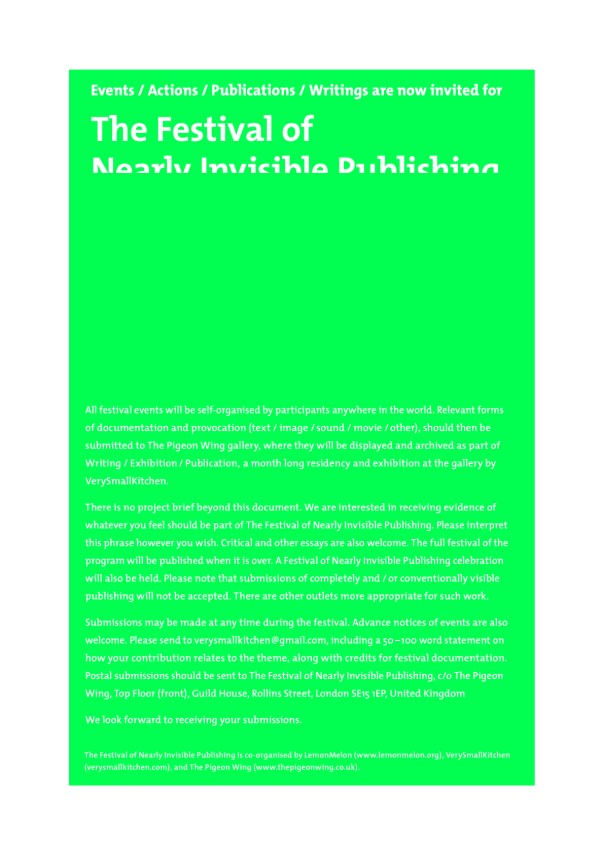
THE FESTIVAL OF NEARLY INVISIBLE PUBLISHING IN EDINBURGH: DISPERSALS by MIRJA KOPONEN

In Uncategorized on September 7, 2010 at 1:34 pm


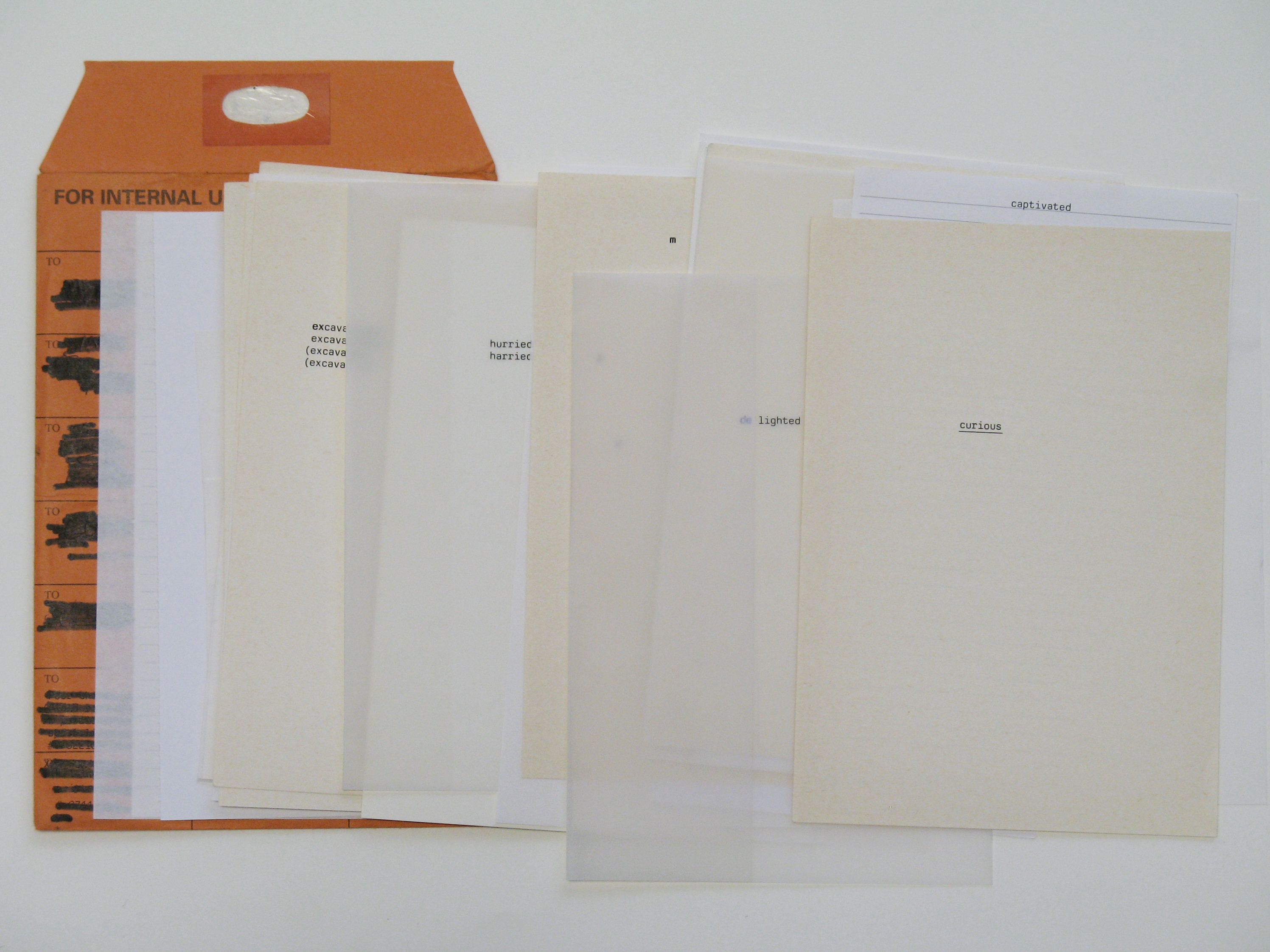
Today and tomorrow are the last chance to see DISPERSALS, an action at the Totalkunst Gallery in Edinburgh that is part of the FESTIVAL OF NEARLY INVISIBLE PUBLISHING. Actually, you might already be too late, if Mirja Koponen’s sticker-poem distribution has gone to plan, and small language pieces have already been taken and dispersed. Or you will encounter the work as it will feature when it arrives at The Pigeon Wing: a sheet testifying to what has been removed and what remains.

This micro-exhibition develops out of THE SHADOW OF A TRAIN project that was a collaboration between myself and Mirja in the summer, in which numerous artists responded to my script for an exhibition, itself unfolding from two paragraphs by the Russian writer Arkadii Dragomoshchenko. As Mirja has written of this new project, which unfolds the dialogue in the context of the FESTIVAL OF NEARLY INVISIBLE PUBLISHING: 

The first dispersal is in the gallery right now. It’s a short event, a burst really, and I think I’m going to send the sheets to you after they have been picked over by the TK audience. I think there is a geographical suggestion here as much as there is an actual dispersal, a belief that the labels with words still will exist there somewhere… an oddly incomplete feeling. 

And earlier, conceiving of the project, Mirja wrote: 

… is simply an attempt to literally disperse the text of ‘The Shadow’. I’d like to print the text of the shadow on sheets of labels ( but as pages of the text as they visually appear in the score) and these are set out  for the audience to peel off and attach to their diaries, notebooks, bags. There is something inherently magical about selecting your favourite words ( or blanks…!), it makes them special in that moment and thereby fixes them onto your life (literally).

This Dispersal turns the work into a series of personal mementoes, gifts, passwords into the exchange   – between the words and the audience – and spreads these out into the space. I like the idea of reversing the process of what we did in june, bringing the words in to the space, and also the idea of materialising the work of the first day of the Shadow in Edinburgh, where the aural experience of the text was the only thing to ‘take with’ from the space. I felt that every line, two lines, combination of lines was potentially meaningful,  in theory a simple thought of course, but  when I was listening to people reading the text in so many different ways when left to their own devices, I was suddenly  quite struck by this.

So, the first Dispersal, a small and quiet piece, makes the Shadow disappear, move on, little by little, perhaps in parts, perhaps entirely.

I would like to do it in the Totalkunst space of course, as the text has materially been there, but it could also travel into The Pigeon Wing through a wormhole in the universe and be dispersed from there. Perhaps there could be somewhat different circumstances for doing this… some sort of augmentary framing of the project. What you think?  More could be written/thought about this approach of course, too. Other ways of dispersing?

The materials and traces of this event, when received, will be added to the unfolding array of material at The Pigeon Wing. Submissions are welcome for the festival. Please see the call for works here.

THE DEPARTMENT OF MICRO POETICS IN NEW YORK: JILL MAGI IN RESIDENCE

In Uncategorized on September 5, 2010 at 9:10 am

Jill Magi will be the first artist in residence at the DEPARTMENT OF MICRO-POETICS, VerySmallKitchen’s long distance residency at the AC Institute, New York. Jill will be in the space on Sat 11th, Wed 15h, Thurs 16th, and Sat 18th September, conducting her project SMALL TALK SMALL BOOKS.

Jill’s description of the project is as follows: 

SMALL TALK SMALL BOOKS is a four-day residency/poets retreat taking place in the DEPARTMENT OF MICRO-POETICS. Jill Magi will be in residence for four days, inviting four New York area poet publishers and editors to come and talk informally about poetry, respond to the text works installed in the DEPARTMENT, discuss the relationship between publishing and writing, and chit chat about other topics perhaps not related to poetry. 

A cross between coffee klatch, talk show, cooking show (where something is made together), and workshop, each SMALL TALK SMALL BOOKS session culminates in Jill and her guest making a small book together. The text for the small book—it may be prose, poetry, a survey, an essay or manifesto—comes out of the time they spend together talking, responding, and doing some writing together. 

The small book will be formatted there on the spot, printed out in a small batch, and stapled together.  Copies of these books–a small box set–will be kept at the DEPARTMENT “on file,” and sent to the U.K. for The Pigeon Wing sister exhibition. Others will be distributed under the auspices of SONA BOOKS, a chapbook press organized by Jill Magi, and also according to the poets’ desires.

The SMALL TALK SMALL BOOKS schedule is as follows:

 11th: with Stephen Motika, poet and editor at Nightboat Books

15th: with Jennifer Firestone, poet and editor of Letters to Poets

16th: with Paolo Javier, poet and editor of 2nd Avenue Press

18th: with Sara Jordeno, visual artist/writer 

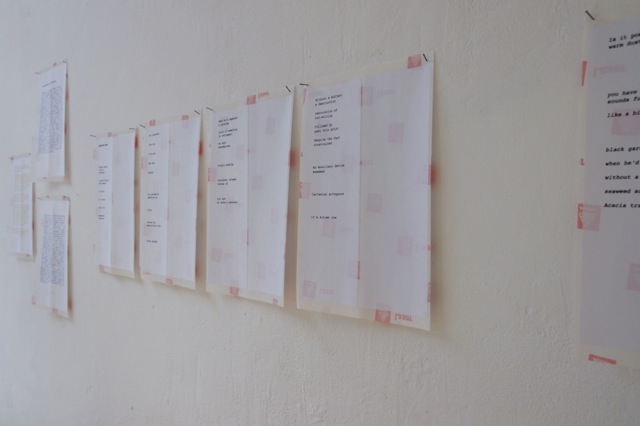
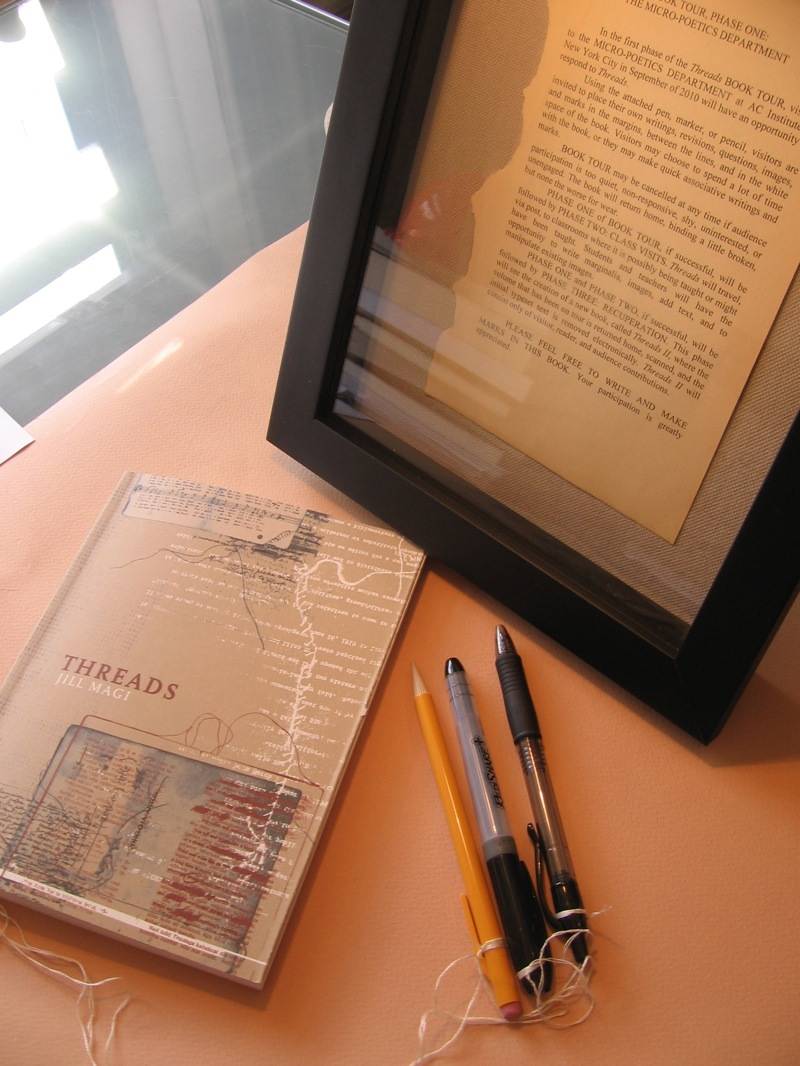
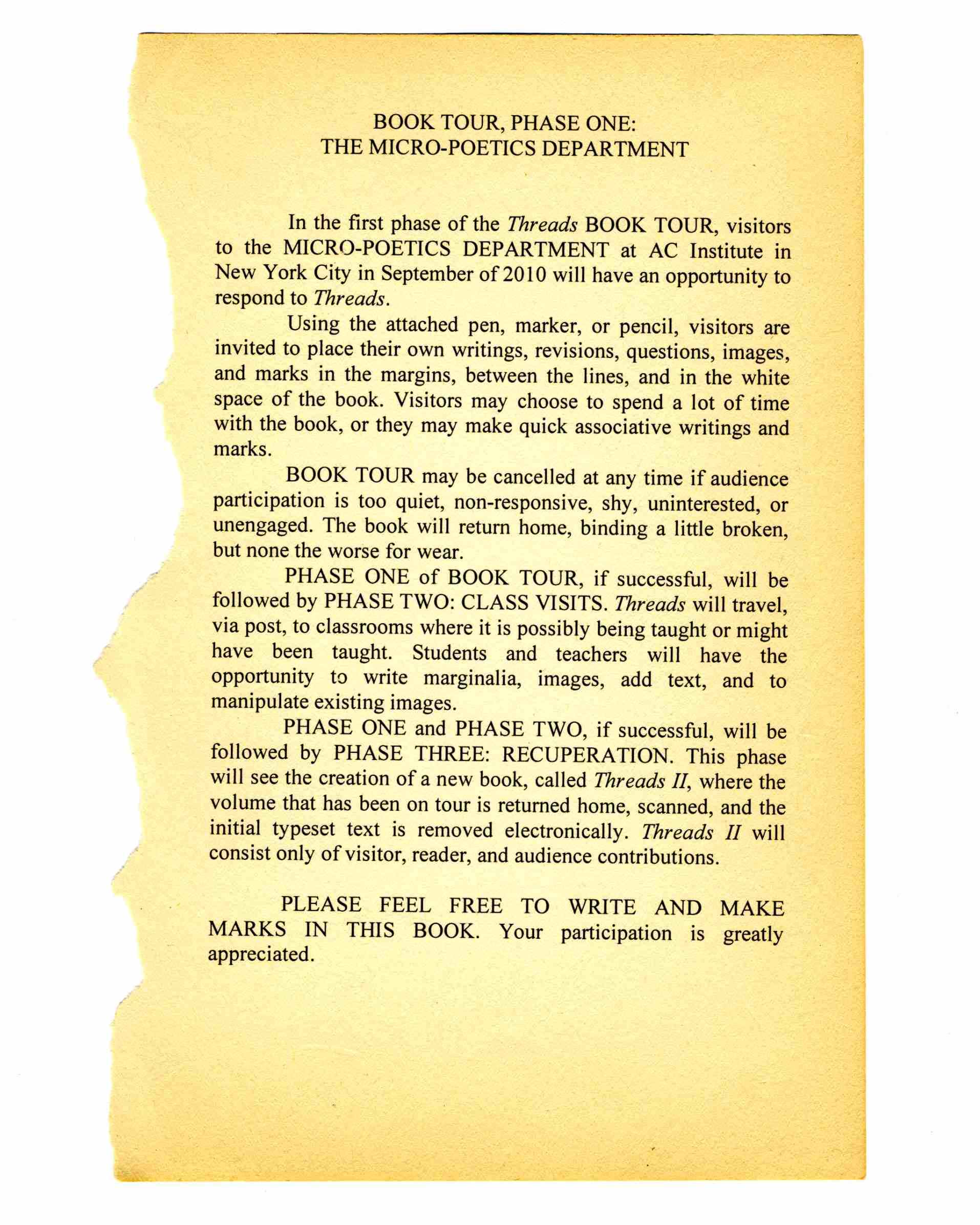
Jill has also contributed an installation work, that will be present in the space throughout the exhibition, which runs from Sep 9- October 16th. This invites reworkings to her book THREADS, according to the following score:

More about Jill’s work can be found on her website here, which documents both her own written and visual work and that of her small press, Sona Books. Her book TORCHWOOD is published by Shearsman books. Recent projects include the unfolding “text-image work-in-progess” LABOR, excerpts from which can be seen in PEEP/SHOW and Critiphoria

A correspondence with Cecilia Vicuna, part of the Letters to Poets project, can be seen here

More information on The Department of Micro-Poetics can be seen here.  Future residencies will include Kai Fierle-Hedrick and Rachel Zolf, and Paolo Javier.  More info to follow.

WRITING/ EXHIBITION/ PUBLICATION: FIVE MONTH LONG PROJECTS (AND A SECRET PERFORMANCE INSTALLING MATT DALBY’S VISUAL POEM BOXES)

In Uncategorized on September 4, 2010 at 10:32 am

Márton Koppány, Csend (Silence), from Endgames (Otoliths, 2008)


WRITING/EXHIBITION/PUBLICATION began last night at The Pigeon Wing ,and the opening featured readings by Julia Calver, Tamarin Norwood, myself (reading a text by Helen Kaplinsky) and Press Free Press. Pippa Koszerek was also documenting the event in shorthand. 

All of these artists have projects unfolding throughout the month. Here are short statements by each artist on their project, followed by a coda on the “secret performance” of installing Matt Dalby’s Visual Poem Boxes before last night’s opening (and a statement by Matt on the project):

Julia Calver

SUNBEAM and FOREST exist inside an interminable argument which takes place at the level of the forest floor. They argue over who forms the ultimate frame for their ongoing dialogue. This work switches on and off through various iterations as SUNBEAM slips into periods of silence and then ‘reawakens’ in new ideas. Performances throughout the exhibition; texts in the space to take away.

Pippa Koszerek

Inoperative Minutes. In the two weeks leading up to the opening of WRITING/EXHIBITION/PUBLICATION Pippa Koszerek will intensively study Shorthand from notes passed on to her by secretarial support staff during her recent residency in Dundee. In an act of public/private recording Pippa will act as the sole documenter of the opening reading/performance event taking place at the Pigeon Wing on 3 September. The resulting notes will be displayed in their original form throughout the month for visitors to decode and re-interpret.

During this month Pippa will be concurrently taking up her acting role as Secretary of the Dickens Museum as part of the three month Island Projects exhibition Beyond the Dustheaps where part of her position will include the exploration, study of and adaptation of Dickens journalistic use of Gurney’s Shorthand system.

Considering both secretarial and journalistic uses of shorthand and the latent potential of the space between notes and official records, Pippa will participate in The Festival of Nearly Invisible Publishing, undertaking a three day residency at the Pigeon Wing in the first weekend of October culminating in a presentation of her findings for the approval of Pigeon Wing visitors.

Helen Kaplinsky

The text which I read last night was entitled Script for the Initiate which Helen describes as follows:

Script for the Initiate. A script will be read on the opening night of the exhibition by writer and curator David Berridge. The text has been collaged from multiple press releases for exhibitions seen by the artist over the past year.

Her project throughout the month is a collaboration with Hammam  Aldouri:

The Artists Assistant: Acts of Obedience (Nebulous Readings). Premised upon a contractual agreement, this collaborative work sees the artist employ an assistant who is granted conceptual authority. For the period of the exhibition the assistant will give instructions to the artist. In this case the assistant will task the artist each week to read a given text in gallery space. These readings will not be announced but the scripts will be available to view, alongside the contract which binds the collaboration.

Tamarin Norwood

I want to look at writing in terms of ‘writing into existence’, and specifically in terms of writing not approaching its object but rather pushing it away, and instead approaching a represented version of that object which exists only because the representation writes it into existence. In this context, the prospect of ‘writing live’ presents contradictions I would like to explore both in writing and through a video intervention into the space. By intervening in the ‘liveness’ of the writing residency, I hope to present and contextualize some of the productive contradictions that arise in the practice of live and site-specific writing. 

Press Free Press

Press free press present A TIME FOR WORK, a month-long durational activity.  Within the space, they mark their non-space. This is their office. Two workers will operate under conditions of increased and decreased resistance, navigated by voices communicating from outside the city. They will attempt to map the exhibition through the means at their disposal: by writing, processing and editing a document that exists in constant flux. 

press free press is a poetic collective: finding, constructing and demolishing language following the invitation of language poets and performance artists; writing language that is poetry or performing poetry that is language.  

The rota for A TIME FOR WORK can be seen here

*

Installing Matt Dalby's Visual Poem Boxes at The Pigeon Wing, Sep 3, 2010


One other “secret performance” that took place yesterday was the installation of Matt Dalby’s Visual Poem Boxes. Matt’s instructions on installing the boxes had indicated:

The boxes should be distributed in small clusters of perhaps no more than three of each  size in locations where they may not be immediately obvious. They should perhaps seem to be incidental to larger works around them.

So when the show was installed I opened the box containing 18 6cm x 6cm boxes and wandered the space deciding where to place them in accordance with this instruction. 


Matt Dalby, Mill 24 Visual Poems, May 2010


A smaller set of 3cm x 3cm boxes are also part of DEPARTMENT OF MICRO-POETICS project at the AC Institute, New York (where the curators of the space will conduct a similar performance of installation) and for this context Matt wrote the following statement about the project:   

The visual poem boxes grew out of a series of visual poems. The visual poem boxes grew out of card constructions. The visual poem boxes grew out of a collection of street cutlery.

The visual poems were created in ink on paper and derived from letter forms. Derived from ascemic writing. Derived from Chinese characters. Derived from Caroline Bergvall’s Plessjør.

Caroline Bergvall’s earlier book Fig provided Matt with a first glimpse of innovative poetry at the beginning of 2008.  His first experiments were in visual poetry and were unsuccessful. Most of the next year was spent concentrating on sound poetry.

Plessjør provided a clue to approaching visual poetry in a more physical way. The boxes originate with an earlier project to construct card forms with otherwise conventional poetry covering the faces.

The construction project was revived as a way to present street cutlery. That is abandoned cutlery collected from the street. 

Critical discussions of work with friends, the work of a friend who had cut a deep slash in the pages of a book led to the decision to transfer the visual poems to boxes, to cut them from one face of each box. 

The boxes are absences and ambiguities. The letter forms, the reasons for choosing the letter forms, the possibility of the letter forms constituting part of a word or utterance, any mark on paper recognizable as print is missing. 

The visual poems are absences. The space inside the boxes is absence. The darkness inside the boxes mimics ink. It is ambiguous if the visual poems are cut or drawn.

There is tension between the handmade and the manufactured. 

The visual poems they come from are made by hand. The boxes are made by hand. The visual poems on the boxes are cut by hand. But it is not apparent how the boxes are made.

The boxes could be produced in volume with existing manufacturing techniques. The slow transformation of the visual poems by copying from sketches to inking from inked version to visual poem box would stop.

Without whom: Helen, Gary, Lou, Graham, Jen.

NOTEBOOK ON LANGUAGE IN THE LANDSCAPE

In Uncategorized on August 30, 2010 at 10:32 am

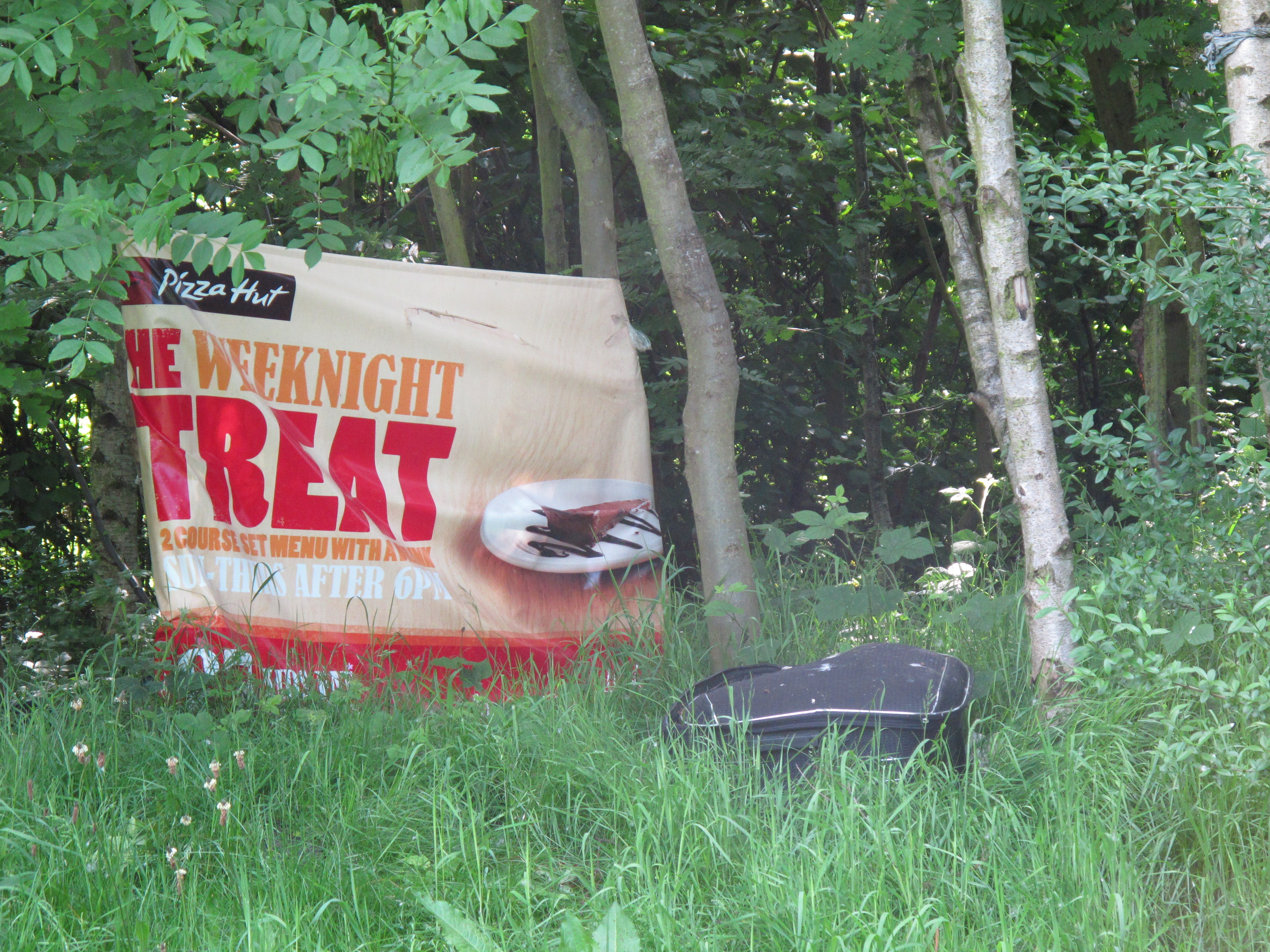
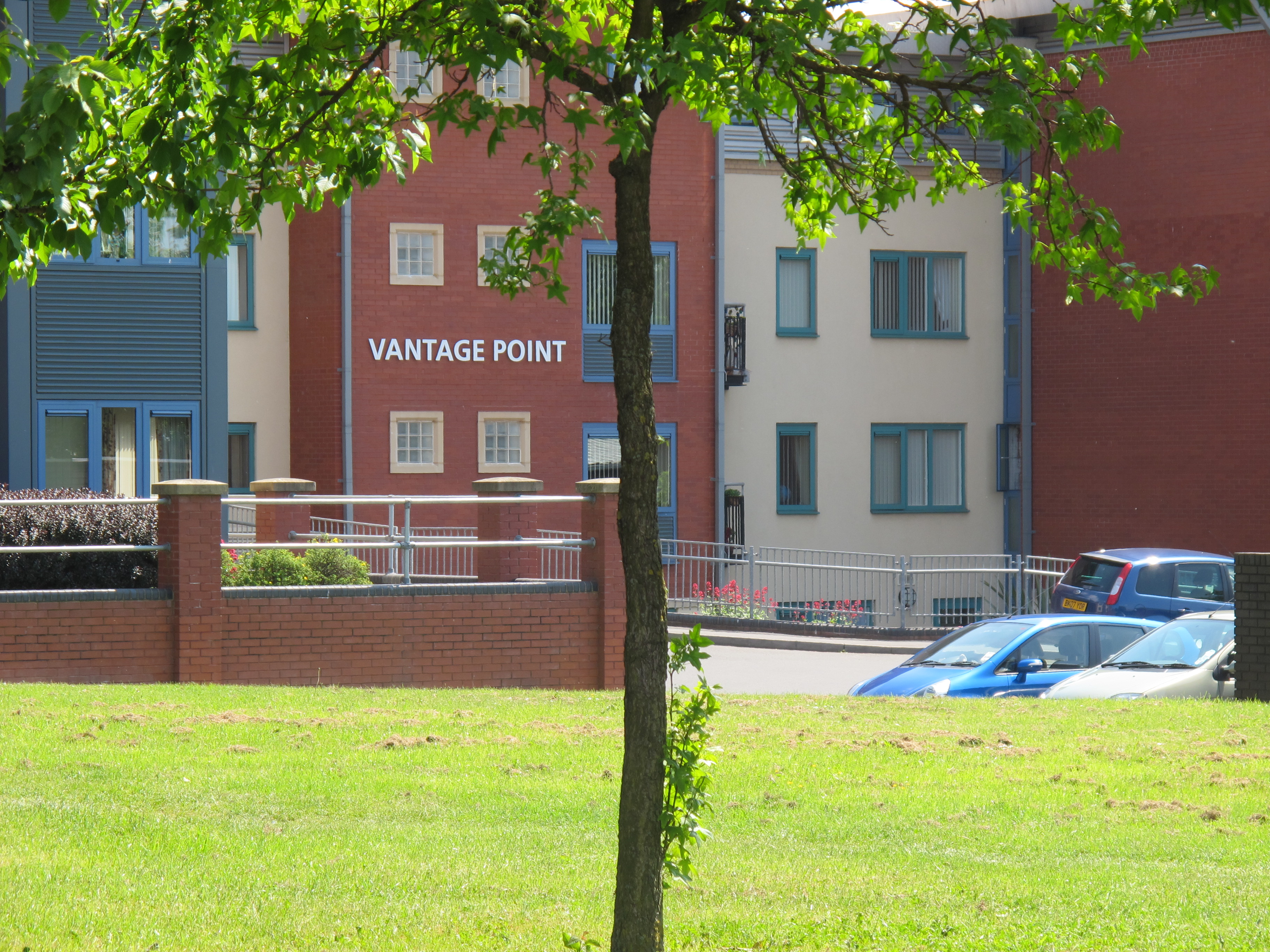
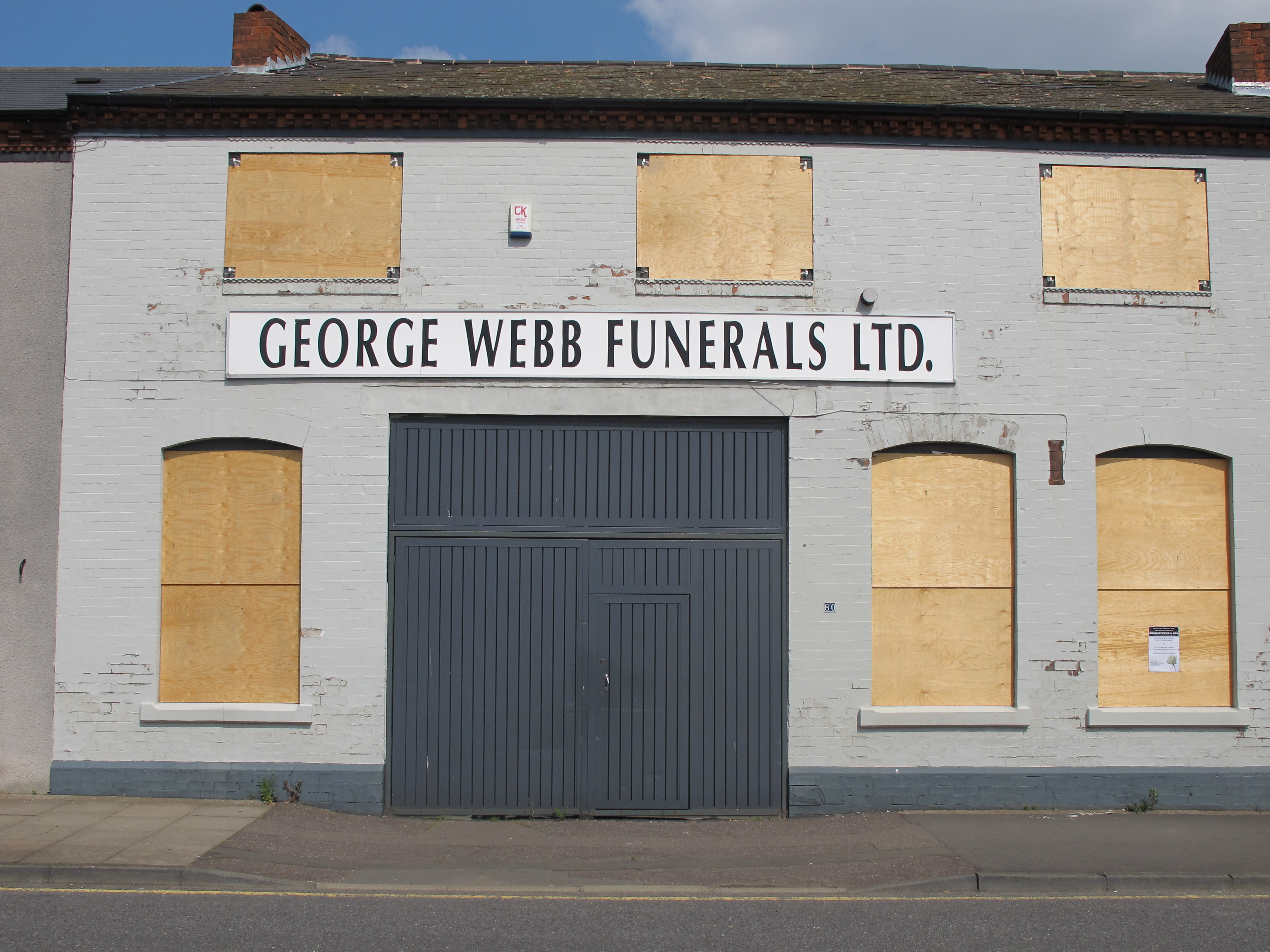
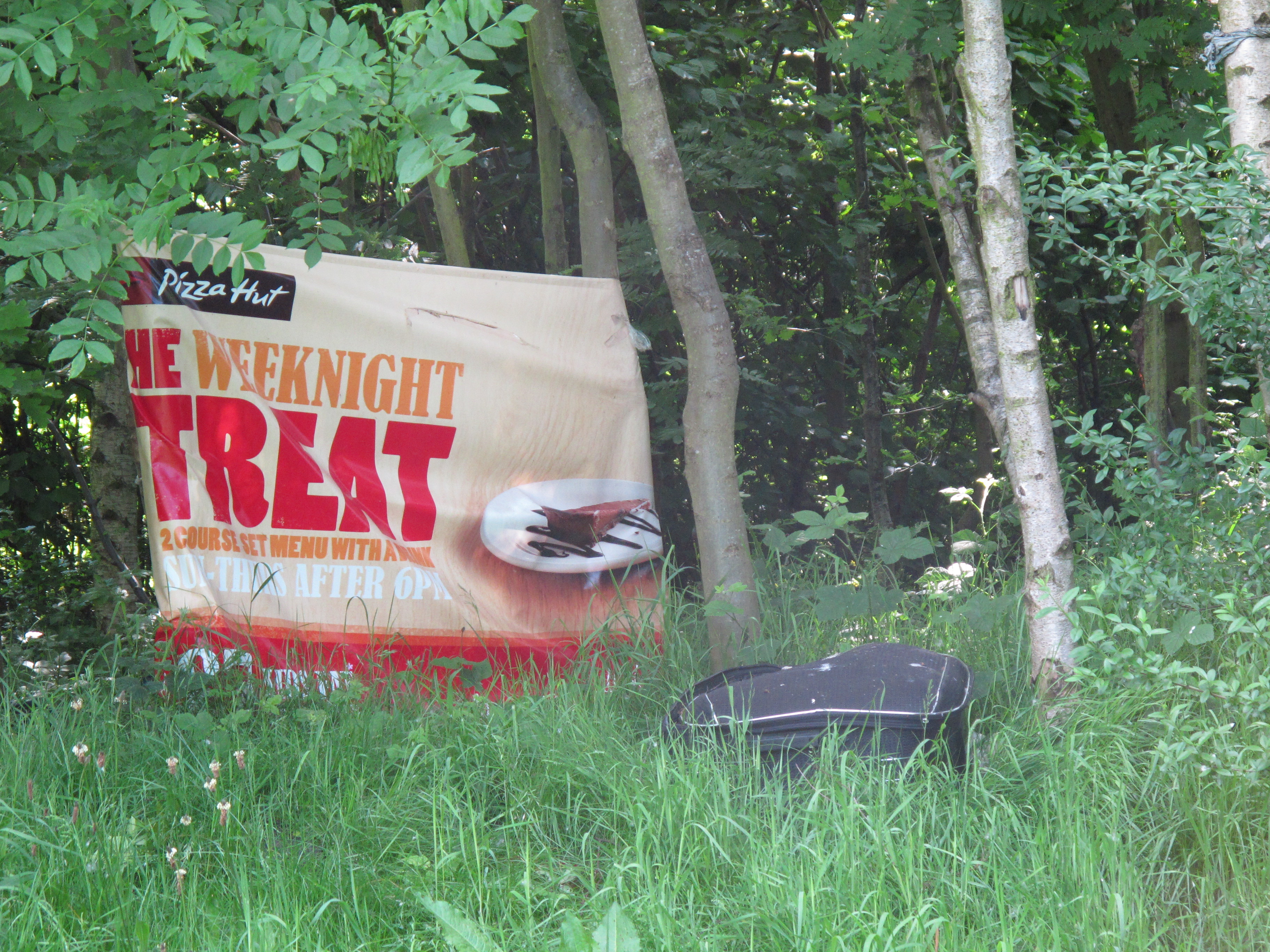
PHOTO: David Berridge, West Bromwich, June 4, 2010


In her essay “Language in the Landscape” Johanna Drucker observes:

“Language in the landscape, whether roads signs, billboards, or graffiti, shapes our relationship to the landscape in many ways. Language can be explicit (DO NOT ENTER), deceptive (THE ONLY REAL BEER), enigmatic (EDY’S CHARACTER CANDIES), confusing (PARKING THIS SIDE ONLY BETWEEN 4PM AND 6PM ON ALTERNATIVE TUESDAYS EXCEPT WHERE INDICATED), and elucidating (WINDOW 6 FOR TAX FORMS ONLY). In every case, written language represents an invisible conversation: someone is speaking, someone is being addressed, the message has a purpose, and the message is delivered in a particular way. Language is a symbolic system, full of implication. It allows us to discuss things that are not present. We cannot dismiss language in the landscape as auxiliary or duplicative. The relationship between linguistic statement and physical object influences every encounter we have with out environment.” 

Drucker’s essay, originally published in Landscape. Vol.28, no.1, 1984, offers a preliminary classification of language in the landscape. Drucker begins by focussing on the forms of written language itself:  “The forms of written language are twofold: first, the visible features of the method of production, such as the style of typography or calligraphy, and medium employed; second the forms of the language per se, such as current slang, obsolete jargon, newly coined words, and unconventional spelling. Form affects meaning.” She then considers language in the landscape by means of the following categories:

Information

Beyond Information

Instructive Language

Language as Advertisement

Language as Identity

Language as Evidence

Language Creates Speculation

Language as Edification

Language as Context

Drucker’s comments on this final category also serve as the essay’s conclusion. They relate, too, to the photographs above, which were taken on walks around West Bromwich on June 4 2010, as part of my residency at the Black Country  Creative Advantage. My written response to the language in the landscape can be seen here. As Drucker observes:

“Landscape serves as the context for the language in it. Written language does not simply identify objects in the landscape. Language changes our perception of the very situation in which it acquires meaning. As we observe words in the landscape, they charge and activate the environment, sometimes undermining, sometimes reinforcing our perceptions. For us, language is full of culture and history, but it is also full of ambiguity and enigma. Because it is a set of symbols we use to invoke concepts, we may  find it divorced from the very objects it aims to identify, posing the issues of definition and identity as distinct from the material in which they are embodied.” 

SOURCES: Johanna Drucker, “Language in the Landscape” in Figuring the Word: Essays on Books, Writing and Visual Poetics (Granary Books, New York City, 1998), 90-99.

GET A FREE POT OF COLESLAW: INVESTIGATIVE POETICS OF WEST BROMWICH NOW PUBLISHED

In Uncategorized on August 29, 2010 at 10:15 am

In June I spent two days in West Bromwich as a writer in residence with the Black Country Creative Advantage. Some notes on the origins of this project, particularly thinking through  and around ideas and practices of INVESTIGATIVE POETICS can be seen here.

During the residency it was decided that I would write an issue of the BCCA CREATIVE REPORT newsletter, whose format comprises a 20 page A4 publication stapled into cardboard covers. 

My text has now been published as CREATIVE REPORT #2. It can be downloaded as a PDF here. If you are in West Bromwich then you can pick up a hard copy at the BCCA stall  (stall 42, New Market Hall, King’s Square) or at the following locations:

African Caribbean Resource Centre; Charlemont Community Centre, Beaconview Road; The Fox & Hounds; Guru Nanak Community Centre; Hill Top Library; Kenrick Park Community Centre, Glover Street; Lodge Road Community Centre, Lodge Road; Sandwell College Student Association; Stone Cross Library; The Vine; Yemeni Association; YMCA; Wood Lane Community Centre, Greets Green.

This project offered the chance to think through a whole set of questions about relationships of writing to site, and the role writers can play in urban regeneration projects. 

What kind of intervention could I usefully make in the time I had been given? What did it mean to focus on my own writing and poetics as a way to explore a location and issue with which I was unfamiliar? 

I decided to focus on the role of written language, encountered, both in the streets and in the array of printed documents on the BCCA stall in which the debates of urban regeneration are partially conducted. I read through this material – how exactly such documents are read or not  was one of the questions that interested me – and gathered material on a series of field trips throughout West Bromwich. 

The resultant 20 page document includes notes, micro-essays, one word poems, poems awaiting development, pages cleared like areas awaiting development, street notations, quotations, scripts for plays and an opera, along with resources/ quotations from a range of other art projects/ poets/ thinkers….  unfolding the intention of an object of use, provocation and entertainment….

Language in the urban environment, West Bromwich, June 4, 2010


BCCA have commissioned the actor/writer Suzan Spence to record her own one person version of the text. I’m interested how one voice could approach the polyvocality of the text, assembling and re-assembling its components in each read through. When Suzan contacted me by email about her project I replied:

…I think of the text as batch of material/ ideas for use. I think some bits of it are likely to be more suitable read aloud than others, and perhaps a structure for the recording can be found by moving backwards and forwards in the text, following your interest. 

One thing that interests me about this kind of script is that the normal categories get confused – so anything could be stage directions, dialogue, notes and so on. Anything could be read aloud or not. 

In projects since – such as the serial writing project I am doing for BEYOND THE DUSTHEAPS exhibition – I have continued to think through INVESTIGATIVE POETICS, both as a particular way of working with language and within a broader realm of performative gesture and forms of social relation. 

OTHER SOURCES: Sat in my room in the West Bromwich Premier Inn I also watched the video of Laura Elricks’s STALK  – see here – and read David Wolach’s essay on the project and its “poetics of spatial practice” in JACKET magazine here. Also valuable here was Elrick’s “Poetry,Ecology and the Re-Appropriation of Lived Space, published in Brooklyn Rail here

Finally, whilst all this reading relates to a distinct constellation of concerns, wanting last night to list the books that have recently informed my unfolding sense of what is at stake in an INVESTIGATIVE POETICS produced the following diverse range of titles:

Falke Pisano, FIGURES OF SPEECH (JRP Ringier, 2010).

Geof Huth, NTST: The Collected Pwoermds of Geof Huth (If P Then Q, 2010).

Raqs Media Collective, SEEPAGE (Sternberg Press, 2010).
Viktor Shklovsky, Knight’s Move (Dalkey Archive Press, 2005 [1923]).

Pierre Guyotat, COMA (Semiotext(e), 2010).
Sean  Reynolds and Robert Dewhurst, WILD ORCHIDS: HANNAH WEINER (Issue 2, 2010).
Thanks to the BCCA curator, Monika Vykoukal, for her help and support on the project. Each issue of the CREATIVE REPORT takes for its cover an element of the West Bromwich city emblem. The full set of newsletters, published throughout 2010, will offer a symbolic, methodological, and literal reconstruction of this emblem ,and the urban realm it both visibly and invisibly delineates.

OPENING SOON: DEPARTMENT OF MICRO-POETICS at AC INSTITUTE, NEW YORK Sep 9- Oct 16 2010

In Uncategorized on August 28, 2010 at 10:12 pm


Emma Cocker, Field Proposal (2010)


THE DEPARTMENT OF MICRO- POETICS will be in long-distance residence at the  AC Institute, New York as part of Exchange Value (Sep 9-Oct 16 2010). Co-ordinated from London by VerySmallKitchen, the Department offers ongoing research into the histories and contemporary manifestations of  micro-poetic practices, conceived of both as a form of writing and a quality and practice of invitation, economy and relation.
For EXCHANGE VALUE the Department compiled an exhibition in the form of a box of ideas, scores, drawings, maps, lists, books and wall texts, sent from London to be installed by curators at the AC Institute space in New York.  

The Department currently includes projects by Rachel Lois Clapham, Emma Cocker, Matt Dalby, James Davies/ If P Then Q, The Festival of Nearly Invisible Publishing, Marianne Holm Hansen, Márton Koppány, Marit Muenzberg/ LemonMelon, Tamarin Norwood, Mary Paterson, Seekers of Lice and Mary Yacoob.  The DEPARTMENT is a working space and new works and texts will be added throughout the month, along with updates on the departments research. 

Marianne Holm Hansen, For The Record (2010)


The Department has also extended an invitation to New York based poets, editors, and artists to consider how they might make use of the Department as a work, exhibition and/or performance space. Residents are invited to make an intervention in the space for gallery visitors, and to have a correspondence (in any form) with the Department in London. New York Artists in residence include Kai Fierle-Hedrick and Rachel Zolf, Paolo Javier and Jill Magi. More information about their projects – including events, publications, installations and performances – will be available soon.

On gallery opening days, THE BULLETIN OF THE DEPARTMENT OF MICRO-POETICS will be published in London, emailed to the AC Institute and distributed in the space. Copies of the template will be available in the space for visitors to contribute their own issues of the bulletin, exploring an open model of publication and research, and how diverse forms of exchange and distribution can be represented in the gallery space. 

THE DEPARTMENT OF MICRO-POETICS participates in the possibilities and crisis of poetries non-monetary economy of gift exchange.  It is  curated/ Assembled by David Berridge/ VerySmallKitchen. For more information contact David at verysmallkitchen@gmail.com. More to follow….

WRITING/ EXHIBITION/ PUBLICATION: VerySmallKitchen at THE PIGEON WING 3 Sep – 3 Oct 2010

In Uncategorized on August 15, 2010 at 8:41 am


Márton Koppány, The Secret, from Endgames (Otoliths, 2008)


WRITING/EXHIBITION/PUBLICATION

Opening Event Friday 3rd September 6-9pm.

Exhibition/ reading room open every Fri-Sun 12-5, or by appointment.

See The Pigeon Wing website  for new additions and full program of events.

For their residency at The Pigeon Wing, VerySmallKitchen presents a month long exploration of how writing moves (or not) between the locations of WRITING/ EXHIBITION/ PUBLICATION.  Throughout September The Pigeon Wing will be both work space and exhibition,  with a program of exhibitions, readings, performances, research projects, libraries, and screenings, exploring an abundance of forms and practices at the interface of writing and art practices.  

Notes, essays, scripts, scores, propositions, live writings, scrawls, appropriations, assemblings and dissemblings, accretive structures and/or deletions,  are some of the strategies to be explored by a range of contemporary practitioners from the UK, Hungary, Ireland, the US and elsewhere. Throughout the exhibition, the gallery will also provide a focal point for the THE FESTIVAL OF NEARLY INVISIBLE PUBLISHING, a programme of self-organised events happening throughout the world, evidence of which are submitted to the gallery for archive and display.

The unfolding exhibition is organised around four key areas: WRITING LIVE, THE DEPARTMENT OF MICRO-POETICS, EXHIBITION/ PUBLICATION, and ASSEMBLING (the last presenting a remarkable exhibition-within-an-exhibition from Franticham/ Red Fox Press’s unique archive of rare assembling publications from 1970-2010).  Whilst many artists have created texts and installations specifically for the space, others will produce work that unfolds at each of the live events, whilst other scores and contractual arrangements unfold at times not publicly announced.  As part of Deptford X a final weekend will see artists working in the space leading up to a final performance event and feast. 
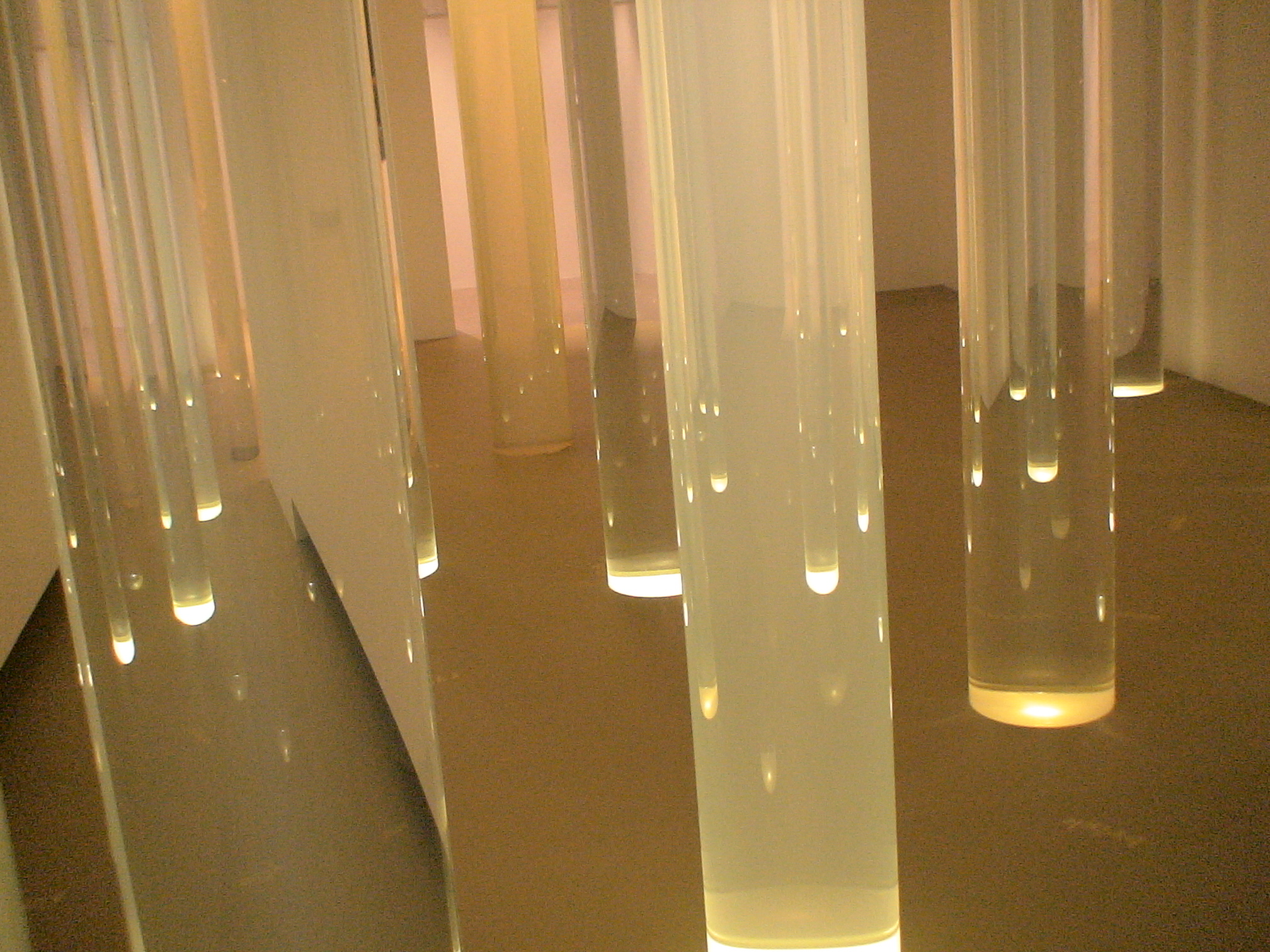
See the website for full timetable of events.  As well as opening and closing performance events, the schedule currently includes: Ignite and Reprise: Films by Matthew MacKissack; LemonMelon Publishing Seminar; DISSASSEMBLING CANNON by Phil Baber; Aphorism as Art Practice seminar; conversations with Simon Cutts and Francis van Maele; and month long writing residencies from Press Free Press, Julia Calver, Hammam Aldouri (assistanted by Helen Kaplinsky) and Tamarin Norwood.  

THE PIGEON WING also operates an open house/ reading room on Friday, Saturday and Sunday.  Individuals and groups whose work relates to the research topics of the exhibition are invited to present their work, join us for an informal conversation, come read and consult the library and other materials.  Projects unable to make it the gallery at these times, may submit materials online. Viewing by appointment outside these times. 

CONTRIBUTING ARTISTS:

Hammam Aldouri

Phil Baber

Bagazine

Julia Calver

Maurice Carlin

Anne Charnock

Rachel Lois Clapham

Emma Cocker

Simon Cutts

Matt Dalby

James Davies

Sonia Dermience

Karen Di Franco

Marianne Holm Hansen

Sarah Jacobs

Joy as Tiresome Vandalism

The Knives, Forks and Spoons Press

Helen Kaplinsky

Mirja Koponen

Márton Koppány

Freek Lomme/ Onomatopee

Matthew MacKisack

Marit Muenzberg/ LemonMelon 

Tamarin Norwood

Pippa Koszerek

Mary Paterson

Press Free Press

Red Fox Press

Colin Sackett

Seekers of Lice 

Mary Yacoob

WRITING/EXHIBITION/PUBLICATION is curated by David Berridge.  The event includes the FESTIVAL OF NEARLY INVISIBLE PUBLISHING, open for submissions throughout the month. 

EVENTS

Fri 3rd September  6.30-9.30 OPENNING: WRITING/EXHIBITION/PUBLICATION

Performances by Julia Calver, Press Free Press, Helen Kaplinsky, Tamarin Norwood

Fri 17th September  7pm Matthew MacKisack: Initial and Reprise. Three films.  

Sun 19th  September 2pm Aphorism as Art Practice Sunday

Sat 25th September  2pm LemonMelon Publishing Seminar with Marit Muenzberg  and James Davies,  including Phil Baber’s performance DISASSEMBLING CANNON

Sat 2nd- Sun 3rd October LIVE WRITING

Artists in residence in the space throughout the weekend include  Matt Dalby, Rachel Lois Clapham, Marianne Holm Hansen, and Press Free Press.

Sun 3rd October  7pm closing meal/ performance event

Performances include Julia Calver, Matt Dalby, James Davies, Marianne Holm Hansen, Press Free Press, and Helen Kaplinksy. Plus- 

THE FESTIVAL OF NEARLY INVISIBLE PUBLISHING meal by Mada Fabiancyk.

NOW ONLINE: IT WAS RUNNING INTERFERENCE: ON POETRY AND (ART-) WRITING

In Uncategorized on August 3, 2010 at 11:17 am


Photo: Eileen Myles


My essay  IT WAS RUNNING INTEREFRENCE: POETRY AND (ART-)  WRITING is now online in the latest issue of Jacket, edited by Pam Brown and John Tranter. Read the full article here.  

The essay began as a review of Eileen MylesThe Importance of Being Iceland: Travel Essays in Art (Semiotext(e) 2009). Written between 1983 and 2008, the book offers powerful testimony of how poetry  and arts practices relate to one another, both in Myles own practice and in the New York arts scene of which she is a part.

Myles’ subjects include the New York School poet art-reviewers such as James Schuyler, through Robert Smithson and Carl Andre – and a generation of sculptors whose practices are in many ways formed around the material of language – to more recent art-poetry fusions in the work of, say, Kenneth Goldsmith and Jenny Holzer.

Myles writes of her involvement in several projects organised by Hans Ulrich Obrist, also responsible for last years Poetry Marathon at the Serpentine Gallery. I had been thinking about Caroline Bergvall’s critical comments on the marathon – in which she participated.  Starting with Myles and Bergvall’s thoughts, the essay became a broader consideration of the role of poetry and language in historical and current arts practice.

The essay also includes the publication of two photos by Myles, which are also reproduced here. For a fascinating take on many of the issues raised in this essay, see the wonderful Laura Moriarty edited anthology of A Tonalist Poetry, also in the current issue of JACKET.   

The essay begins: 

It’s almost too much, as a starting point: William Carlos Williams delivering Robert Smithson in his role as GP, in Passaic, New Jersey, 1938. If genealogies of art and literary history are usually less direct, Williams-Smithson remains a useful starting part for a history of art-poetry connection, both for its bodily immediacy and as metaphor. The New York School and the conceptualists would be key points on most narratives, and Williams-Smithson are but a step away, not central parts of either narrative, central to others, connections back and forth and askance. Such off-steps are a key part of this story.

One contemporary manifestation of this relationship was the Serpentine Gallery’s Poetry Marathon in October 2009. The event was criticized by one participant, Caroline Bergval, who concluded that “whilst amazing… the pink elephant in this open-air enclosure was language itself. Or rather, a fear of language, a fear about not controlling a knowledge of language that demands its conscious, careful, and studied semiotic and semantic manipulations across a whole range of environments.” Another participant, Eileen Myles, seems more relaxed, testifying to a profound uncertainty principle underlying the relationship of art and poetry on both aesthetic and infrastructural levels:

But when the event was over it was clear that nobody really knew what a poem was but the Serpentine was behind it, this poem thing. It was a usefully baggy approach to the meaning of the poem thing, making its existence known to the world, again. It seemed the art world was wavering towards us in some watery way. Splashing and moving their flippers and making bubbles. All we had to do as poets was accept this love. And I do. I think our acceptance of this unknowing love is the pretext for poetry’s new relationship to art in the 21st c. It’s all around us. It’s not us around them. Trying to slip our tentacles into their party. 

Myles’ relationship to the art world’s octopus seduction technique is unfolded throughout The Importance of Being Iceland: Travel Essays in Art, a collected essays in which the art-poetry question, amongst others, unfolds through a series of encounters, with artists (the work and the person), places (mostly New York, Provincetown, and Iceland), and with her own mind-body and its ongoing process of expression into language. The essays here were written between 1983 and 2008, then collected together — through another recent art-poetry interface — when Myles received a grant in the Warhol/ Creative Capital foundation’s first art writing cycle. It was through this that the long title essay was written. Ditch Smithson-Williams’ umbilical moment, New Jersey, 1938. Iceland is where the artists and the poets really combine.

It was from Myles I got the Smithson-Williams story. In her 2000 essay on Robert Smithson’s The Collected Writings, Myles writes:

… all of these guys were writing [Smithson, Judd, Carl Andre, Sol LeWitt], words were the ground of the work, even more than the material it was “made of,” and seeing these writings explains a missing link in how we wound up with the poetry and art culture of today. No one who knows the 70s really has to ask where Language poetry comes from. It was part of the work. Language was sculpture and vice versa.

Extracted, some of this paragraph appears like Sol LeWitt’s much anthologized “Sentences on Conceptual Art”, notably Words were the ground of the work and Language was sculpture and vice versa. But the tradition of art and poetry Myles explores doesn’t have that (even retrospective) certainty. I also found myself needing to spoil the party right away with some more problematic art and poetry examples. Like Lawrence Weiner’s oft repeated declaration that poetry is not what he is doing; or Carl Andre avoiding the term. A necessary cautionary note, then, as texts by Andre, Acconci, Graham and others continue to be re-published.

Photo: Eileen Myles


Maybe, following Myles, I should splash and make bubbles. For many contemporary practitioners — and archival projects such as Ubuweb — these histories are part of a broader gathering of experimental language practices. Perhaps, I imagine Myles saying cheerfully, I should lighten up and focus instead on what can be learned from Smithson’s writing style:

Smithson’s method of writing is unique — where a quickly engineered set of associations begins to build language as you would build buildings, a quick suggestion that “the skyline is a sentence.” Smithson urges “ why not reconstruct one’s inability to see? Let’s give passing shape to the unconsolidated views around a work of art, and develop a type of anti- vision or negative seeing.” Writing is such blindness, I think he meant. 

If Smithson’s art writing is one founding moment in the art-poetry relationship as we might conceive of it today, then poets writing art criticism is another. This, too, is a fraught history. After all, Smithson’s generation, and the criticism of, say, Artforum, is in contempt of all the poets earning a few pounds writing for Art News and, more broadly, the subjectivity of their response (and prose)…

Continue reading here.