verysmallkitchen

Posts Tagged ‘VSK project’

VSK PROJECT: JILL MAGI an extract from SLOT

In Uncategorized on September 6, 2011 at 5:02 pm


then I had news        people were washed away they say

water went away they say            fog was not complete


they say your eyes do not mistakes

people were washed away


from the nothing

the increase


from the tile the paver the sacred the numinous

to gather from his hairbrush the news


the fork the wire the sacred small papers of rain

the beam the cutter was not they say


from the nothing

the increase the many the faded the washed away


your eyes do not make mistakes

they say

“On my way to Hiroshima,” wrote Noguchi, “where I was to propose the design of two bridges for the Peace Park, I stopped by the city of Gifu to watch the cormorant fishing.”


How far beneath and silently?


“A low wall, perhaps four feet in height, surrounds upturned video monitors emitting blue light. This modesty screen is intended to prevent small children from watching the graphic and murderous scenes.”


“A clerestory, pronounced clearstory, is a high wall with a band of narrow windows along the very top.”


She wrote that disasters are revealers.


Which comfort do you seek, wringing out the sorrow previously held in order to make way for the new?


How much violence is an echo?


I await your reply, which I expect will be global-


Dear Flannel-board Story Activity:


Please help students compare their lives to the enslaved child.


Dear Charter of Rights and Freedoms: Welcome


to a dynamic opinion pulse


that illustrates the tensions of translating. Dear Lesson Plan:


watch digitally enlarged sentences scroll upward in a vertical polling chamber and feel the proof of it,


my craning neck. Dear Conspiracy: Take your opinion


and make me a city.


Dear Tower of Faces: I know nothing about you


except your collective status as victim. Archive: We are coping


with huge sets of historical data.


Visitors: Use your key


to record opinions immediately,


tally and present your pillar of thought, your architect, our father, your mark.


Sincerely yours, White Wall of Rescuers.


On the lowest right corner of the wall, I read the following instructions:


To see the real thing, no reconstructions, a student will make a diorama depicting history to the left, such as Anne Frank, and to the right of the register: black people in miniature, plus a squaw, another squaw,


to purchase to make a disaster event with feathers with beads with real –


We tell the world what the children draw for sale will save us.


Dear Venn Diagram:

Students will write a class story dealing with a slave who becomes free, using free-writing to express feelings, fast, without thinking, without crossing out, and preferably timed.


“Platforms will be built with seminal views to reconnect the visitor to the outside world.”


But visitor, where did you go?


A marble floor tile shifts


and in its loosened state I slip down into a basement

and there I meet Fred Wilson, mining the museum, saying:


“This situation in the world is not particularly worse than other moments. It just depends on who you are. It helps to diffuse the anxiety knowing that you’re in this continuum.”


He pulls paintings out of storage. He draws a line to that point.


“Despite red velvet linings, memories are like nettles that come back long after the first touch.”


“Whose memories?”


“I have a family,” answers the didactic.


from the nothing the increase

I make a space


between me and this room

what I feel of my old sadness


is a shining blue-like body

from the nothing to the increase


I reproduce myself endlessly

causing little figures


drawing thin lines

I break


with mourning

after the 13th day


Rough Guide to the USA

Let’s Go USA

Rough Guide to New York City


Regarding the Pain of Others by Susan Sontag

Lonely Planet USA


The Language of Inquiry and One Continuous Mistake hold bookmarks that read “Borders Books.”


A month after the event, the kind man told me to go and mourn the destroyed books. He unfurled the following blueprint:


To give a glass bowl.

Go into the forest and hang their clothes from trees.


To make a new entrance to the building.

Give everyone a new name.


So as to remember the ruin.

Leave a space in the new house undone –


Meanwhile, Peter Eisenman explains how he fought to keep names off the stones of the Berlin Holocaust memorial.


At the ceremony to mark the beginning of its construction, he stumbles: “I never at many moments thought we would build this and here it is.”


The project is delayed when the company commissioned to make an anti-graffiti coating for the stones is found to have also produced gas for Nazi extermination camps.


On the day that the memorial opens, an “unidentified youth” is photographed jumping from pillar to pillar.


Dear Documentary:

Catalogue this wood-rot, this moss

encroaching. Preserve the footprint.

Bar-code a furrowed brow.


Please slot

your next erosion event with us.


*


This is an extract from Jill Magi’s SLOT, forthcoming from Ugly Duckling Presse Dossier Series this fall.  Read the text as the author’s PDF here

Jill’s AUDIO LETTER TO DAVID, part of her SMALL TALK SMALL BOOKS residency for VerySmallKitchen’s DEPARTMENT OF MICRO-POETICS is here.


VSK RESIDENCY: PAUL ANTONY CARR: NATHANIEL’S PERPETUAL MOTION (2)

In Uncategorized on September 1, 2011 at 9:40 am


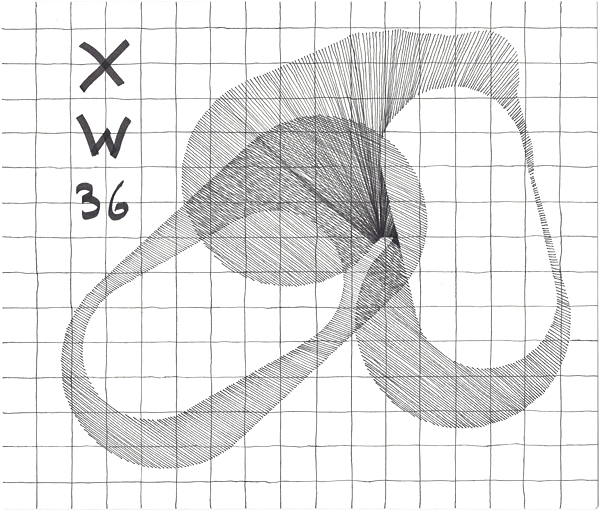
“The music gets slow quickly, and gets slower slowly.”

2011. Ink on paper. 8.5 x 7.25 in.


*


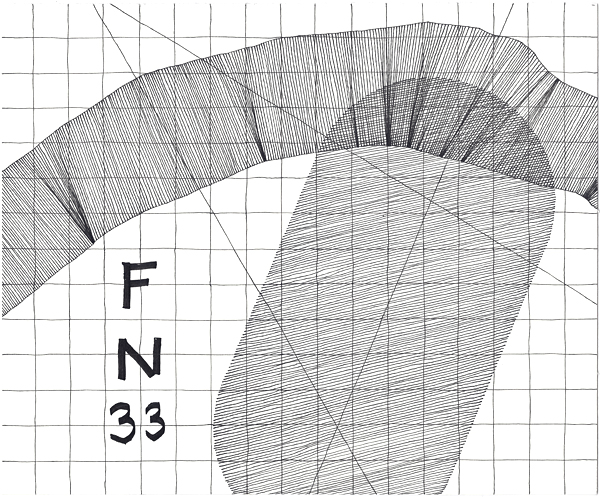
“The tune will not loop, but instead continue to play toward its unattainable termination while steadily reducing speed. Nathaniel attempts to achieve this by creating points on the sound file’s timeline and stretching them apart. The first point is a nanosecond from the start of the track. The second point is initially a nanosecond from the first point, but Nathaniel increases this distance to two nanoseconds. The distance continues to increase in ever larger proportions between each successive point. Eventually, there will be a distance between two points that is too long for Nathaniel to comprehend. Nathaniel refers to this as Segment X. Inconceivable is how much greater the length of the subsequent segment is to that of Segment X. Equally inconceivable is how far less the length of the preceding segment is to that of Segment X.”

2011. Ink on paper. 8.5 x 7 in.


*


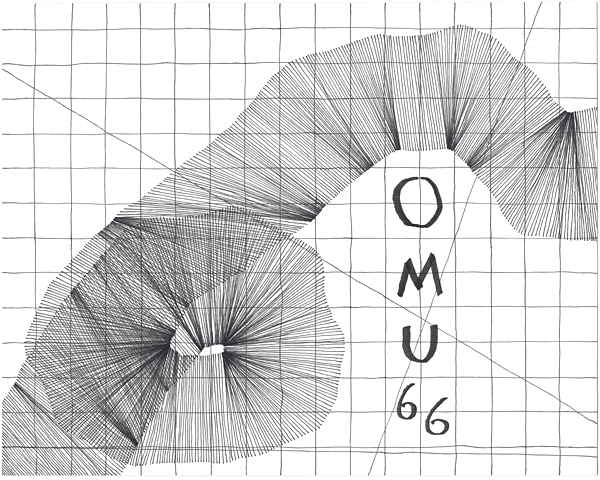
“After wasting several hours working on this musical project, Nathaniel realizes that there is no possibility of ever listening to a completed version of the track. For the music to become infinitely slower as playback progresses, it can never reach its end. To listen to the work in progress would be to listen to something both  incomplete and complete at the same time. The unfinished project has not accomplished what is intended of it, and yet it will play to a point of completion. The completed project has attained a goal, a conclusion, but an infinite repetition of technique is required of Nathaniel to enact the proposed design. To declare “done” is to quit the project. In all ways conceivable, the work can never be finished. To listen to it at any stage, no matter how close – or not close – to being what he wants it to be, is indicative of failure.”

2011. Ink on paper. 8.5 x 6.75 in.


*

This is the second post of Paul Antony Carr’s 3-month residency in the VerySmallKitchen. It follows Paul’s recent VSK Project here, which presented an aspect of his EXCERPTS project.

Nathaniel’s Perpetual Motion is a new strand of this project, and a series of image-text pairs will appear on VerySmallKitchen between now and October. See the first post of this residency  here.


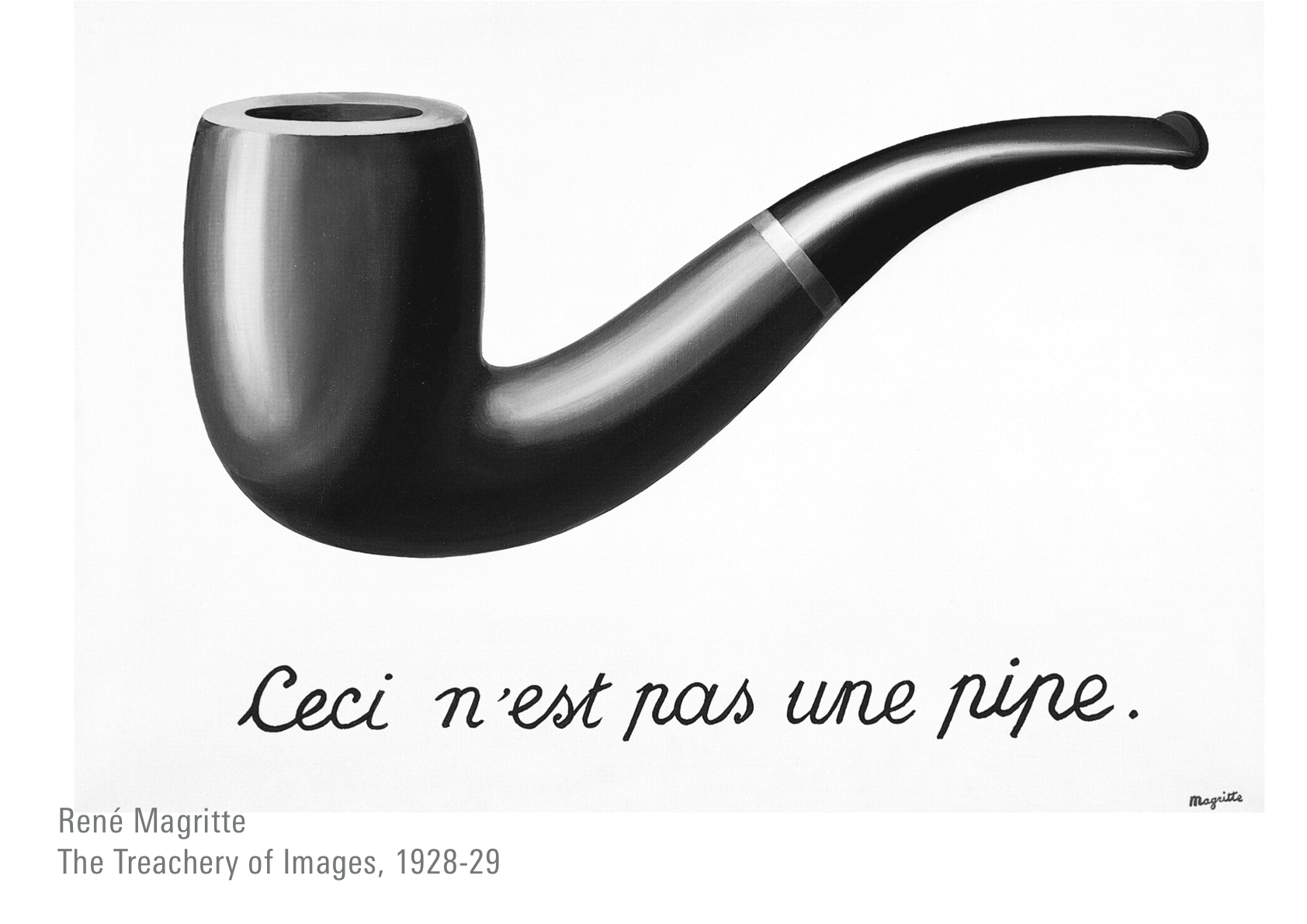
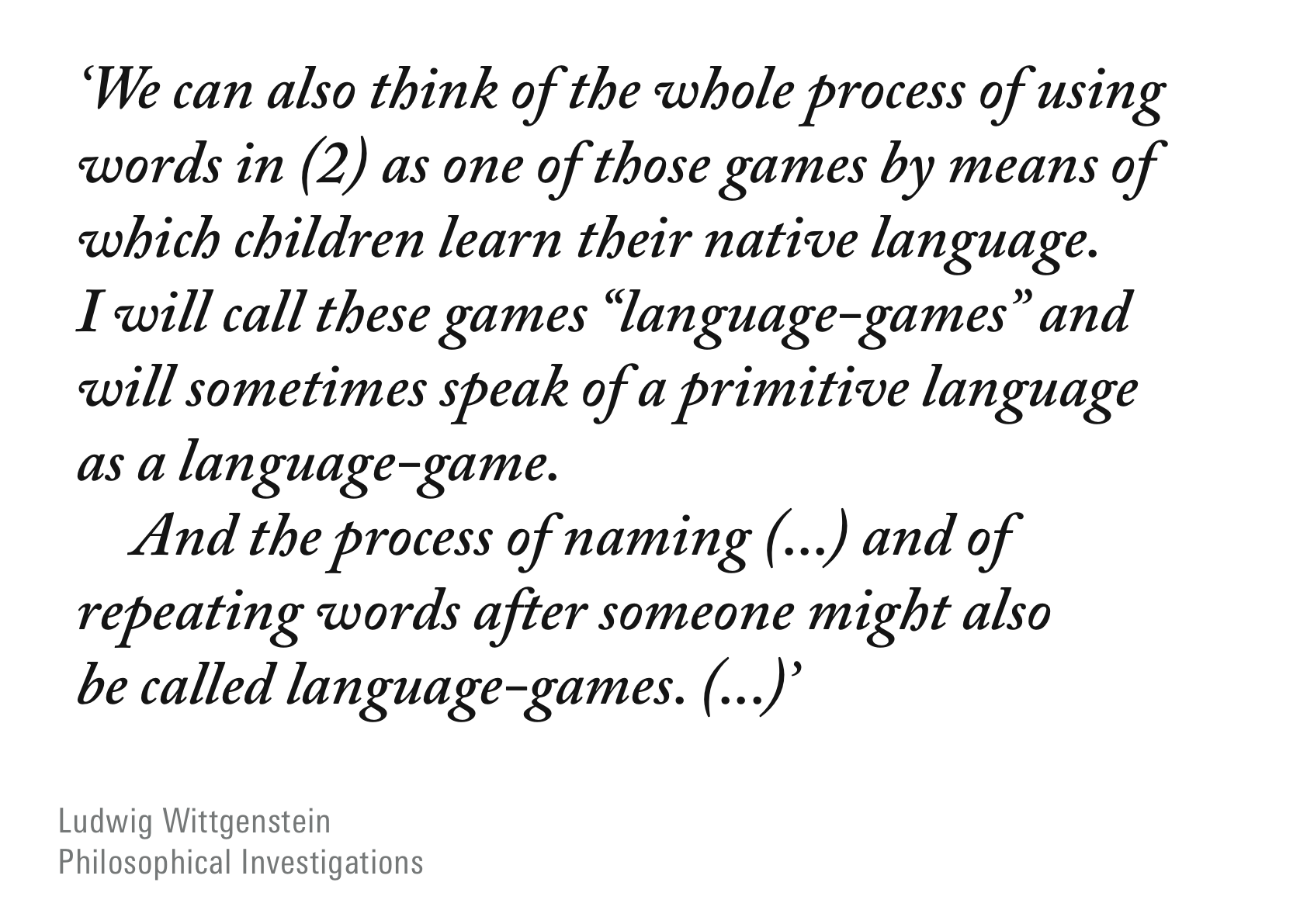
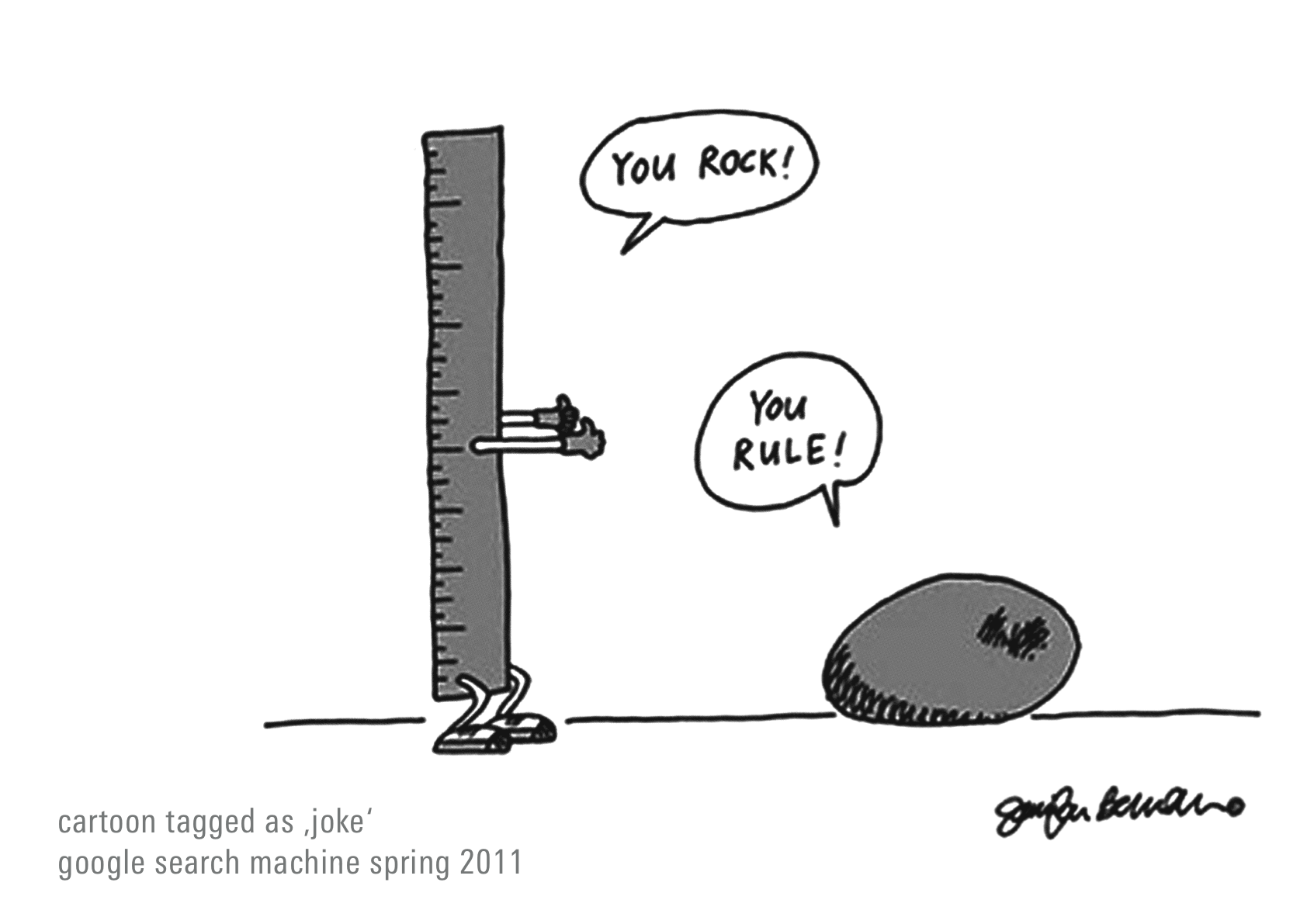
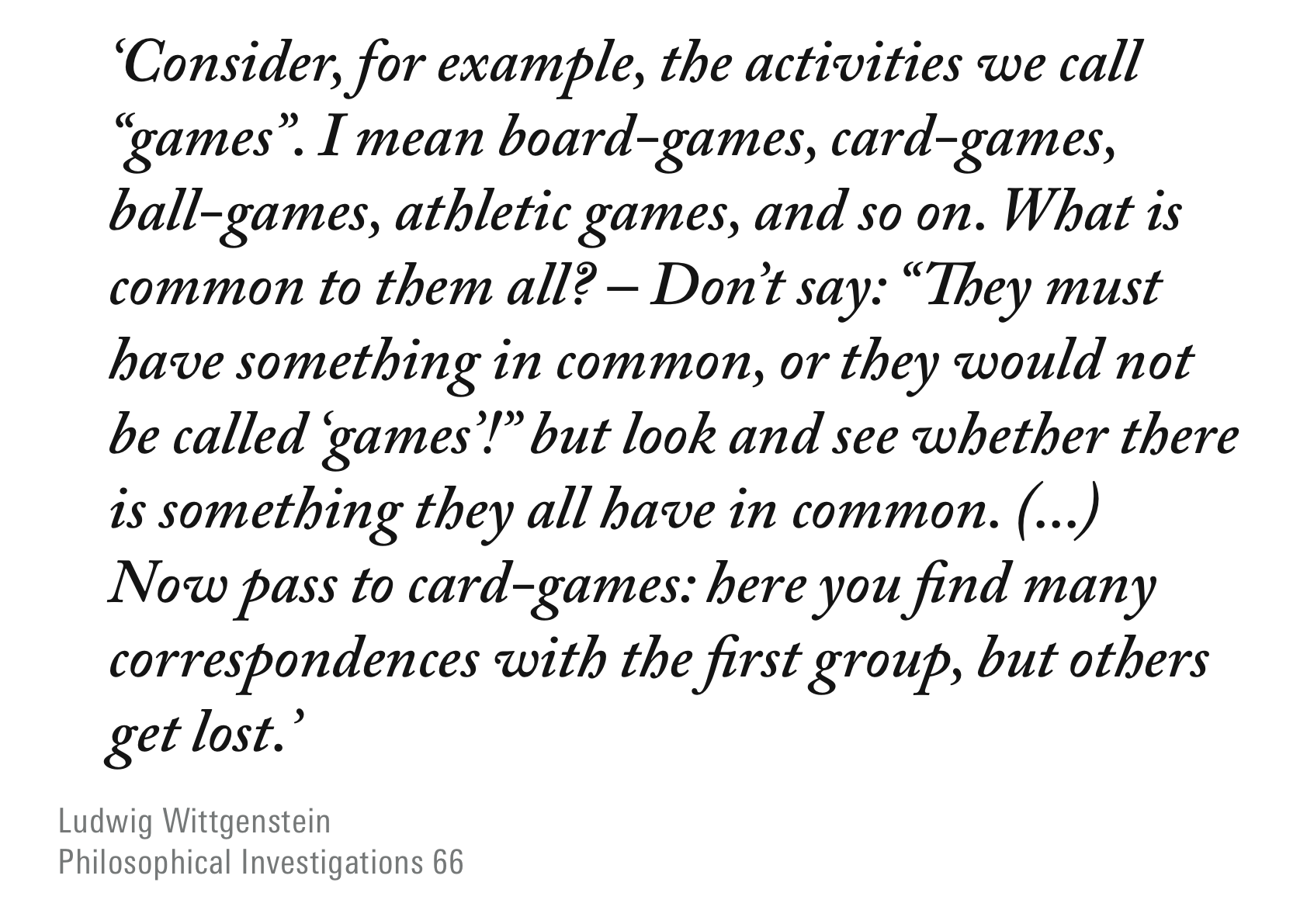
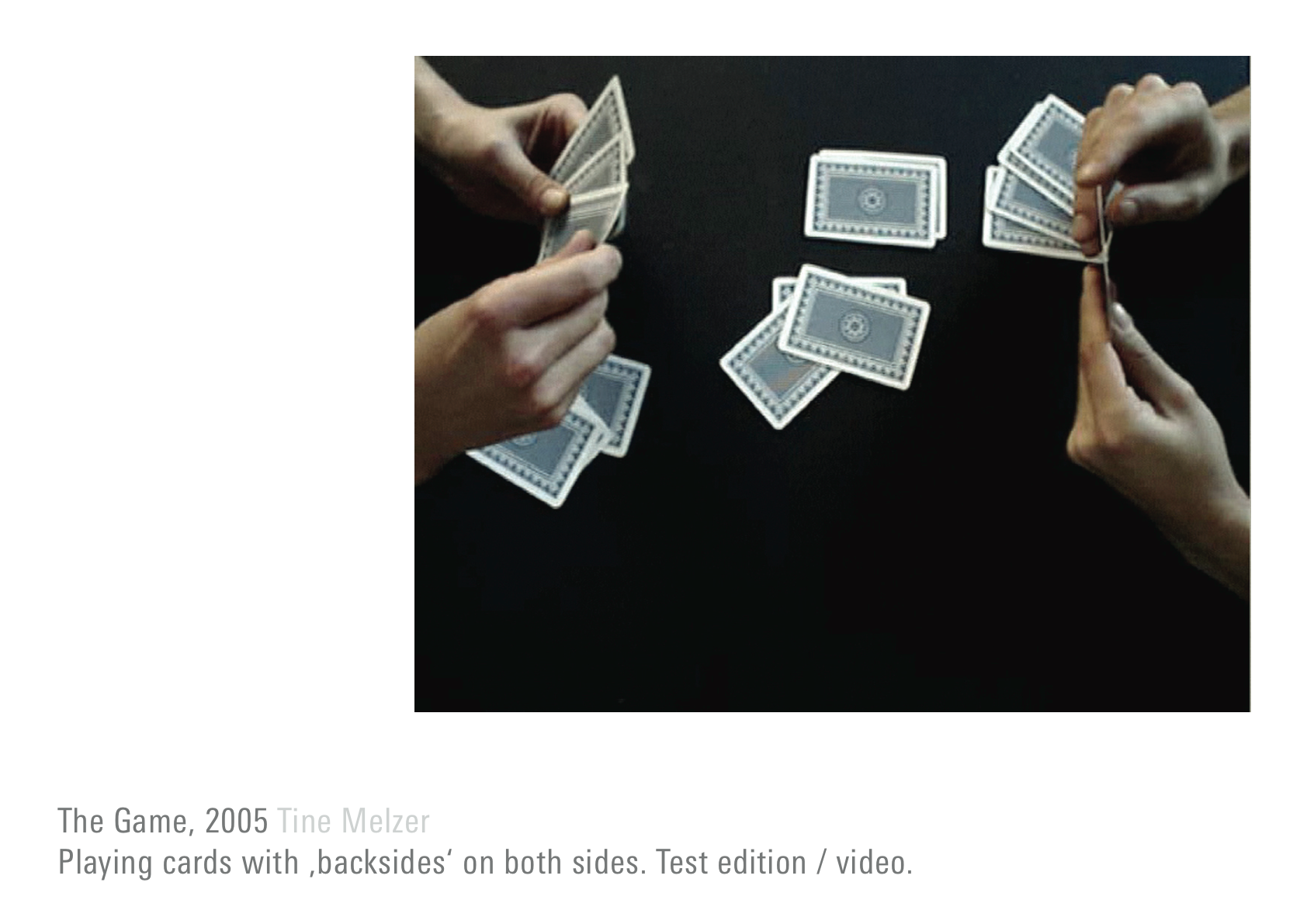
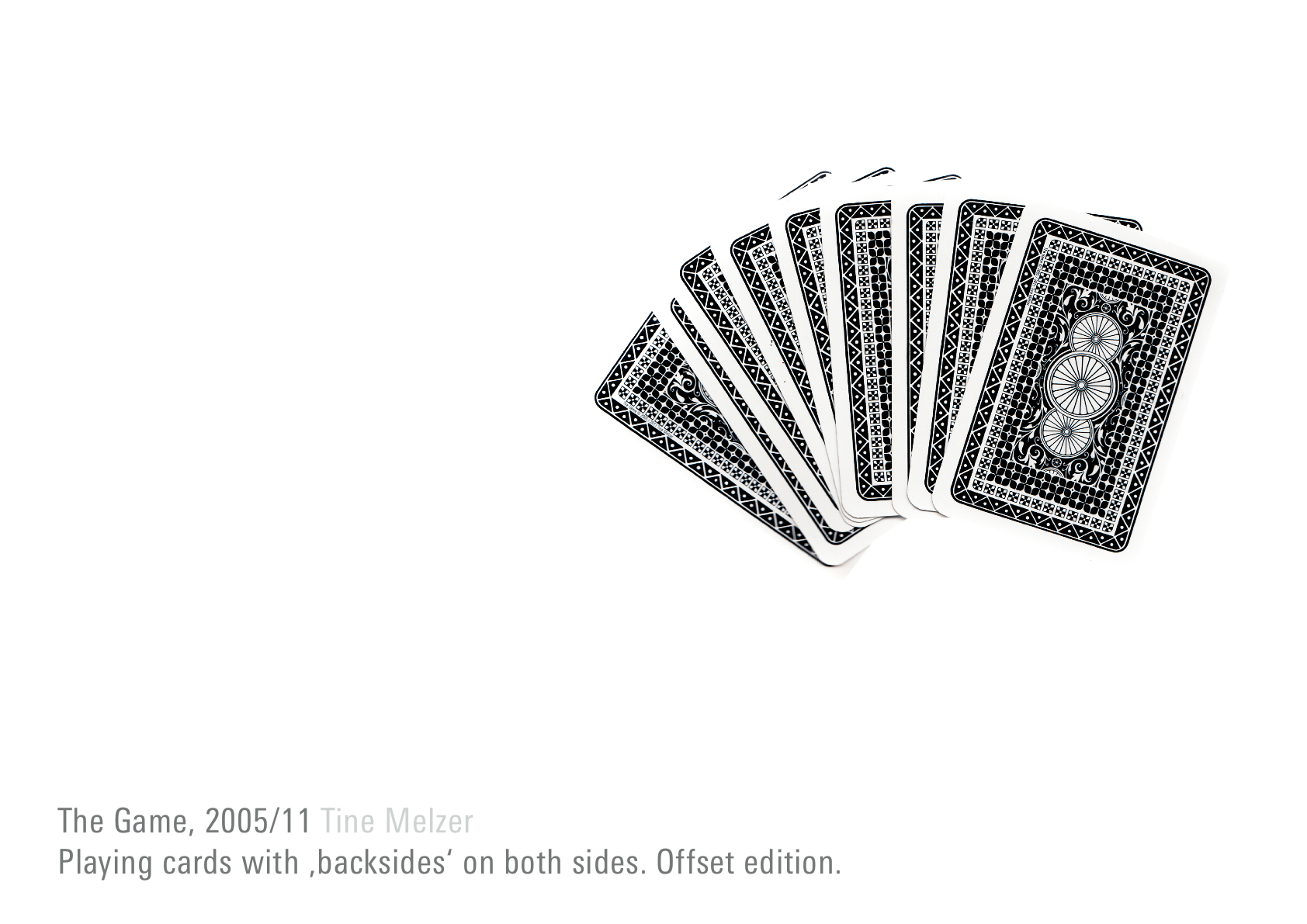
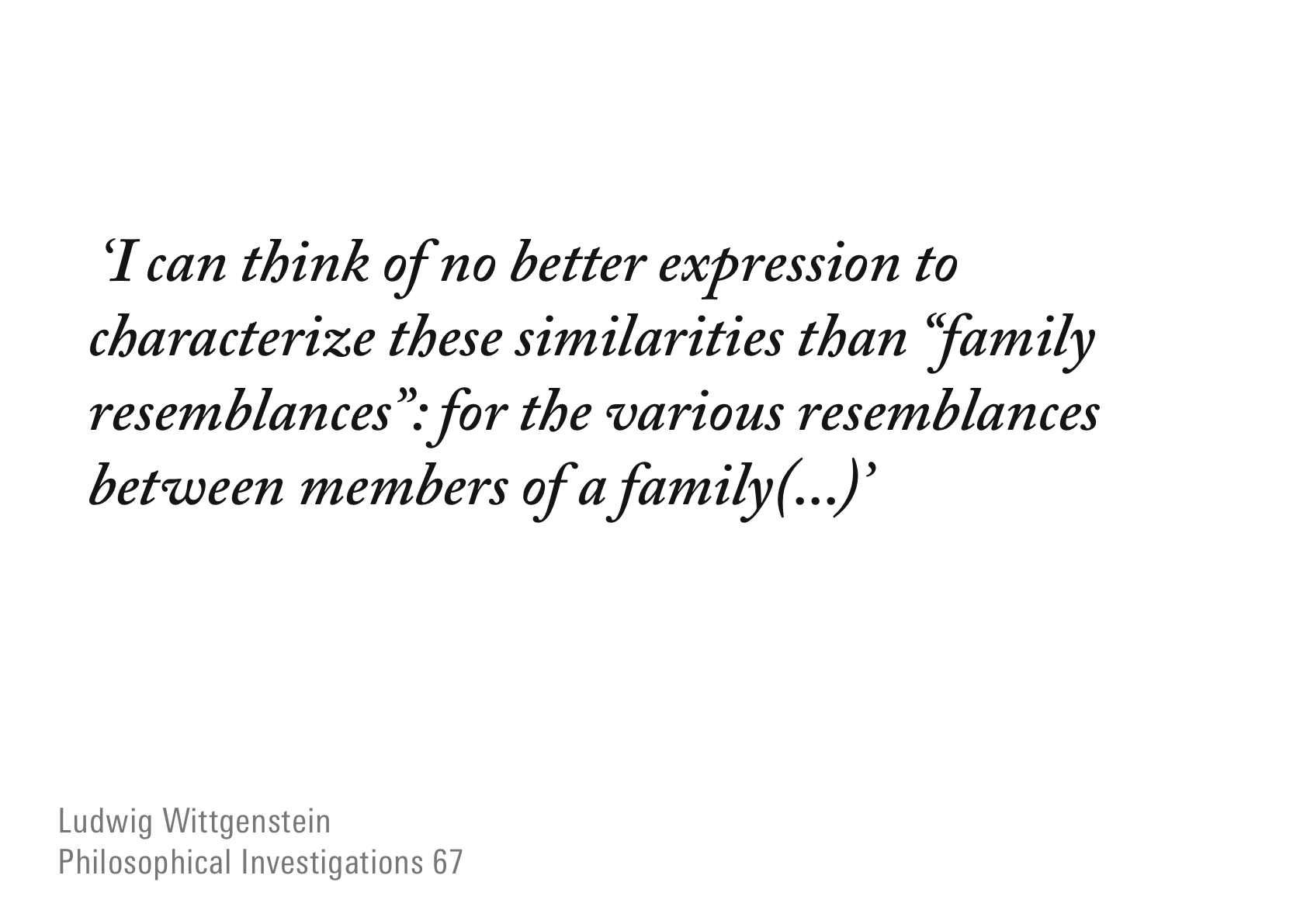
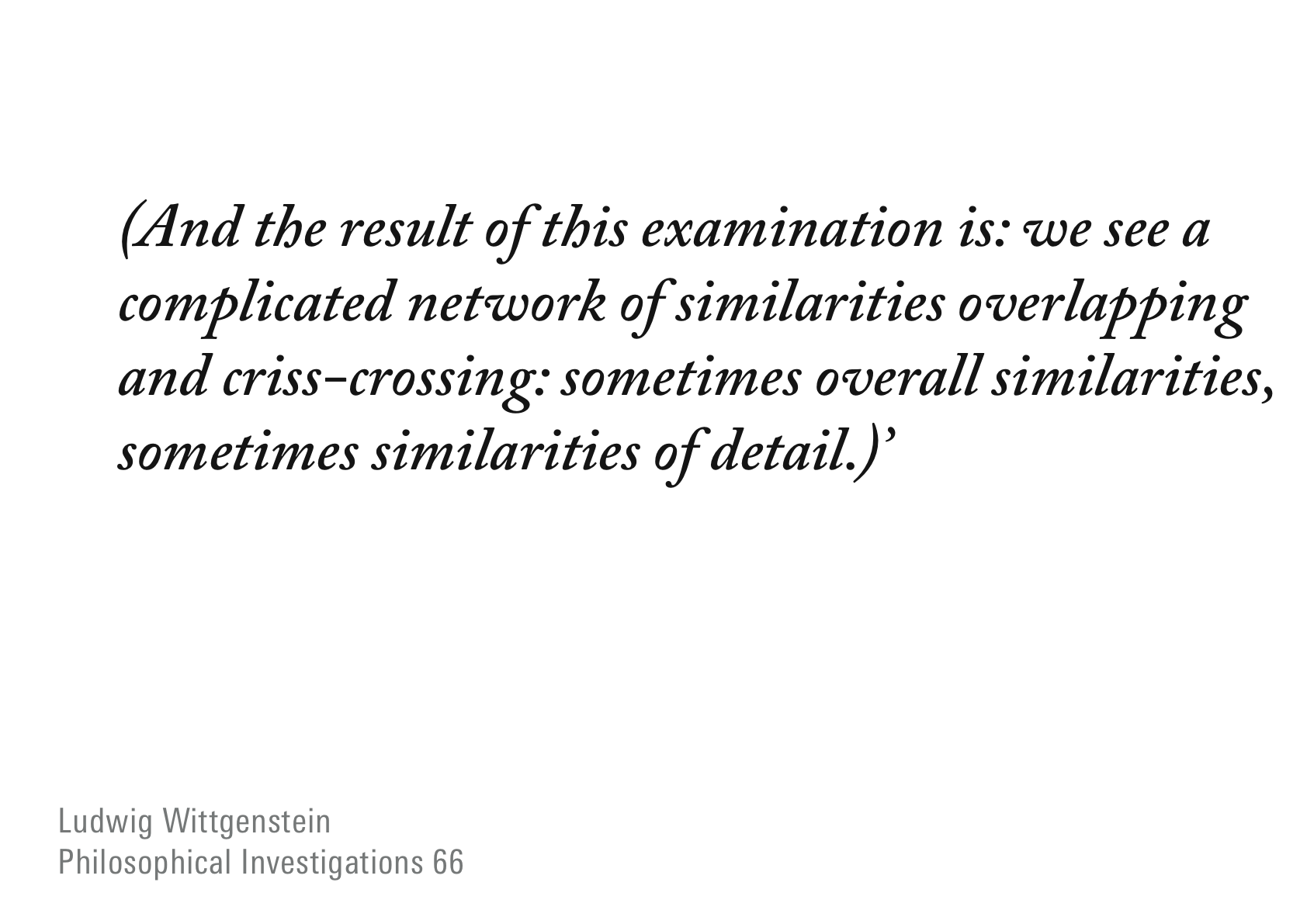
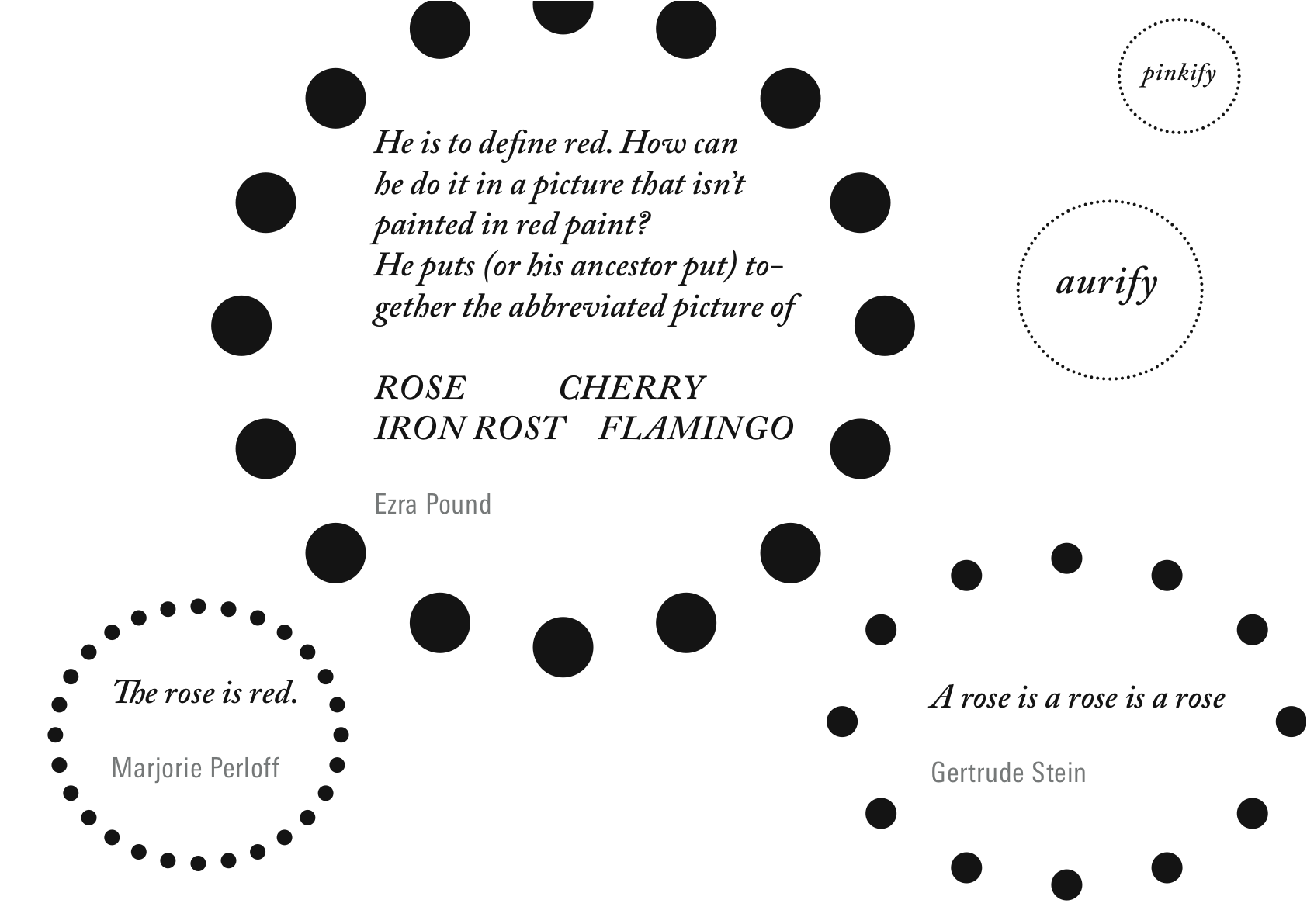
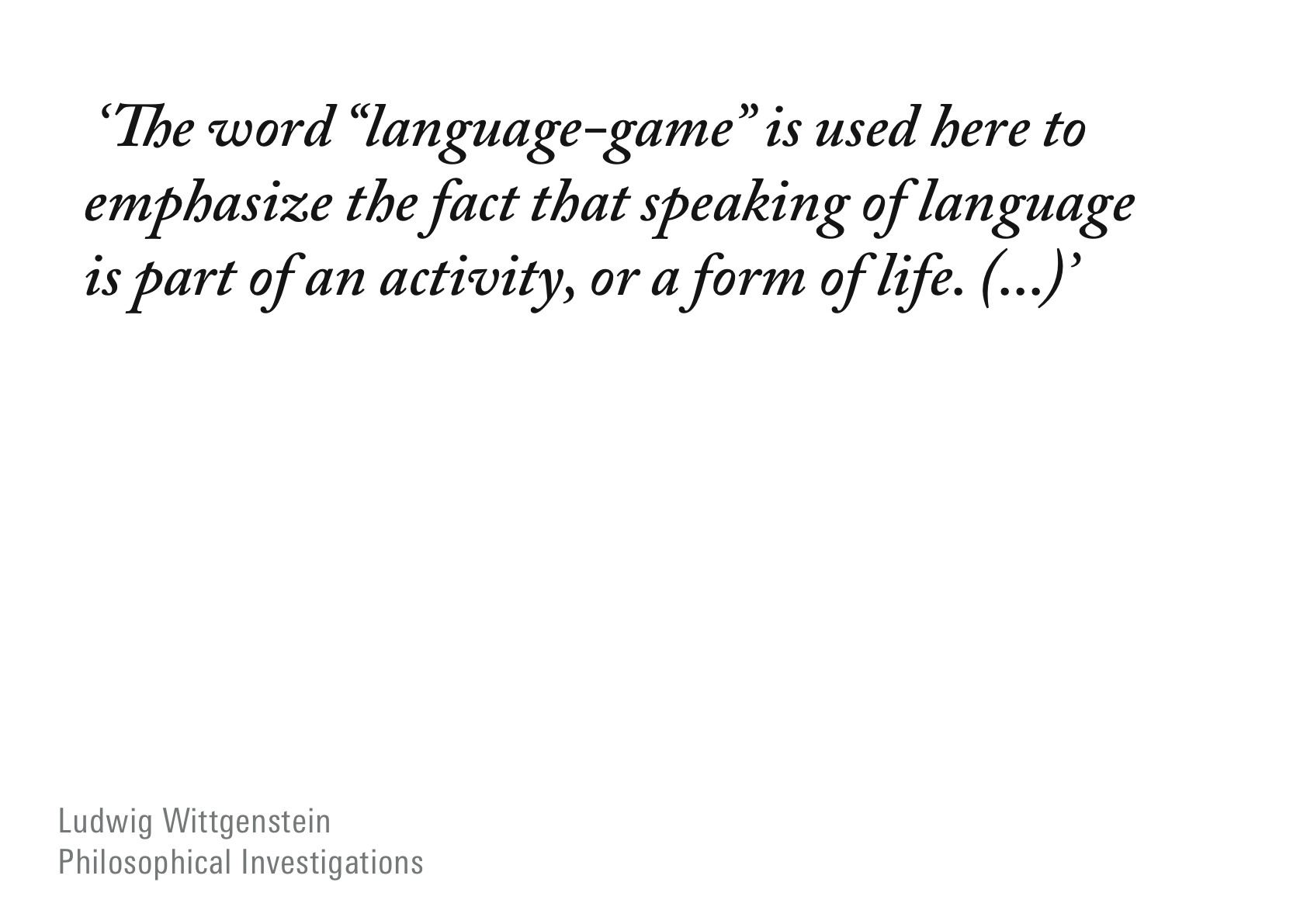
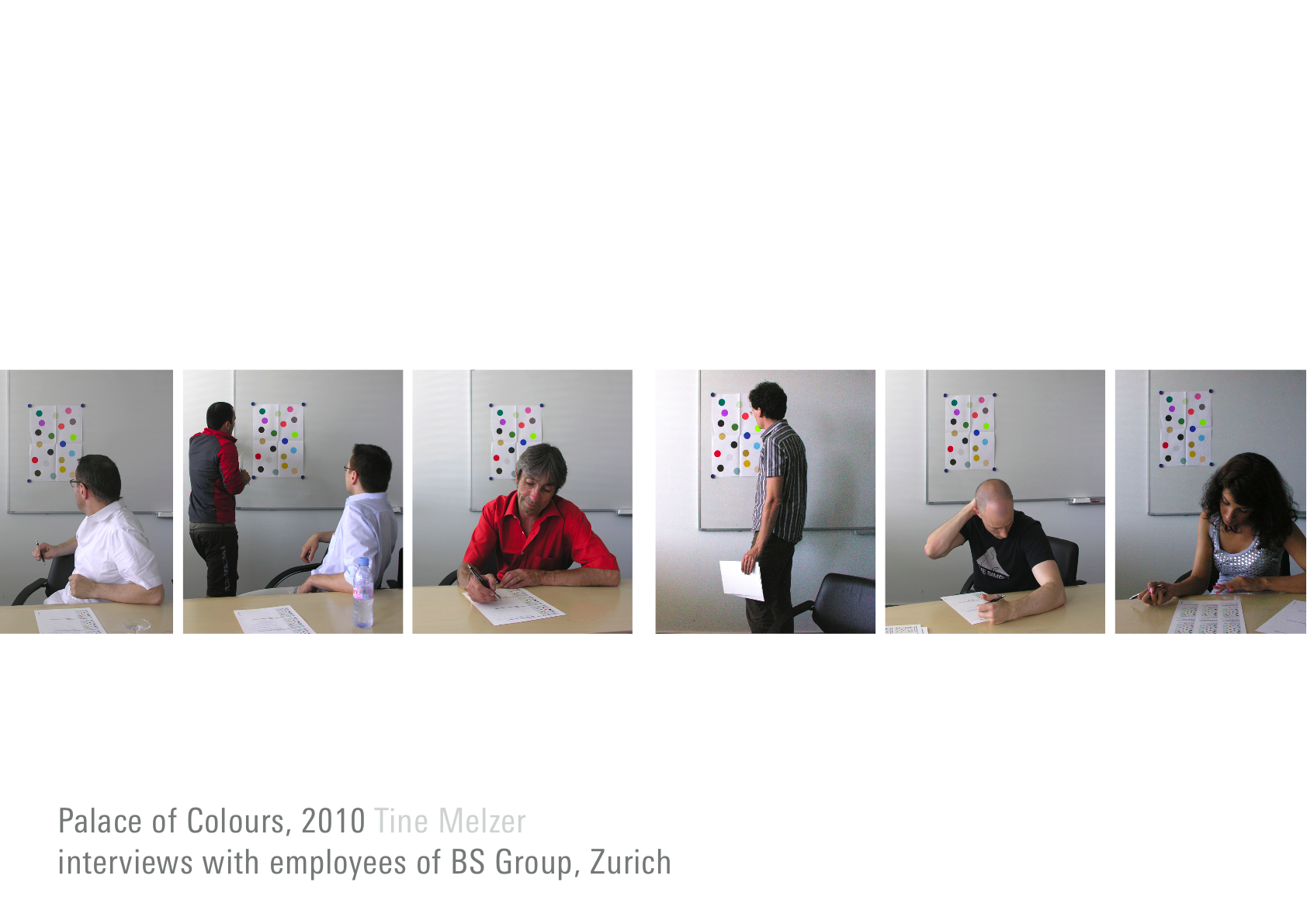
VSK PROJECT: TINE MELZER LANGUAGE GAMES PART 2 ON GAMES

In Uncategorized on August 29, 2011 at 11:13 am


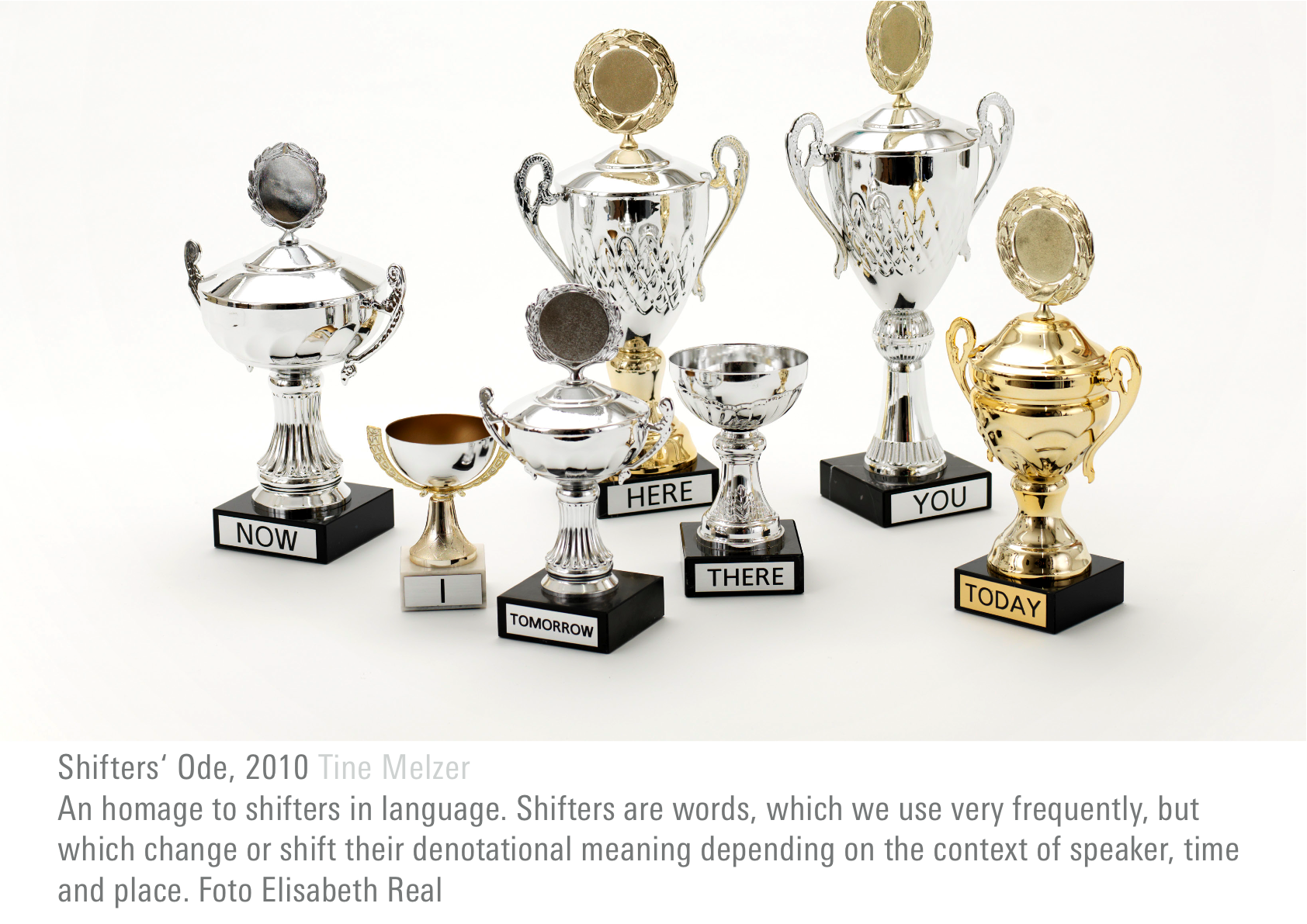
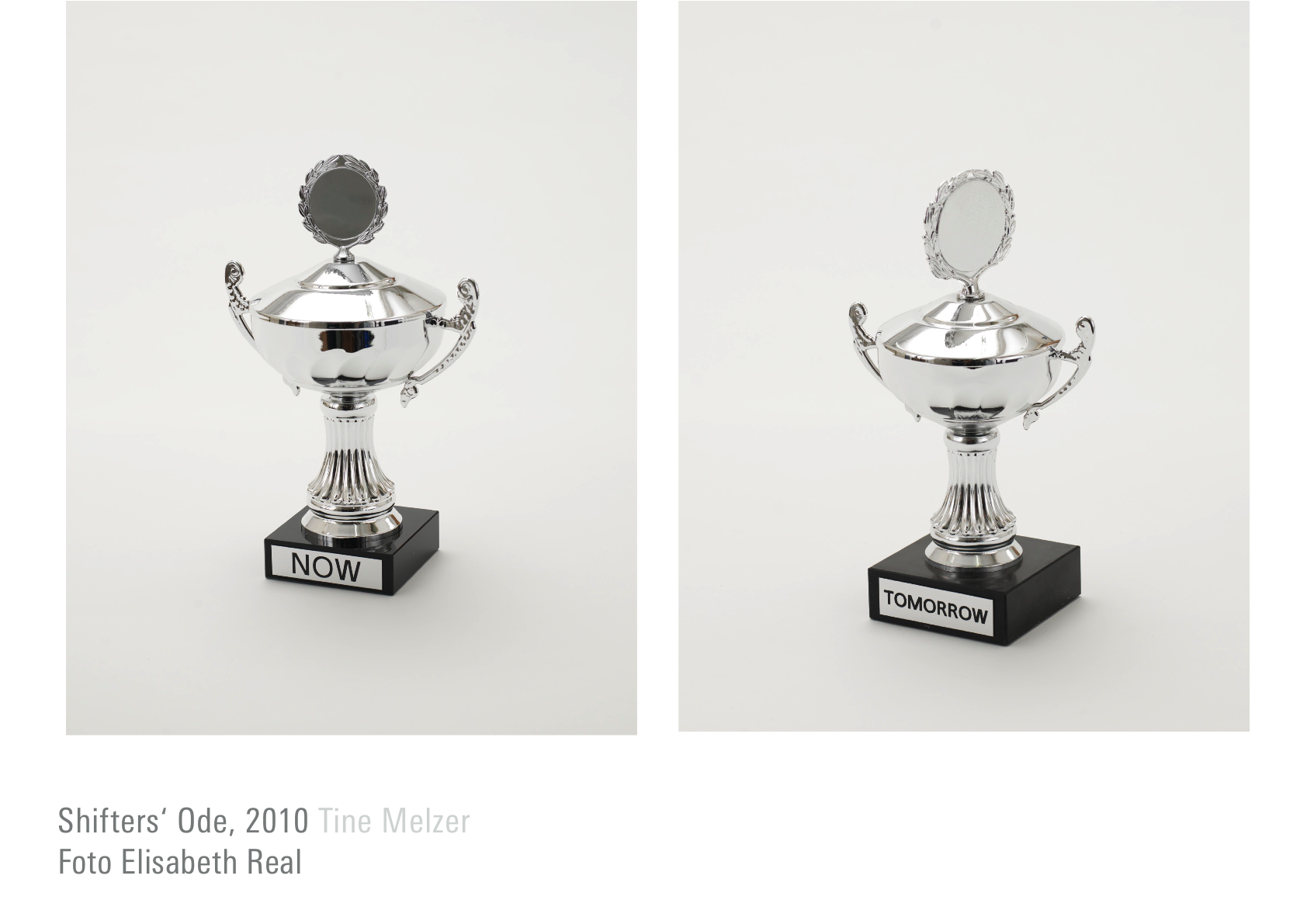
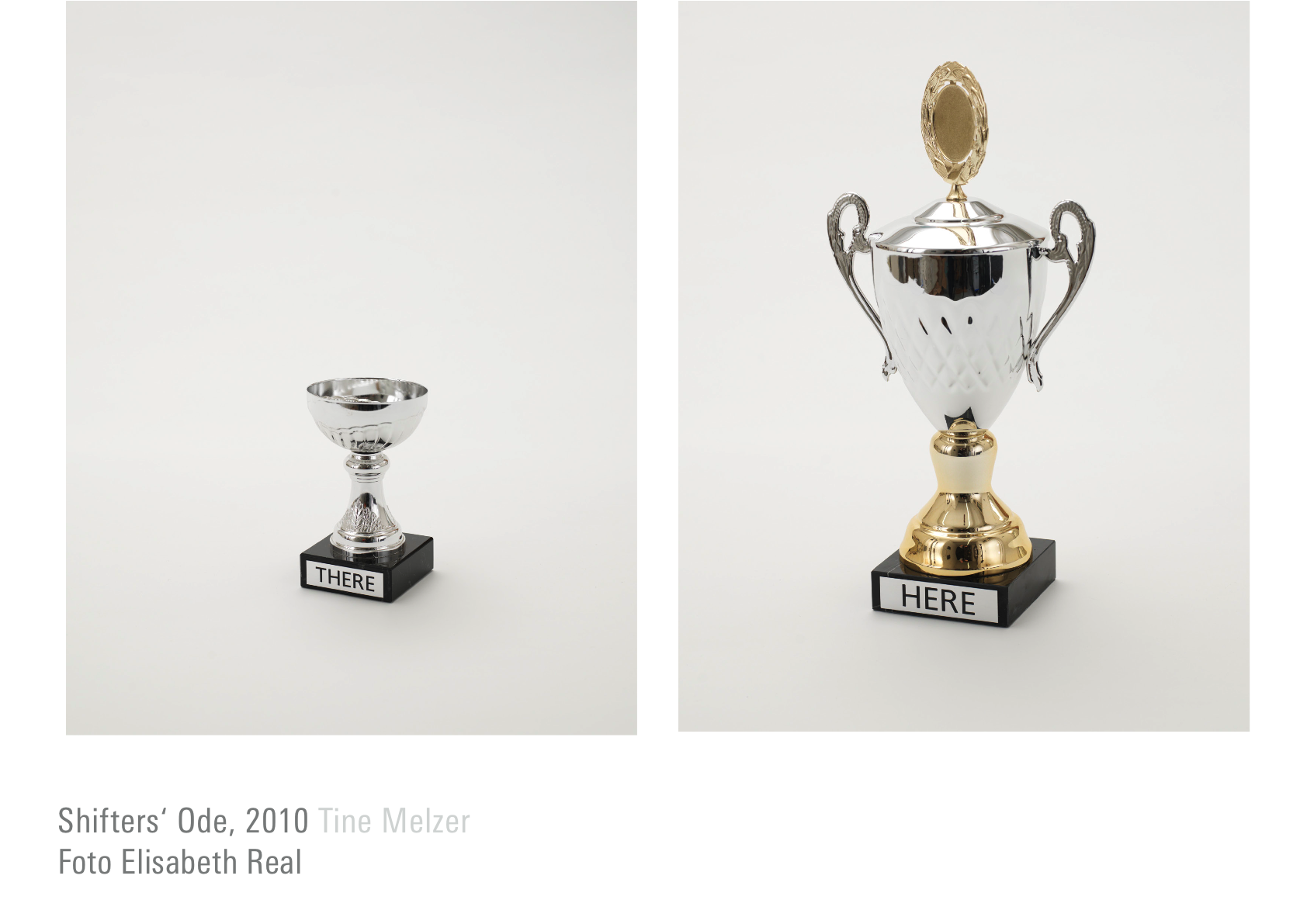
*

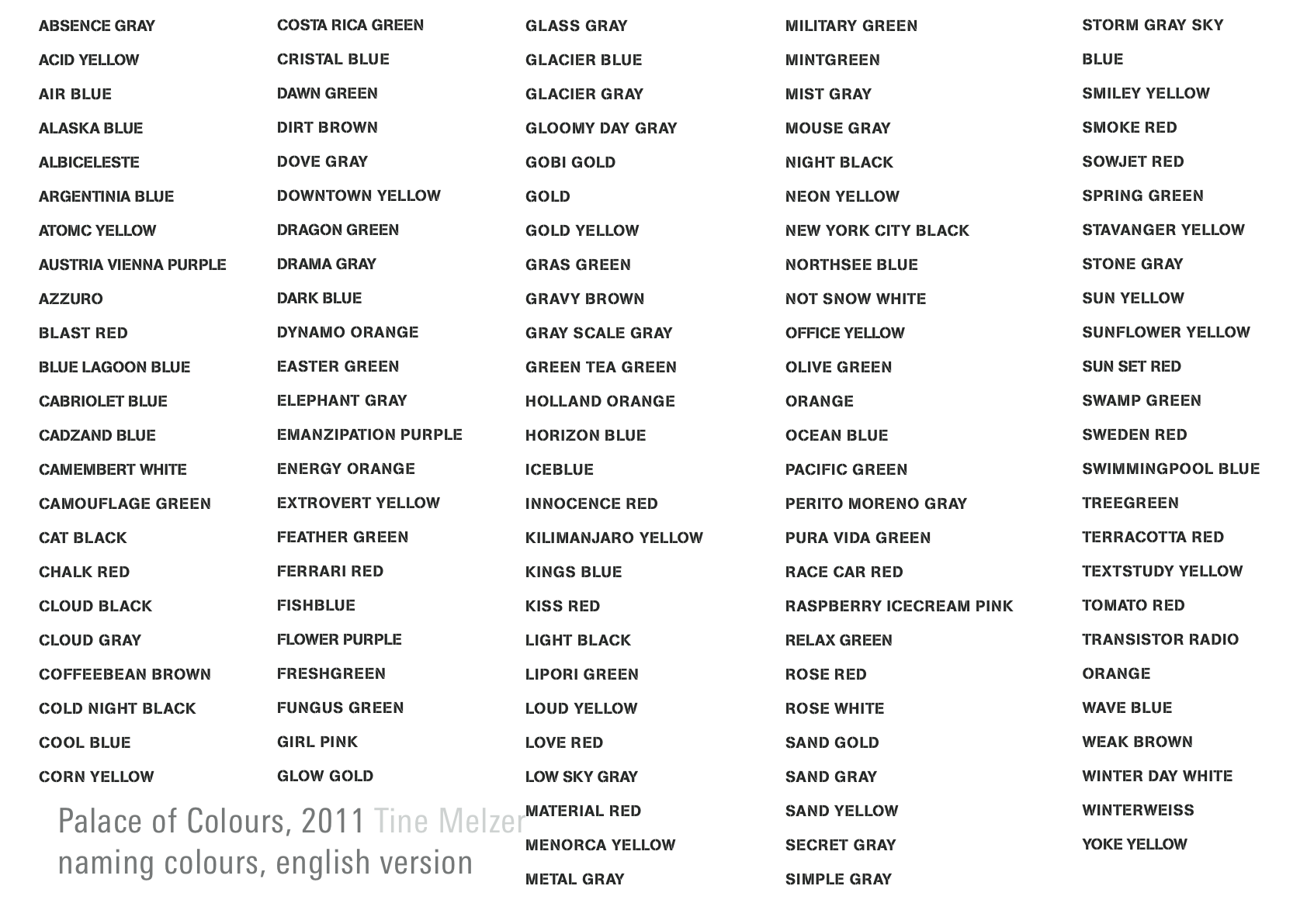
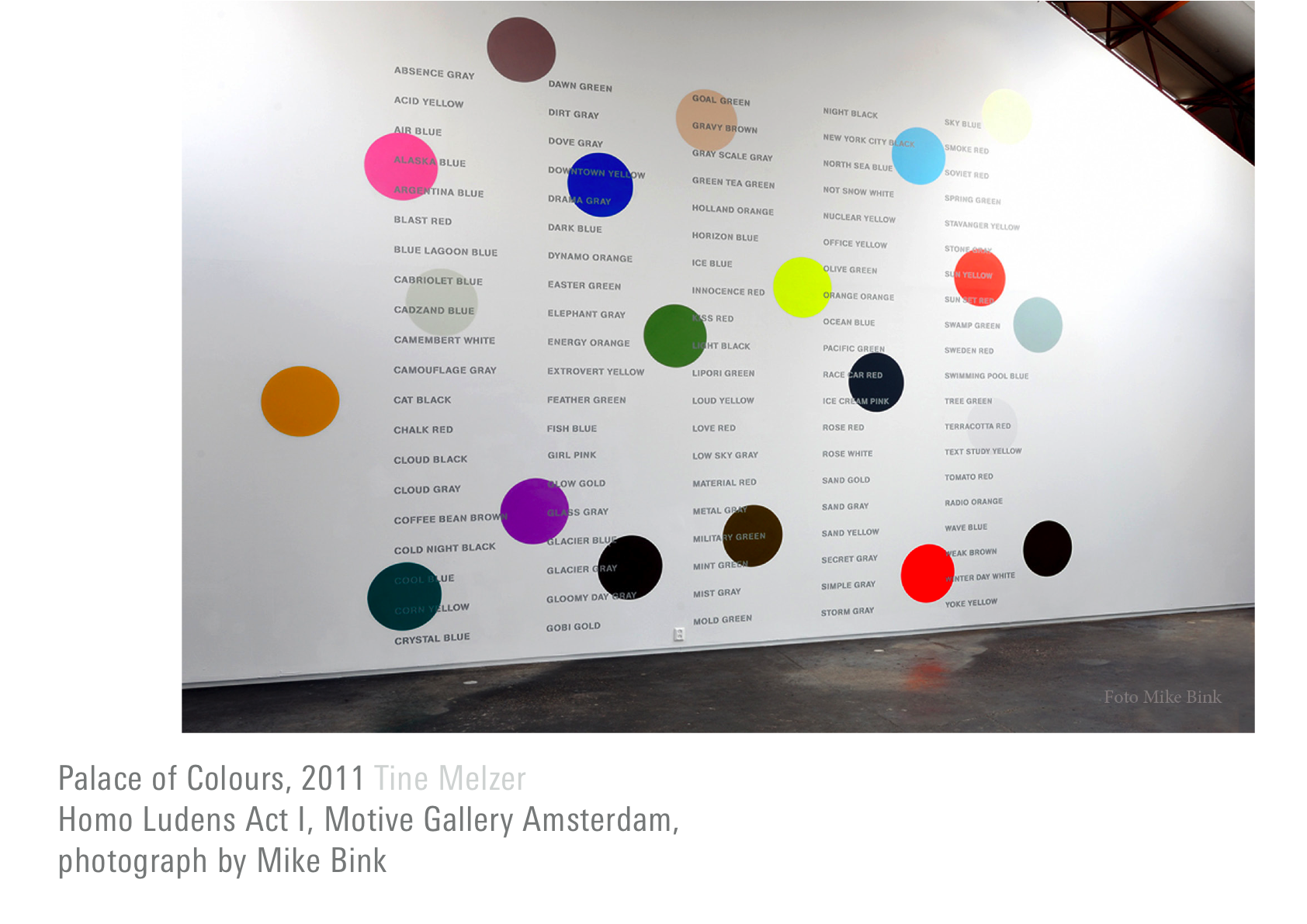
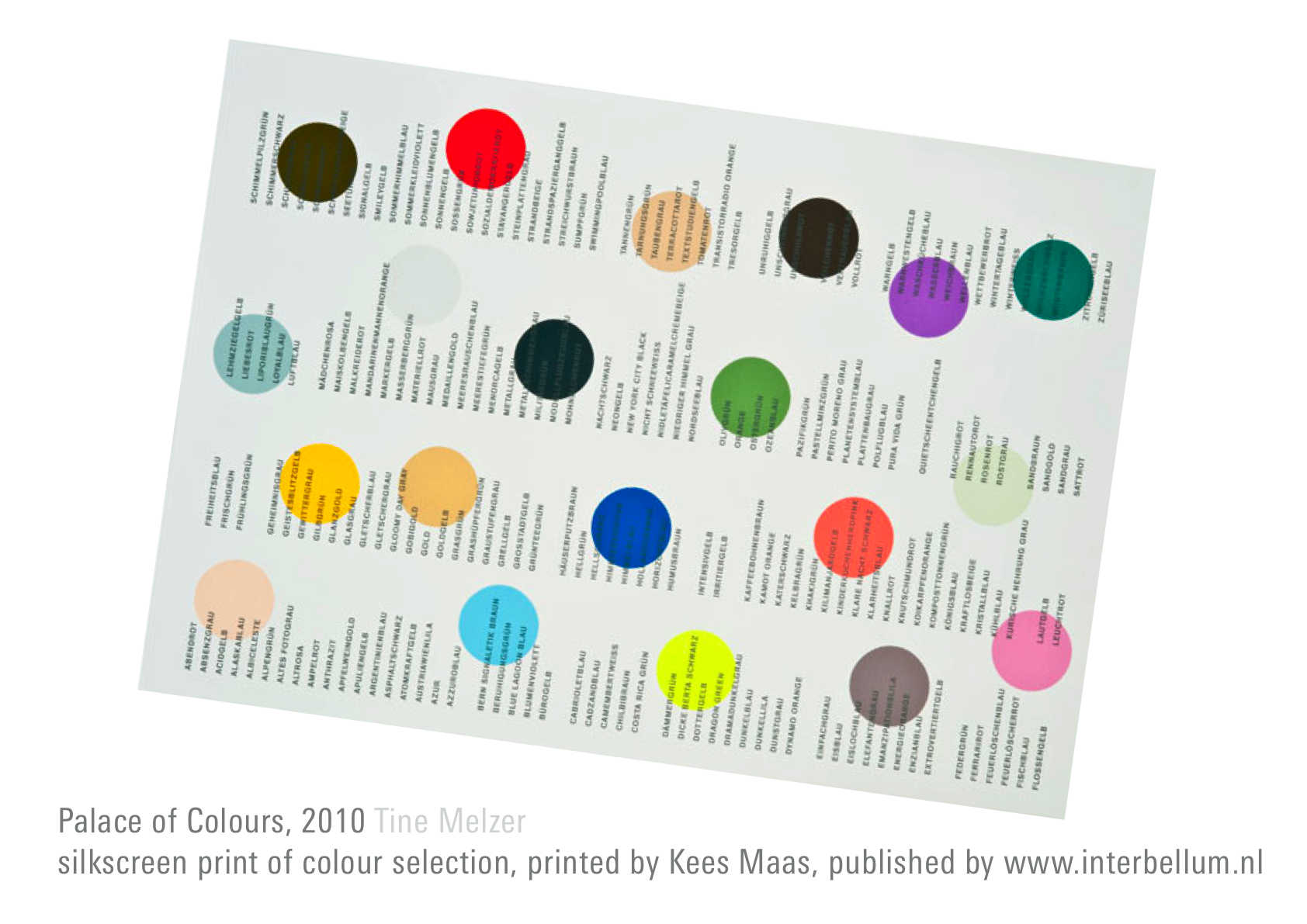
More about Tine Melzer’s work is here. See also projects for Interbellum and Motive Gallery. LANGUAGE GAMES PART 1: ON COLOURS is here.


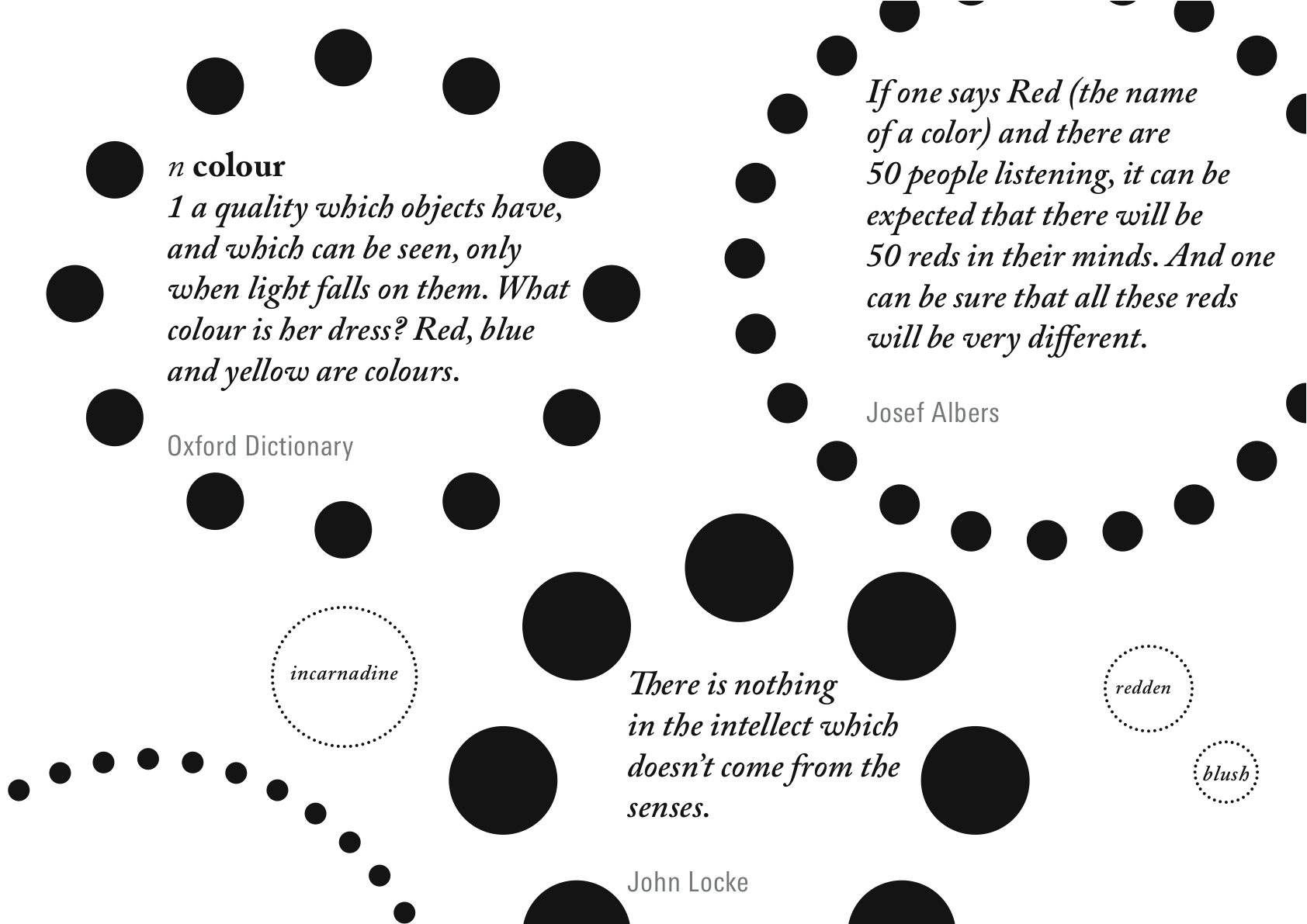
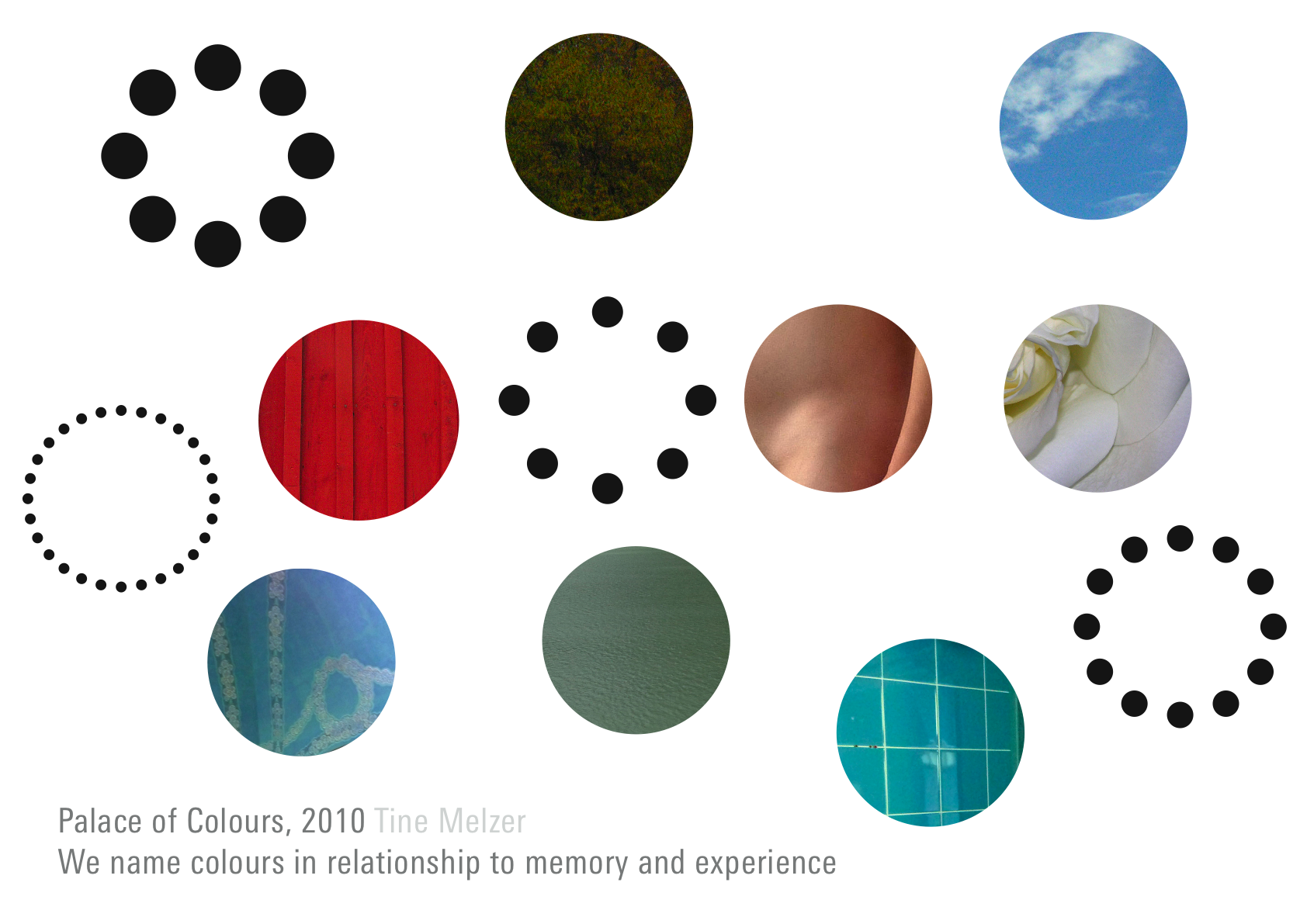
VSK PROJECT: TINE MELZER LANGUAGE GAMES PART 1 ON COLOURS

In Uncategorized on August 26, 2011 at 8:44 pm


*


More about Tine Melzer’s work is here. See also projects for Interbellum and Motive Gallery.

LANGUAGE GAMES PART 2: ON GAMES, the conclusion of this VSK Project, will be published on Monday.


VSK PROJECT: The Middle Notebookes [extract] by Nathanaël

In Uncategorized on August 11, 2011 at 1:09 am

[ … ]


*

If by liberation you intend the emancipation from reason, sure. If it’s the thing that wracks groans and torment from the body, if at the moment of sleeping and waking it is the thing that  transforms me into a howling cemetery, a blood-soaked battlefield. I have become the war and the malady, the face of the death of a person. I have envisioned these technologies. (…) You see, if it isn’t a liberation, it is nonetheless a thing detached against the thing that lays it bare. I am the residue of a self, the absence of relation: thing and thing.

*

Your name is discarded at the side of the road. After the months of deliberations. Thrown among the gravel and algae of the pavement. This abandoned name is barely a death. It will happen to you one day in the mouth of another. That side-road name that holds the shape of your already-body. Your body in disbelief at not having that name.

*

With him, my I-him, in body, I have no further language. He grants me this reprieve.

*

My mind stops at the Bar Kokhba revolt and the collective suicide of the Guadeloupean marrons in 1802, alongside the Mulâtresse Solitude. More than ever, I understand that gesture. At the end of a battle, where nothing is ever won, the evidence of the only possible act is to set fire to oneself. The enemy is nowhere visible, and the city, as it so often is in my thinking, is empty, abandoned. What remains of it, I have ingested, in structure, in discourse, in enmity. The thing against which we fight becomes us. To obliterate it, it must surely be necessary to obliterate it in – and with – oneself. I cannot know what meaning to grant this in a present of abandon, of resentment, confusion and sorrow, of perverse euphoria. There are the cats who ask to be fed, and a love that surely doesn’t intend for me, but toward which I go.

*

The absence of a witness is the beginning of a murder. It became clear to me at the crematorium when the howl, immediately swallowed by the roar of the furnaces, was wrenched from me.

*

Eyes open or closed, it’s the same screen, the same blood, the same smell.

*

Desire’s accusations are irrefutable. I come to you with judgement and morbidity. Against a theatre of moveable parts, Genet insists “the architecture of the theatre … must be fixed, immobilized, so that it can be recognized as responsible : it will be judged on its form”. This, then, is my injunction, that I bring with me, my “irreversible” theatre. Judge me.

*

The conditional is bereaved: tense, unappeased. It carries potentiality’s breach, boring into the undetermined with disbelief. The if then of me, constructed such that uncertainty, embedded in the causal palate of language’s misdeed, is militantly rejected by a structuring of sated need. It locks into place, but this does nothing for a body that falls from a sky. The contaminant is alive, it is vital, distressed; it disregards our posturings. “Nothing is true”, contends Édouard Glissant, “everything is alive”. It is this untrue-alive, which is the end of I (je) – its everlast. The insistence of Cahun’s intransigeant interrogation, speaking, alive: what want and to what end this accusation of endings? Each thing in ending, at the very start. It is sometimes called: onset. And we are its disease.

*

The bed expulses me. My head seized by a liquid burn.

*

We are in time. That, too, is unthinkable.

*

You arrive shortly after. Days, weeks. You say: N. You rid my names of their gravity, their fatality. N., this residue of me, this scrap. You open your mouth with mine, you gorge my cries, you pull my body under the weight of you, I bite into the soil of your shoulder, you cry the continent and the passing hour. You say nothing, you sleep and give me your rest, the livid days of tomorrows. You read to me out loud. You are my passeur, laid over my disappearance.

*

Who will wash the body of my death. Who will kiss my bloody mouth. Who will swallow my cries, my pain. Who will consume my passing. Who will speak me.

*

I am bereft, and unjust. Now I can speak to you of this, now that I’ve written you I don’t know what it will be with the telephone next time or the time after that, but it is ok now that I have told you and please be secretive with this, guard it like a wingless bird with no eyes, who never saw a thing and is afraid of loud noises. Make it precious that way and irrepressibly endangered, such that you have no desire to whisper it, not even to yourself.

*

Fistfully. Mouthfully. The place you take into you is an injury and my prints are all over you. This is your city. Your tawdry. As though speaking of seeing could correct calamity. Our limbs are not limber. And geography cringes at the encroachement of further geography. Find the text that granted permission, the book that wanted burning, the mouth that needed closing, the hand held before an expressionless face. Brazen and stumbling. (2006)

*

Death is long, terribly long, notwithstanding the unbearable remainder.

*

…and into your sleep, I swear it, into your death, I will follow you. (Bernard-Marie Koltès)

*

If it is true that “desire is dead, killed by an image”, it may be that this accusatively emphatic image bespeaks the murderous vigil; to watch, unbidden. To bring the body, unworn, to testify against itself, to responsibilise its enmity, build up the wall of its own figuration, severely, make what is seen visible against history’s rent screen – a black box of miserly misery. Speak into speaking, unlistened. // I go to where it happens. The door is a door that closes. A gate that scrapes shut against a forensic, vaulted compound. These are its barbed technologies, its unmitigated heat, a fire that doesn’t burn, a blood that doesn’t bleed: the smell of it. If desire is dead it is dead at the point of seeing, accused, beseeching. It dies undead, it sees unspoken, it works its asphyxiation into the endangered throat, stripped of its vital civility, mouth open on no sound, untold. The wither image may have killed desire, ineradicably. Death’s death as it were, remaindered at its skinned edge, its posthumous (re)iteration, end upon devastated end.

*

Through the window, the city demonstrates its refusal.

*

A. tells me that I am at the bottom of the pit. But it isn’t at all that. A pit wouldn’t be so bad. A bottom, an utterly agreeable thing. Even unbearably agreeable. But a bottom would be something. I wasn’t able to tell her no, there is neither a bottom, nor a pit, nor a darkness, nor anything of the nihilistic dreams of the living. It’s rather of the order of a blank. I think so. Vigilation is something like that. The attention granted to a thing to the point of the obliteration of looking and of the thing. That is where the voice is lost, touch evaporates, it burns for not being able to burn.

*

Saarbrücken: am in another language, as in a body of water that submerges me without touching me.

*

One must agree to be finished: to be here and nowhere else, to do this and no other thing, now and not never nor ever … to have this life alone. (André Gorz)

*

An overly-aggrieved body, a face that carries several deaths already, including mine, and the murder of the mother, the brother. Who will ever want this mouth?

*

Crossing the square, I feel an utter disgust toward all these humans, I tell myself that it’s everywhere the same people, that it’s no surprise we perpetuate the same violences, just look at us. It isn’t that we don’t love enough, I think perhaps it is that we don’t hate one another enough. The human being is a botched animal.

*

You dance because you are conscious of death. (Pippo Delbono)

*

I continue to scatter myself to the wind, I’m in shreds in these places that seem to come to pieces as I move through them, as though my presence alone conferred their disintegration.

*

Wien: An unthinkable world.

*

November (end). Today I would like to speak to you. I know that you would have something to say to me, to me and to all of this, and that you would take me somewhere on foot, that you would have a thing or two to show me. I can’t imagine going back, but remaining is just as improbable. As for me, I would like one day to kiss your mouth and wonder whether mine is even capable of such a thing. Love from a loveless city. N.

*

My words tonight before a Viennese public in an old hospital reconstituted as a Universität made my mouth into a crypt and purged the last vital energies from the room. Ending unspeaking unbreathing and the room unsound. It is a disconcerting shame that accompanies a death, for the person remaining, the vitally-residual, with her culpable vitality, a fistful of aschenglorie, a scattered self. And a face which must only signify this from now on.

*

Kafka: My love for you doesn’t love itself. (Gorz)

*

The body is seized, inert, beating, palpitating, an anguish in time. Is it me.

*

Deutschland: I go toward everything as though I were late, our late desires, yes. It isn’t a place I would have chosen for myself. But we don’t choose our self.

*

The narrative of the end of a certain time is told in a new time which retains that end – an end by which it presents itself as beginning. (Lyotard)

*

Between two places, in a despotic airport (Frankfurt), I write my hope for an inevitable outre mesure. Might it be, in the end, a matter of “that unforgottenness of forgetting that isn’t memory”? (Malraux).

*

Unmoorings.

*

From part to parting, to be summoned is to be attentive to the surf that founds and founders being, I mean the eventuality of one’s existere, of one’s situation.

*

Vienna is not a city.

*

RY King’s photographic dissolve marks the paper immutable. Immutable in that it is always imbricated in a mechanism of deterioration. In this improper sense, the image is not separable from its degradation. Its substances are both paper and light. Thus they are neither, as they run into each other. The bird, in this instance, which is scarcely discernible, is in a field of apparent surfaces. It comprises the surface by which it becomes visible, an irregularity on a structure of hay bales in a field of depleted colour. The photograph misdirects its intention. It intends for me to fall in. In to America.

*

It comes with a number, assigned to a calcined human body which is incommunicable:                . When it says “…I need catastrophes, coups de théâtre”, it abandons sense. The lake is up to my knees in November.

*

The time of the photograph is (always) after. This imprecision accommodates the numerous successions, the end upon seismic end. In a time without time, un(re)countable: still. In this, it is a perfect crime, “the annihilation annihilated, the end … deprived of itself.”

*

Are you the sum of your cities? What are your cities? Es-tu la somme de tes villes? Quelles sont tes villes? “Wounded mouths that gape onto the void”? (Lyotard)

*

I crossed over, I touched, I howled, I gave, I envisioned, I was afraid and I went toward everything that seemed to go against me. I said yes in spite of myself, while saying never again – not Germany, not Austria, not America, not anywhere ever, especially not me – and it’s this conjunction surely that makes that I exist in the rapacious non-existence of the delirious (mis)deed.

*

Pain and pain again. But it isn’t mine, in that it doesn’t belong.

*

This trip to Germany and Austria was by turns very exacting, and always very emotional; I learned a lot, about myself, about history, about the very violence of my hopes. Vienna especially plied me, with its architecture of pomp and excess, in that city I hardly slept. Presents and pasts combined and I was suffocating… I was suffocating and this didn’t prevent me from feeling just as intensely the warmth with which I was everywhere welcomed. I emerge from it shaken, my head shattered, my body plunged into that (for me) beginning conversation and I am moved by the openings – gentle and violent – that sought me out. There is no turning away from it. I go to that which exceeds comprehension, the furore of history, the aleatory encounters, the receptiveness of a present within voice’s reach.

*

Time goes on, how curious, one doesn’t imagine that it could at such an hour.

*

“for we say here: the time before the fire and time after it.” (in Senocak)

*

To bring a life into the world is to bring that world to its death.

*

…a stable, several rooms, bicycle rides in the countryside, a terrible parking lot, people coming and going, a threat, unnamed, an eventual art show, and the rapid deterioration of my body in the face of everyone. Lying down or standing, the liquefaction of my joints, my bones floating in my remains, gaping holes at my knees, waxen skin, saying to R. who is watching television with several others, kill me, have mercy, why won’t you kill me. A boy beneath a blanket, but nothing was fixed, it must have been the residual death imprinted in the body, my installation in that savagery, its imprint of undesirability, tear me from this sleep.

*

As for this end, attached to a death, I am the one now who is changed by it, and who rejects certain narratives which make me into something I don’t want to be.

*

I make the connection between these texts and the sprig of creosote in the mail, your wanderments and a detailed attention granted to the unsuspected details of a fragile narrative of seasons and their material. The documentation of this – burst and furling. A magistral museum, the one that isn’t edified. I admire your eye and that which is emptied from it, the residue of a gaze is a form of (formless) archive.

*

We could think of the sense of touch as the unconscious of vision. (Pallasmaa)

*

It’s 3:30pm, time for me to sleep. I’ve already had one nap, twice gone round the neighbourhood, made and unmade the bed, adored the cats, prepared inedible foods, drunk the remaining tea, written several letters, taken some notes and checked the mail that doesn’t come. It’s impossible to make these tasks into a day, the day being obstinately out of reach, the door being unrecognisable, one walks into it, face first, still there is some relief in the sensation.

*

The next text is a kind of suppuration. It must be the equivalent of rubbing gravel and glass into a wound, but I must do this violence to myself now. Press my whole face into the ambient abjection, hatred, rage. Perhaps remove a blistered skin, rendering myself raw and possibly more humane.

*

[ … ]


More about Nathanaël’s work is here.  Nathanaël  writes: “The extract I’m sending you is from The Middle Notebookes, —  the consolidation in English of three Carnets written in French from 2007-2010, and published by Le Quartanier in 2009 (Carnet de désaccords) and 2011 (Carnet de délibérations) with the last one (Carnet de Somme) due in spring 2012. This information is superfluous to this publication, but it gives you a Very Small Sense of the context for the work.”
VSK PROJECT: TAMARIN NORWOOD’S THE LOCATIONS OF SIX DOMESTIC FIGURES

In Uncategorized on August 5, 2011 at 9:16 pm

Figure 1. Cup

Figure 2. Felt-tips

Figure 3. Hole punch

Figure 4. Miscellaneous

Figure 5. Pot plants

Figure 6. Tubes


Figures 1–6 are excerpted from What The Matter Is (2009) by Tamarin Norwood, first broadcast March 2009 on Resonance 104.4FM.


Figure A.

A utensil, once it has been damaged, becomes its own image (and sometimes an esthetic object: ‘those outmoded, fragmented, unusable, almost incomprehensible, perverse objects’ that Andre Breton loved). In this case, the utensil, no longer disappearing in its use, appears. This appearance of the object is that of resemblance and reflection: one might say it is its double. The category of art is linked to this possibility objects have of ‘appearing,’ that is, of abandoning themselves to pure and simple resemblance behind which there is nothing – except being. Only what has surrendered itself to the image appears, and everything that appears is, in this sense, imaginary.

Maurice Blanchot, “Two Versions of the Imaginary,” in The Gaze of Orpheus, ed. P. Adams Sitney, trans. Lydia Davis. New York: Station Hill Press, 1981 (original French 1943), pp.79-89: p.84


Figure B.

My life day to day was lived through ordinary actions and powerful emotions. But the more ordinary a day I lived, the more I lifted a child, conscious of nothing but the sweetness of a child’s skin, or the light behind an apple tree, or rain on slates, the more language and poetry came to my assistance. The words that had felt stilted, dutiful and decorative while I was a young and anxious poet, now sang and flew. Finally, I had joined together my life as a woman and a poet. And on the best days I lived as a poet. The language at the end of my day, when the children were asleep and the curtains drawn, was the language all through my day. It had waited for me. What that meant was crucial. For the first time as a poet I could believe in my life as the source of the language I used, and not the other way round. At last, I had the means to challenge what I believed had distorted the idea of the poet. The belief that poetry had the power to dignify and select a life, instead of the reverse. That a life, in other words, became important only because it was the subject matter for a poem.

Eavan Boland, A Journey with Two Maps: Becoming a Woman Poet. New York: WW Norton & Co, 2011


Figure C.

As they circulate through our lives, we look through objects (to see what they disclose about history, society, nature, or culture – above all, what they disclose about us), but we only catch a glimpse of the things. We look through objects because they are codes by which our interpretative attention makes them meaningful, because there is a discourse of objectivity that allows us to use them as facts. A thing, in contrast, can hardly function as a window. We begin to confront the thingness of objects when they stop working for us: when the drill breaks, when the car stalls, when the windows get filthy, when their flow within the circuits of production and distribution, consumption and exhibition, has been arrested, however momentarily. The story of objects asserting themselves as things, then, is the story of a changed relation to the human subject and thus the story of how the thing really names less an object than a particular subject-object relation.

Bill Brown, “Thing Theory,” Critical Inquiry, Vol. 28, No.1, special issue: Things. Autumn 2001, pp.1-22: p.4


Figure D.

What Twain helps us to recognize is how the accumulation of objects (and not the desire for the object) might be considered the (futile) effort to materialize that abstraction – to fill up that abstraction, as it were, with particular contents. ‘The House Beautiful’ chapter of Life on the Mississippi registers that effort with a five-page catalogue of objects: ‘ingrain carpet; mahogany centre-table; lamp on it, with green-paper shade. […] Other bric-a-brac […] quartz, with gold ward adhering; old Guinea-gold locket, with circlet of ancestral hair in it; Indian arrow-heads, of flint.’ Despite the hyperspecificity of the catalogue, these are simply the generic contents of the generic ‘residence of the principal citizen, all the way from the suburbs of New Orleans to the edge of St. Louis.’ However passionate the particularity, it has no particularizing point.

Bill Brown, “The Tyranny of Things,” Critical Inquiry, Vol. 28, No. 2. Winter 2002, pp.442-469


Figure E.

It is rare that a being who is not totally engrossed in his action is not mannered. Every personage who seems to tell you: ‘Look how well I cry, how well I become angry, how well I implore,’ is false and mannered. […] If you lose your feeling for the difference between the man who presents himself in society and the man engaged in action, between the man who is alone and the man who is looked at, throw your brushes into the fire. […] Whether you compose or act, think no more of the beholder than if he did not exist. Imagine, at the edge of the stage, a high wall that separates you from the orchestra. Act as if the curtain never rose.

Denis Diderot cited in Michael Fried, Absorption and Theatricality. Chicago IL: University of Chicago Press, 1988, pp.82-132


Figure F.

I’m put off by museums in general; they reek of a holy death which offends my sense of reality. […] Moreover […] most advanced art of the last half-dozen years is, in my view, inappropriate for Museum display. […] Museums do more than isolate such work from life, they subtly sanctify it and thus kill it.

Allan Kaprow 1967, cited in Allan Kaprow: Art as Life, eds Eva Meyer-Hermann et al. London: Thames & Hudson, 2008, p.70


Figure G.

[…] here is the ball park I perceive: an artist can

work within recognizable art modes and present the work in recognizable art contexts (e.g., paintings in galleries; poetry in poetry books; music in concert halls, etc.)

work in unrecognizable, i.e., nonart, modes but present the work in recognizable art contexts (e.g., pizza parlour in a gallery; a telephone book sold as poetry, etc.)

work in recognizable art modes but present the work in nonart contexts (eg., a “Rembrandt as an ironing board”; a fugue in an air-conditioning duct; a sonnet as a want ad, etc.)

work in nonart modes but present the work as art in nonart contexts (e.g., perception tests in a psychology lab; anti-erosion terracing in the hills; typewriter repairing; garbage collecting, etc. (with the proviso that the art world knows about it))

work in nonart modes and nonart contexts but cease to call the work art, retaining instead the private consciousness that sometimes it may be art, too (e.g., systems analysis; social work in a ghetto’ hitchhiking; thinking, etc.)

Allan Kaprow, “Nontheatrical Performance” (1976), in Essays on the Blurring of Art and Life. Berkeley CA: University of California Press, 2003, pp.175-176


Figure H.

Masahiro Mori, “The Uncanny Valley,” trans.  K. F. MacDorman & T. Minato (original Japanese “Bukimi No Tani.”) Energy, Vol. 7, No. 4. 1970, pp.33-35


Figure I.

Oscar Wilde’s unsettling epigram that being natural is a post isn’t too far away. Consciousness makes artifacts of us all. And so does the gallery, the transforming powers of which increase as modernism declines. The spectators in the late-modernist gallery are somehow artificial, aware of being aware – consciousness quoting itself. Though time in the white cube is always changing, the space gives the illusion that time is standing still, as if on a pedestal.

Brian O’Doherty, Studio and Cube: On the Relationship between where Art is Made and where Art is Displayed. New York: Columbia University Press, 2007, p.5


Figure J.

The idea of working in a ‘studio’ makes me uncomfortable, always has, as has thinking of myself as an ‘artist.’ Both terms presume that my motive is ‘to make art’ […] I don’t like to know where I’m going to end up before I begin. […] I tried having a studio only once, in 1985, when a sculptor friend and I rented an additional apartment in the Hell’s Kitchen building where we lived. For me, the experiment lasted just two weeks. I didn’t understand maintaining a separate room to which I was to ‘go and make my art.’ I hadn’t gone to art school and never got into the studio habit. Having a studio made my mind feel boxed-in.

David Robbins in The Studio Reader: On the Space of Artists, eds. Mary Jane Jacob and Michelle Grabner. Chicago and London: University of Chicago Press, 2010, p.261


Figure K.

Lucas Samaras,‘Room #1’ (1964)


Figure L.

This is what I have been thinking: for the most commonplace event to become an adventure, you must – and this is all that is necessary – start recounting it. This is what fools people: a man is always a teller of tales, he lives surrounded by his stories and the stories of others, he sees everything that happens to him through them; and he tries to live his life as though he were recounting it.

Jean-Paul Sartre, Nausea, trans. Robert Baldick. Harmondsworth: Penguin, 1965 (original French 1938), p.61


Figure M.

He began, very cautiously, to open his eyes, to see whether a gramophone was really there. But real things – real things were too exciting. He must be cautious. He would not go mad. First he looked at the fashion papers on the lower shelf, then gradually at the gramophone with the green trumpet. Nothing could be more exact. And so, gathering courage, he looked at the sideboard; the plate of bananas; the engraving of Queen Victoria and the Prince Consort, at the mantelpiece, with the jar of roses. None of these things moved. All were still; all were real.

Virginia Woolf, Mrs Dalloway. Oxford: Oxford University Press, 1998 (first published 1925)


*

More about about Tamarin’s work can be found here. Her VSK Chapook TEXT AS TOOLKIT: A Practical Handbook is here. Her exhibition THESE ARE NOT POEMS will be at the Totalkunst Gallery, Edinburgh August 17-19 2011 as part of I AM NOT A POET.

VSK RESIDENCY PAUL ANTONY CARR: NATHANIEL’S PERPETUAL MOTION (1)

In Uncategorized on August 4, 2011 at 10:48 am

“Nathaniel awakes early this morning. He sits up on the edge of the bed and looks around his minuscule broom closet of a bedroom. Today he finds himself paying close attention to the unoccupied space of the room’s carpeted floor. Nathaniel recalls once telling a friend that he didn’t need much more living space than the minimum area required for him to do a pushup on the ground. This morning he gets down on all fours beside his bed to test if his current digs meet the criteria set forth by a younger, different Nathaniel. He finds it so happens there is exactly enough space for him to do pushups comfortably. But Nathaniel has never done a pushup in his entire life.”
2011. Ink on paper. 9.5 x 6.25 in.

*

“Each additional pushup will expend energy and cause damage to muscle fibre, but will also make Nathaniel a little bit stronger at the same time. If he could endure the fatigue and pain, the accumulation of strength would eventually nullify the unpleasantness of exertion – the more pushups he does, the easier they will become. He could do pushups all night, on his first try, without stopping for a single break. Piece of cake.”
2011. Ink on paper. 6 x 4.25 in.

*

“He has been lying on his stomach for the past ten minutes. Feeling dejected, he lifts himself up from floor, and powers up the computer terminal in the wall. He swiftly navigates through a tree of subdirectories and starts up a hidden rudimentary sound editing program that he had discovered just last week. Once the software is running, he opens one of the three sound files contained on the hard drive – this one is a nondescript piece of soft jazz, most likely preloaded for demonstration purposes. Nathaniel begins to edit the timeline of the tune, attempting to slow it down gradually so that it will never play through to its end.”

2011. Ink on paper. 9.5 x 6.75 in.

*

This is the first post of Paul Antony Carr’s 3-month residency in the VerySmallKitchen. It follows Paul’s recent VSK Project here, which presented an aspect of his EXCERPTS project.  Nathaniel’s Perpetual Motion is a new strand of this project, and a series of image-text pairs will appear on VerySmallKitchen between now and October.

More about Paul’s work is here.

VSK PROJECT: PAUL ANTONY CARR EXCERPTS: TADEUSZ & GREGORY

In Uncategorized on July 7, 2011 at 9:14 am


“Tadeusz stands behind the diagram. He is brandishing a pair of safety scissors borrowed from an office down the hall. Disassembling or destroying the pattern ought to liberate Gregory. But using this barely effectual cutting implement to mechanically sever from each other the linear connections that infest the sheet of paper will be a clumsy affair, and it occurs to Tadeusz that obliterating the diagram could irreversibly damage Gregory’s eyes. Thus Tadeusz stalls momentarily, and then he steps out of the room. He returns swiftly with a proper set of scissors. He holds them open over the top edge of the eerily suspended chart. He pauses again, and looks at his colleague’s lifeless face. No, even with these sharper scissors, the process of cutting up the diagram will be too excruciatingly slow and deliberate for Tadeusz to follow through with. He feels squeamish and afraid. If Tadeusz is going to blind Gregory in the rescue attempt, Tadeusz will need to do so in a hasty and forceful manner from which there can be no turning back. He suddenly raises his right knee until it almost touches his chest, and then aims his foot at the seat of Gregory’s chair.”

2011. Ink on paper. 8.25 x 8.5 in.

*

Paul Antony Carr writes: I am very much interested in certain relationships between image and text. This interest is not only concerned with final forms, or products, but also with the processes “drawing” and “writing” through which the results are arrived at. I see parallels between grammatical structure and delineated form, especially within the sort of mental and physical groping exercised when working toward their refinement. The pictorial and verbal connections I attempt to handle in my practice are often nebulous at best, yet apparent enough for me to negotiate conceptually. However, once momentum has died down and all that remains is the final draft – the residue of process – it is the specifics of fiction, with its requisite plot and character(s), which tie together disparate visual and textual elements. Formally disconnected images band into a unified series through a titling system which reads like excerpts from an overarching narrative. At the same time, uncertain illustrational relationships between text and a visually cohesive set of images can be reinforced through the repetitive application of narrative continuity.

Tadeusz & Gregory are most certainly fictional, and possess potential for fluid identity. The idea of Tadeusz & Gregory is an intentionally vague set of relationships which can be played with in a variety of ways. Regardless of what is written about them, Tadeusz & Gregory may or may not be alike Mason and Dixon, Mason & Dixon, Harrison and Wood (but neither Harrison nor Wood), Reeves & Mortimer, Mark and Jeremy, or any of countless other (and not necessarily British) duos. However, Tadeusz & Gregory are definitely self-serious intellectuals whose research, of no fixed academic discipline, is likely insignificant to both their peers and the population at large. Yet the pair carry on while maintaining an impeccable work ethic. In turn, they celebrate their achievements and bemoan their failures.

Tadeusz & Gregory’s pairing as a duo carries with it the expectation of an act or routine. The nature of this enacted relationship is informed by what is committed in writing about the two colleagues, but is also influenced by expectations carried over from popular culture. The implied missing, or extra, identifying narrative information that is inherently present in excerption as a format lends itself to the malleability of the two characters’ association. This facilitates the conceit of the Excerpts series: that the titles are written as though excerpted from a greater completed story. However, there is largely no premeditated continuity in Excerpts. Thus flexibility in both the identity and interactive tendencies of the characters is useful for allowing the introduction or de-emphasis of landmarks and trajectories within the expanding fiction. And because the drawing and writing are so structurally and procedurally interwoven, enabling verbal improvisation encourages similar leeway in the realm of the pictorial.


VerySmallKitchen writes: Paul Antony Carr’s Excerpts is an ongoing project which VerySmallKitchen first encountered on his website, where it is regularly updated, usually on Fridays.  The EXCERPTS project as a whole can be read in various ways, and Carr’s own website organises the archive either chronologically or into four sections: Tadeusz & Gregory, The boy changes his name again, The Winding Cave, and Untitled.

It is this first strand that forms the basis of Paul’s VSK Project, which presents a new text-image combination above, and a glimpse into the archive, below. How projects shift between contexts is an ongoing interest of VerySmallKitchen, and perhaps the archive here acquires a new narrative quality in condensing together sequential blog posts and removing them from their original temporality. I wondered, too, whether to keep those page and material dimensions for each image, those references beyond the screen to a (prior) paper life and scale.

Paul will also be in residence at  VerySmallKitchen over the next three months, and a new section of the EXCERPTS project will appear here between now and October.

(1)

https://i0.wp.com/paulantonycarr.com/wp-content/uploads/2011/07/tg032web.jpg


“Tadeusz kicks the seat of the chair. The chair rolls away from him on its casters, carrying with it Gregory and the diagram (despite the latter having no physical connection to anything at all). It doesn’t take long for the chair to slow down, but momentum keeps Gregory’s inflexible body moving and he begins to fall sideways from the seat to the floor. Of course, the chart precisely matches Gregory’s movement and descends perpendicularly towards the linoleum with a force that, Tadeusz hopes, will shatter the cursed sheet of paper to smithereens.”

2011. Ink on paper. 8.25 x 5 in.

(2)

https://i0.wp.com/paulantonycarr.com/wp-content/uploads/2011/06/tg031web.jpg


“Tadeusz cautiously rolls the chair, with Gregory on it, a few feet back from the drafting table. Sure enough, the diagram follows Gregory to maintain the distance between itself and the seated scientist, while defying the laws of gravity at the same time. Fearful of looking directly at its pattern lest he fall victim to whatever has afflicted Gregory, Tadeusz walks around to the back side of the hovering diagram and examines its surface. The paper is thin and fragile, but also rigid. It is as solid as a brick wall to the touch. Tadeusz smiles to himself. The diagram will also be as brittle as a sheet of ice. Tadeusz knows what to do.”

2011. Ink on paper. 8.25 x 5 in.

3.

https://i0.wp.com/paulantonycarr.com/wp-content/uploads/2011/06/tg30web1.jpg


“Tadeusz, while deep in thought, unbuttons his cuffs and begins to roll up his sleeves. A series of interrelated solutions has presented itself to him. Tadeusz could physically remove the diagram from the vision of his unmoving colleague, and this might be accomplished by simply rolling up the chart, folding it closed, or picking it up off the drafting table and placing it elsewhere away from Gregory’s relentlessly focused eyes. But Tadeusz is reluctant to attempt any of these methods, for he knows the inadequacies of his own athleticism – if the deadlock between the diagram and Gregory’s retinae cannot be so easily broken, any attempt to move the chart would require shifting Gregory’s body at the same time along a parallel vector. Such would be an unwieldy undertaking, both heavy and unbalanced. Indeed, if the assumption holds true that the distance between, and relative positions of, Gregory and the surface of the diagram are fixed, it would require far less effort to instead directly move Gregory and allow the sheet of paper to follow suit (especially considering that Gregory is seated on a chair with casters). Although, this alone would not be a successful way to rescue Gregory from the clutches of the chart’s petrifying visage.”

2011. Ink on paper. 10.75 x 7.5 in.

4.

https://i0.wp.com/paulantonycarr.com/wp-content/uploads/2011/06/tg029web.jpg


“It is just a few minutes past 7.00am when Tadeusz unlocks the office door and steps in. He flicks the lights on, rests his briefcase against a bookshelf, strolls past Gregory, and sits down on the worn Le Corbusier-inspired sofa. Tadeusz examines his colleague. Unsurprisingly by now, Gregory sits motionless at the drafting table with eyes fixed on the complex geometric chart laid out before him. Gregory does not move, blink, breath, eat, drink, defecate, or urinate – though he sometimes sweats, his hair and beard do not grow. Gregory should be dead, but three weeks have passed since Tadeusz discovered him frozen in the office, and still Gregory shows no signs of decomposition. So, despite all commonsensical objections, Tadeusz surmises that Gregory must yet be alive. Tadeusz would almost allow himself to be overjoyed by this conclusion if he could but determine a method to successfully reclaim his friend from the visually-induced stasis.”

2011. Ink on paper. 10.75 x 7.5 in.

5.

https://i0.wp.com/paulantonycarr.com/wp-content/uploads/2011/05/tg028web.jpg


“Gregory rolls the chart flat onto the angled drafting table. The plot laid out on the surface of the paper is a complex pattern that occupies the entirety of the sizeable sheet. He begins to study it intently. But fear sets in before long. Although his intellect tells him the graphic pattern physically ends at the perimeter of the chart, with his vision focused at its centre, the repetitious uniformity of the diagram begins to encroach upon his peripheral vision. What normally serves as a visual buffer at the edge of his sight is effectively abolished, and he finds his eyes locked into place in relation to the ubiquitous diagrammatic matrix presented before him. Furthermore, panic ensues when he realizes his predicament extends beyond the ocular, and that he is rendered incapable of wresting his body from it’s current position less than two feet away from the chart. ‘I can’t move,’ is what he’d like to say, but not even his lips are able to escape the solid grip of delineation.”

2011. Ink on paper. 8.25 x 5.25 in.

6.

https://i0.wp.com/paulantonycarr.com/wp-content/uploads/2011/05/tg027web.jpg


“Their next project – it’s more like a frivolous challenge really, but somebody is actually funding the research – is to devise a system by which a pontoon plane can stay airborne without recourse to aerodynamics. The requested solution is to have the plane counterintuitively stay ‘afloat’ in midair upon downward falling rain.”

2011. Ink on paper. 8 x 5 in.

7.

https://i0.wp.com/paulantonycarr.com/wp-content/uploads/2011/05/tg011web.jpg


“Tadeusz stops writing mid-word, not to sharpen his pencil – though it could do with sharpening – but rather because he just now realises he might finally understand the eagle-thing analogy Gregory incoherently expounded the other evening.”

2011. Watercolour on paper. 9.5 x 7 in.

VSK PROJECT: AODÁN MCCARDLE ‘abair’ ANARCHEOLOGY(2)

In Uncategorized on June 17, 2011 at 1:18 pm

(1)

(2)

(3)

… In the book I’m launching next week [ ‘IS ing’ (Veer Books 038) launched at Prague Microfestival 2011] the improvised performances had to find a book form, for the most part they were improvised read/writing so didn’t make use of the visual but towards the end I started to introduce other resistances while reading in order to keep facility or a reliance on facility at bay…

… I’ll have to deal with how I can read from a book which is mainly a transcription of improvisations, we’ll see…

… There are questions I’d like to ask in bringing this performance to a blog, web, or vimeo version.  It may well be that very little needs done, a sense of archiving…

How is the host genre if you like or ‘platform’ to be considered when moving say from book to web, from performance to book, and i mean from your perspective, i have a sense of how i would ask questions of it as a poet/performer…

[4]

(5)

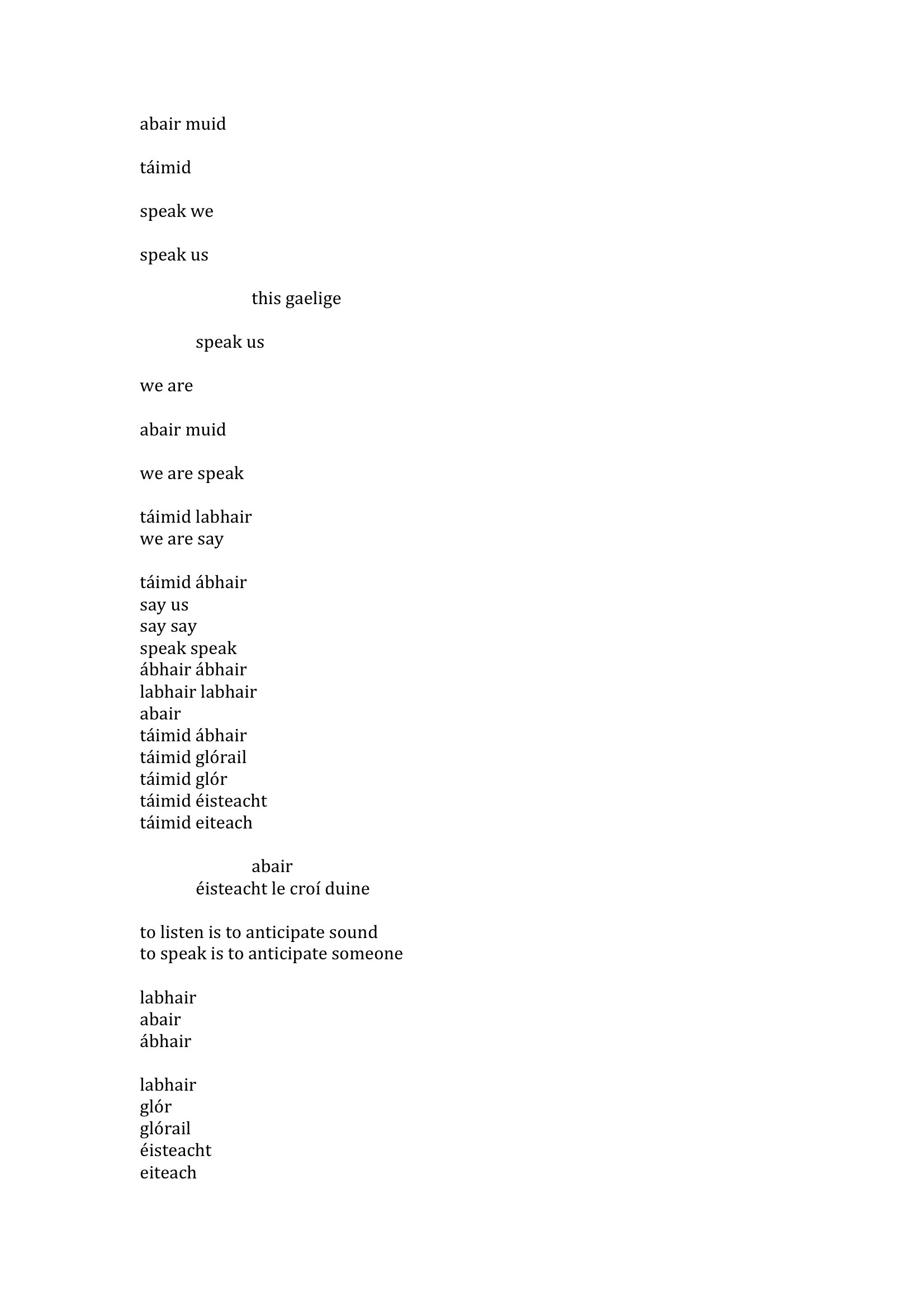
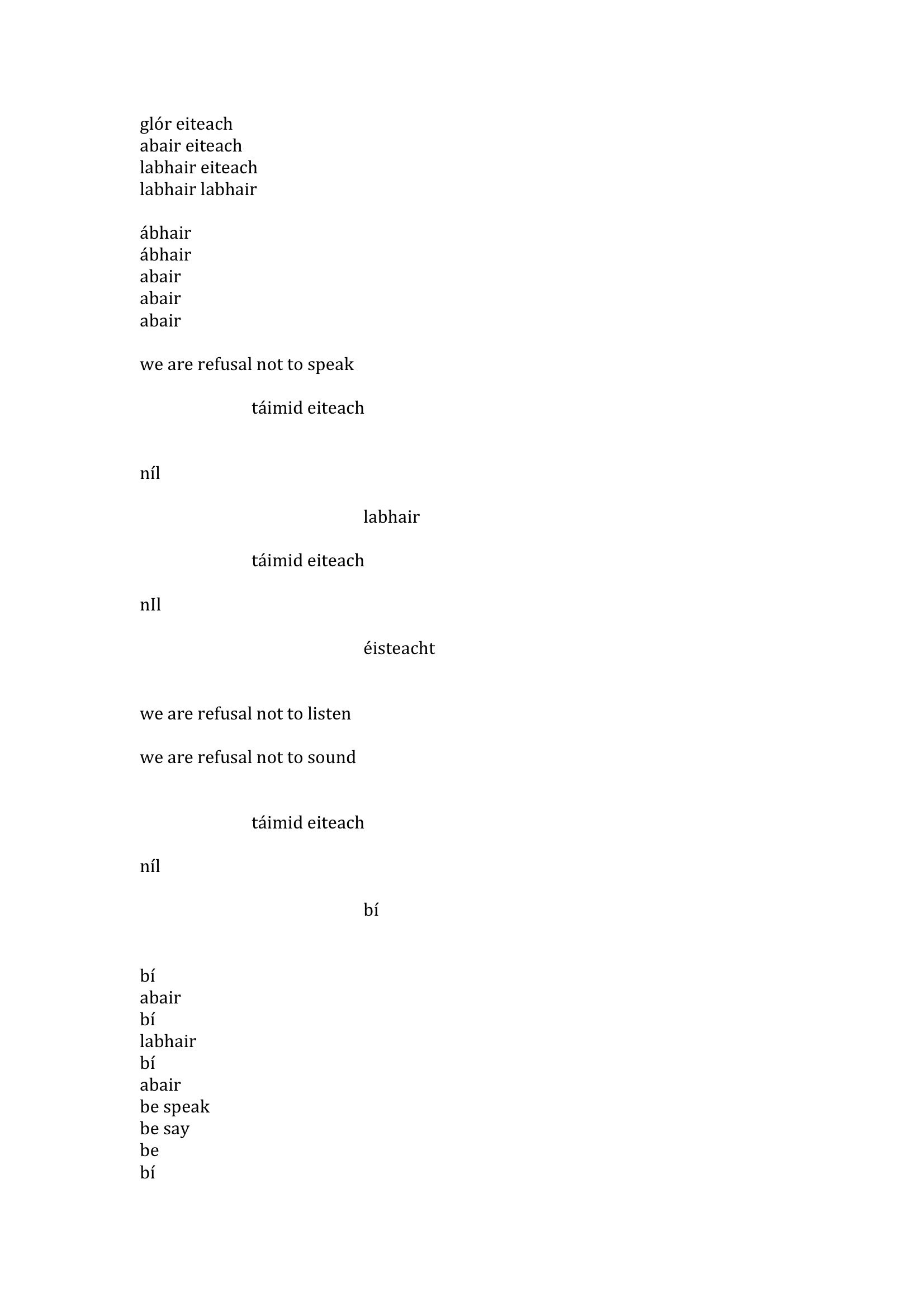
The use of Irish that in the words of Theo Dorgan, ‘places us out of the language set of the boat’ specifically appeals to speaking and identity.  It speaks to the individual ‘saying’, in the act of ‘saying’, not only in Irish but as an individual voice speaking out of its own boat.

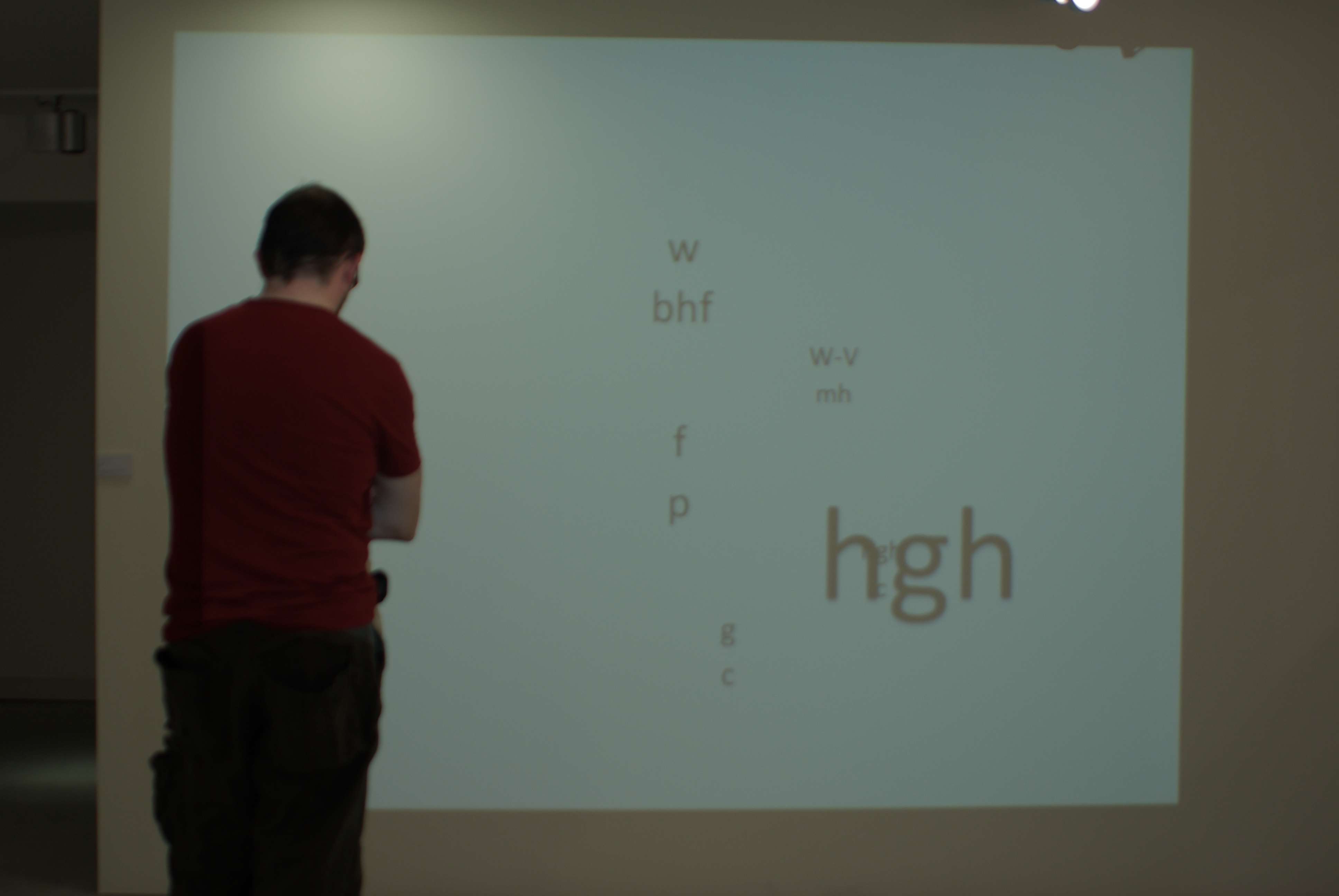
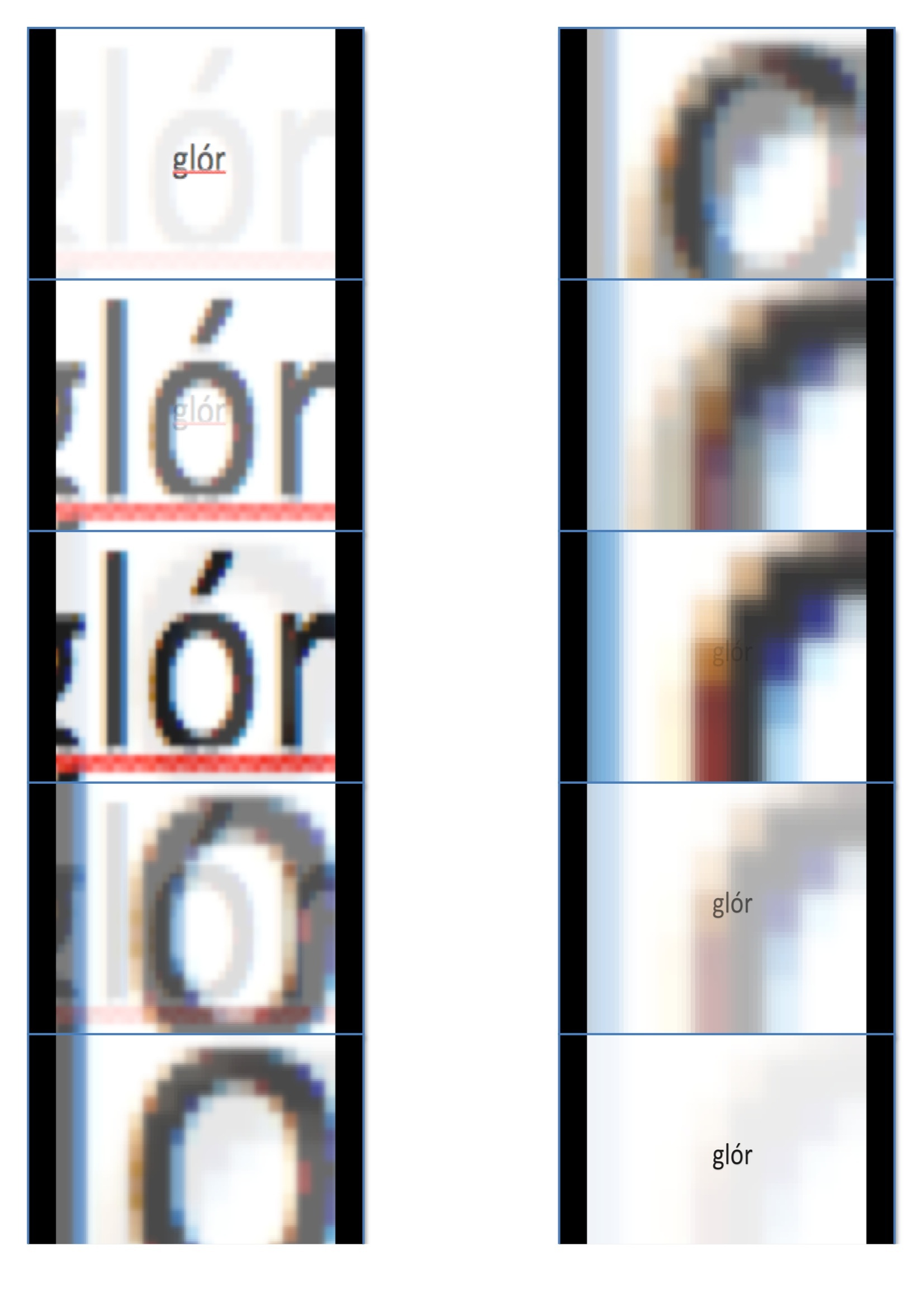
The investigation for Ciall represented initially by this powerpoint presentation ‘abair’ points to the Gaeltacht sensibility depending in the end upon one premise that it keeps speaking that it keeps saying, that it keeps sounding.

Within my own register of voices the poet Maggie O’Sullivan speaks of growing up in Yorkshire with Irish Parents and how that has skewed her relationship to language. To paraphrase John Hall [1] this work places itself as a gerund ‘an action’ caught as a thing’.  A performance of it would anticipate itself as a thing in action. The sensibility of the Gaeltacht is or has to be that of an action, an anticipation of a ‘we’, of a making of a present. Otherwise it ceases to be.

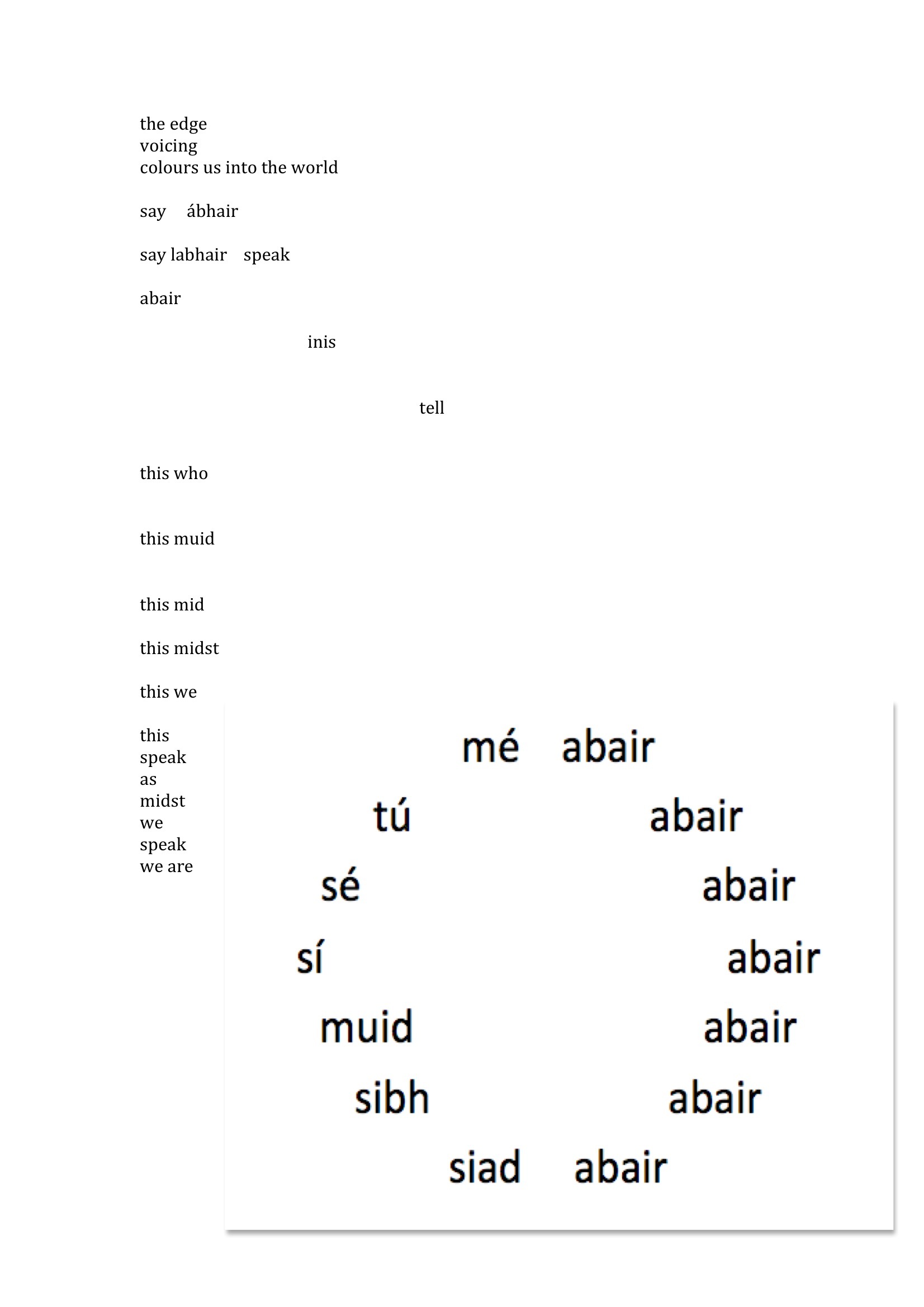
This work will use ‘abair’ as a score for an improvised read/writing that anticipates a reader, a viewer, an other making a meaning.  That meaning is a present of activity. The Gaeltacht makes a present out of its own body of language, language of body, of I of mé, of tú, of muid.  The world exists as and how we sing it into existence, anticipate its present. While it reaches graphically towards voice this work must retain its link to writing and reading, its focus is on the making of meaning and identity through language and the material bodies present in that activity the graphic sign and the reader /viewers body in equal focus. Senses and sense as poetics of the body.

NOTES

[1] John Hall, Thirteen Ways of Talking About Performance Writing (Plymouth College of Art Press, 2007) p.27.

(6)

VERYSMALLKITCHEN writes: The anarcheology here does not have to follow the temporality of a project that concluded in the event at  An Gaileraí, Gweedore, Donegal, on 9th April 2011. Here, score comes after the documentation, and/or the proposal can be a conclusion.

Whilst the original purpose and function of each remaining fragment is in many cases evident, I think the opportunity of transition to a blog format like VerySmallKitchen is that these pieces can be (re-)figured into a sequence that offers new ideas about where and how the work is work is functioning.

Perhaps this is a non-hierarchical treatment of the different components that comprise, to adopt Joseph Grigely’s proposition [in his Exhibition Prosthetics (Bedford Press Editions, 2010)], the “prosthetic body” of language as it runs through all stages of the exhibition (and performance) process.

I have, though, whilst working with sequence and shifting temporalities, kept the various stages distinct, so that movement and adaptability also encounters and negotiates with the specificity of score, event, proposal, performance, document…

… with the further proviso, of course, that any transformation into a new context is a possibility embroiled with loss, gaps, (non-) human error, constellation up and down grade, deletions themselves erased by further dis-/re-/placements, provocations….

(7)

(8)

… the one thing missing and turned down a bit too much during the performance on the vimeo is the multi voice pieces during the métúsésímuidsibhsiad transitions, but i’m always open to interpretation, there is a direction of development in some investigative sense so the poem sort of digs towards an unknown goal considering the call by the gallery so the gaelic comes more at the end but very much in concordance with the poetics of the opening, that is the transgression of the grammar which nearly all gaelic work I’ve seen overly adheres to.

The breaking of the grammar, how that considers language is purposefully basic in part to allow space for performance but also to allow greater opening into the language as a future project…


*

Part 1 of this project is here.

VSK PROJECT: AODÁN MCCARDLE ‘abair’ ANARCHEOLOGY(1)

In Uncategorized on June 12, 2011 at 1:19 pm

Aodán McCardle, ‘abair’, An Gaileraí, Gweedore, Donegal, for Ciall 2011

(1)

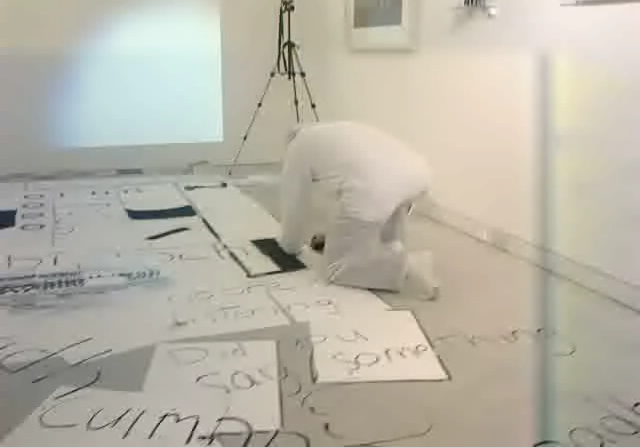
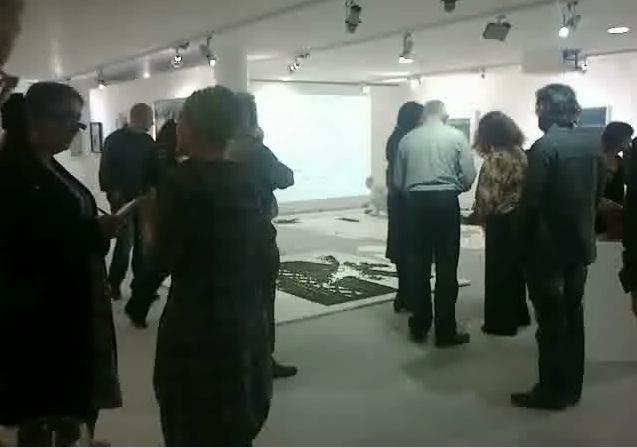
… it’s called ‘abair’ which is  the gaelic verb ‘to say’ though ironically in the end my performance was mute at least verbally, in part due to the type of attention a ‘formal’ art audience was prepared to give especially in the circumstances of this particular exhibition and its subject…

… it became quite different to what i was setting up originally, much more visual and less vocal other than the sounds recorded on the powerpoint, the joys of improvisation, it was very good for me from the experience point of view in that you tend to learn a lot more in that way…

… I’ll be working on a book version but that will take the next year off and on and will have to deal with the different materiality of experience just as Caroline Bergvall moved and changed between book, installation and web version for éclat

(2) ‘abair’

(3)

Aodán McCardle, ‘abair’, An Gaileraí, Gweedore, Donegal, for Ciall 2011

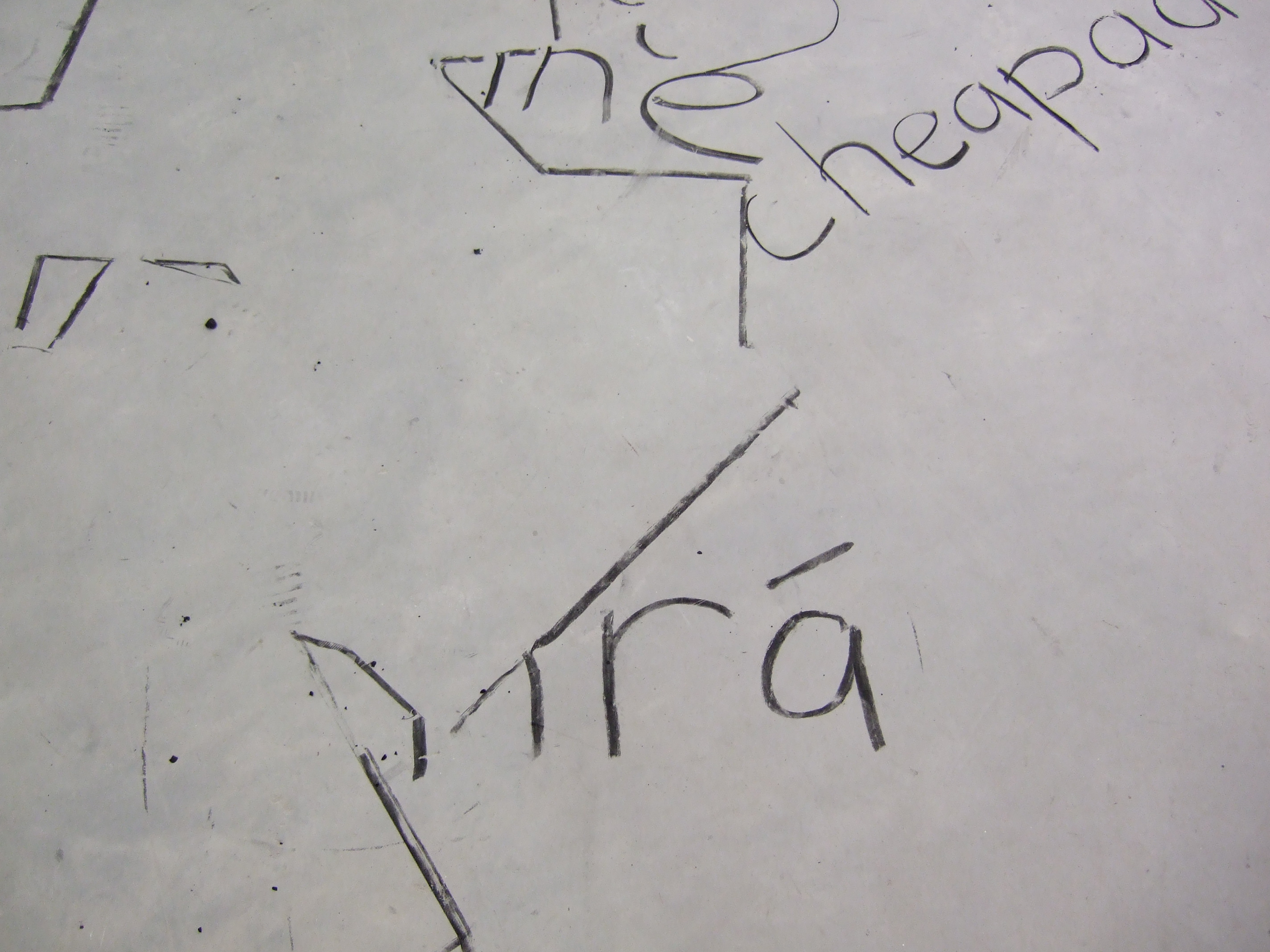
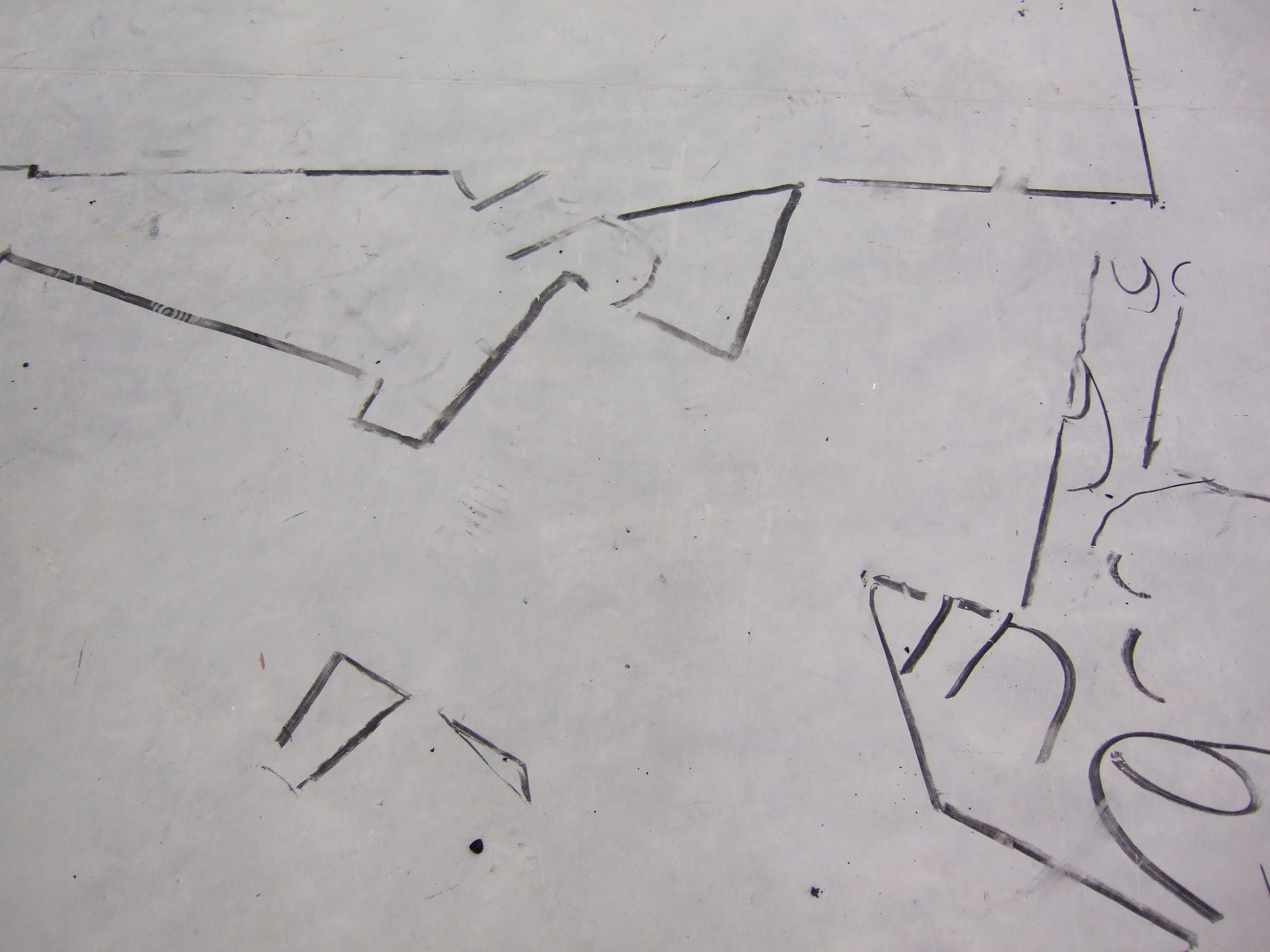
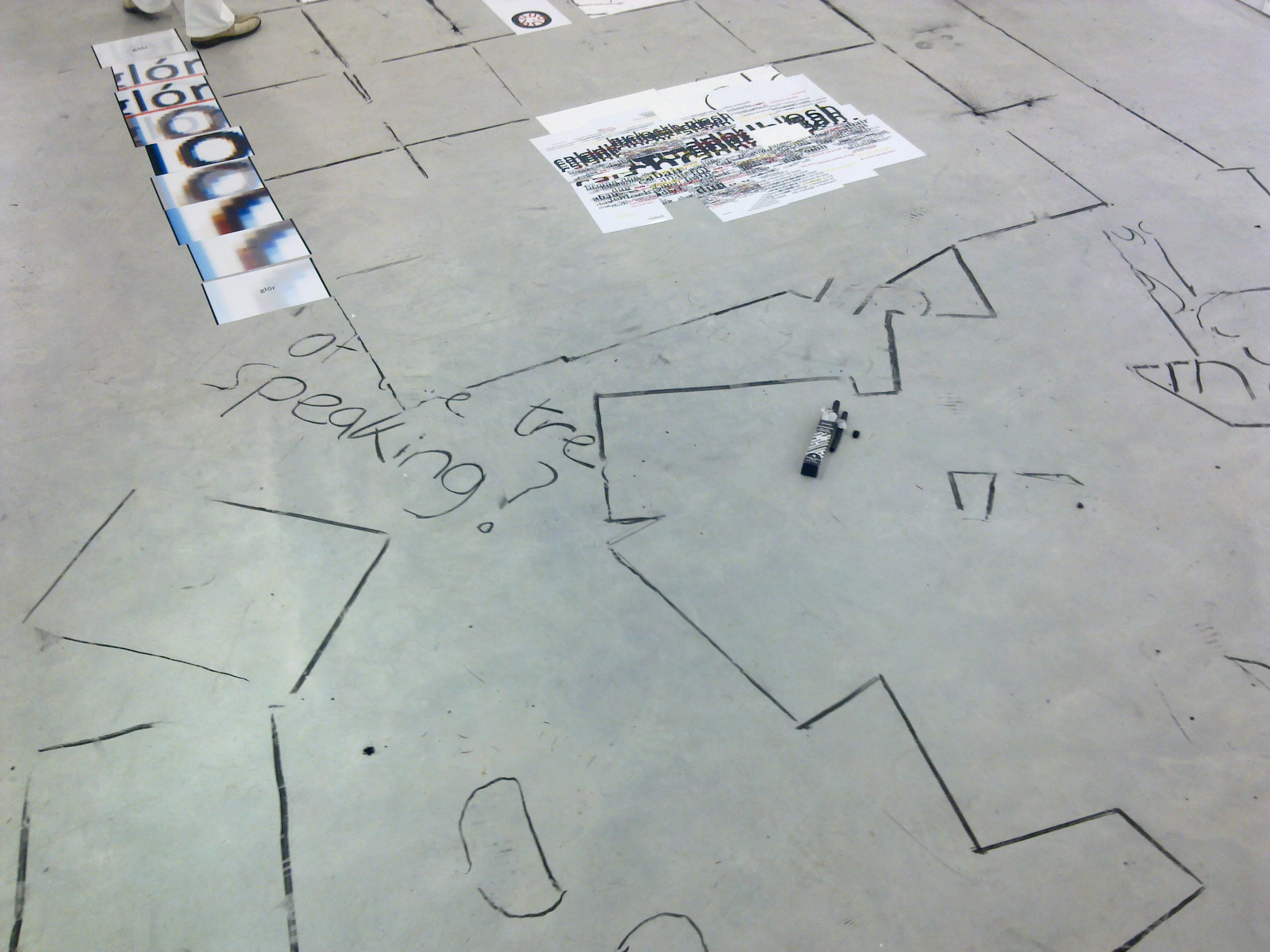
VERYSMALLKITCHEN writes: This VSK Project is anarcheology of a performance by aodán mccardle at An Gailearaí, Gweedore, Donegal in response to Ciall 2011.

It is compiled by VerySmallKitchen – not present at the event itself – in response to an invitation from aodán to work with the numerous traces of the event towards an online presence for the project.

These included: its written score, the event proposal, the performance and installation itself, and how it was documented in email, still, sound and moving image.

Or not, for as aodán observes in an email 05/05/11:

The subsequent improvised site specific performance is a conversation that has been lost as both video cameras failed for different reasons. It will hopefully be glimpsed in its still silence at VerySmallKitchen… The blog there will be an archeological dig of the remnants.

*

Parts 2  of this project is here.