verysmallkitchen

Posts Tagged ‘art writing’

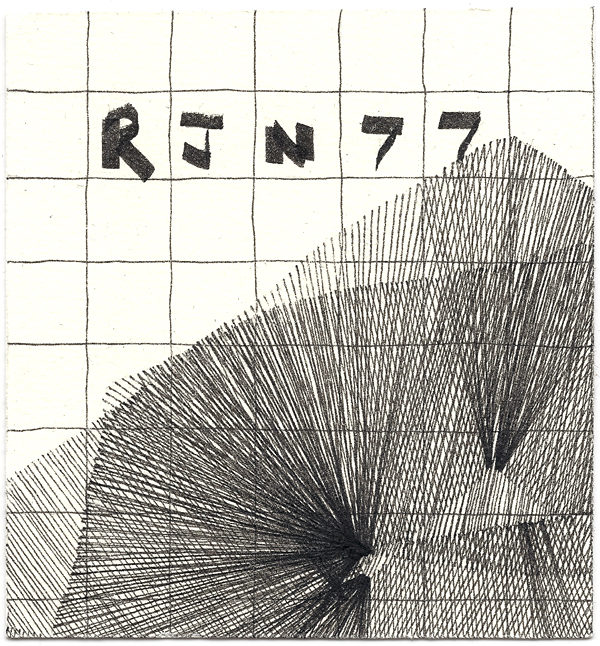
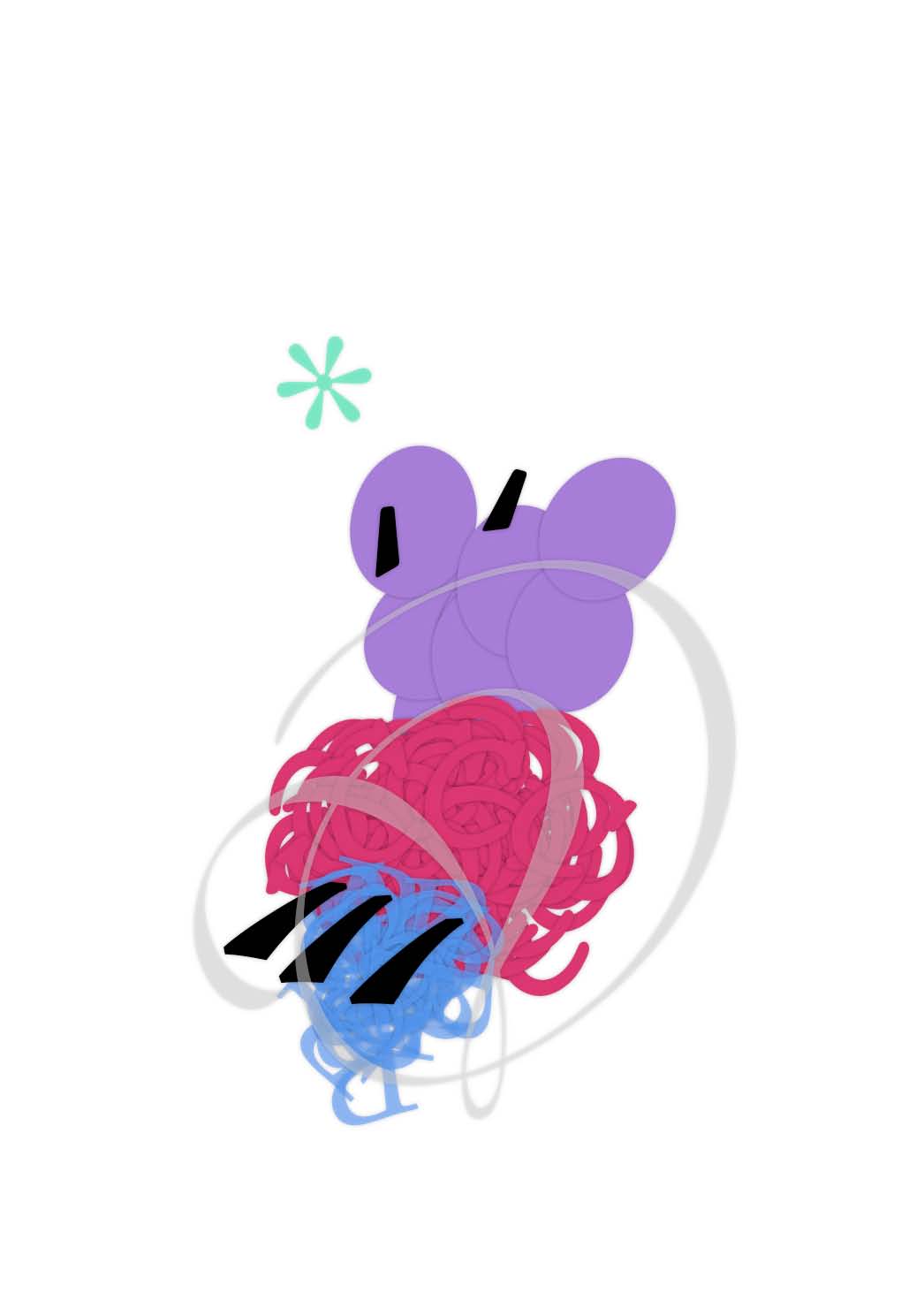
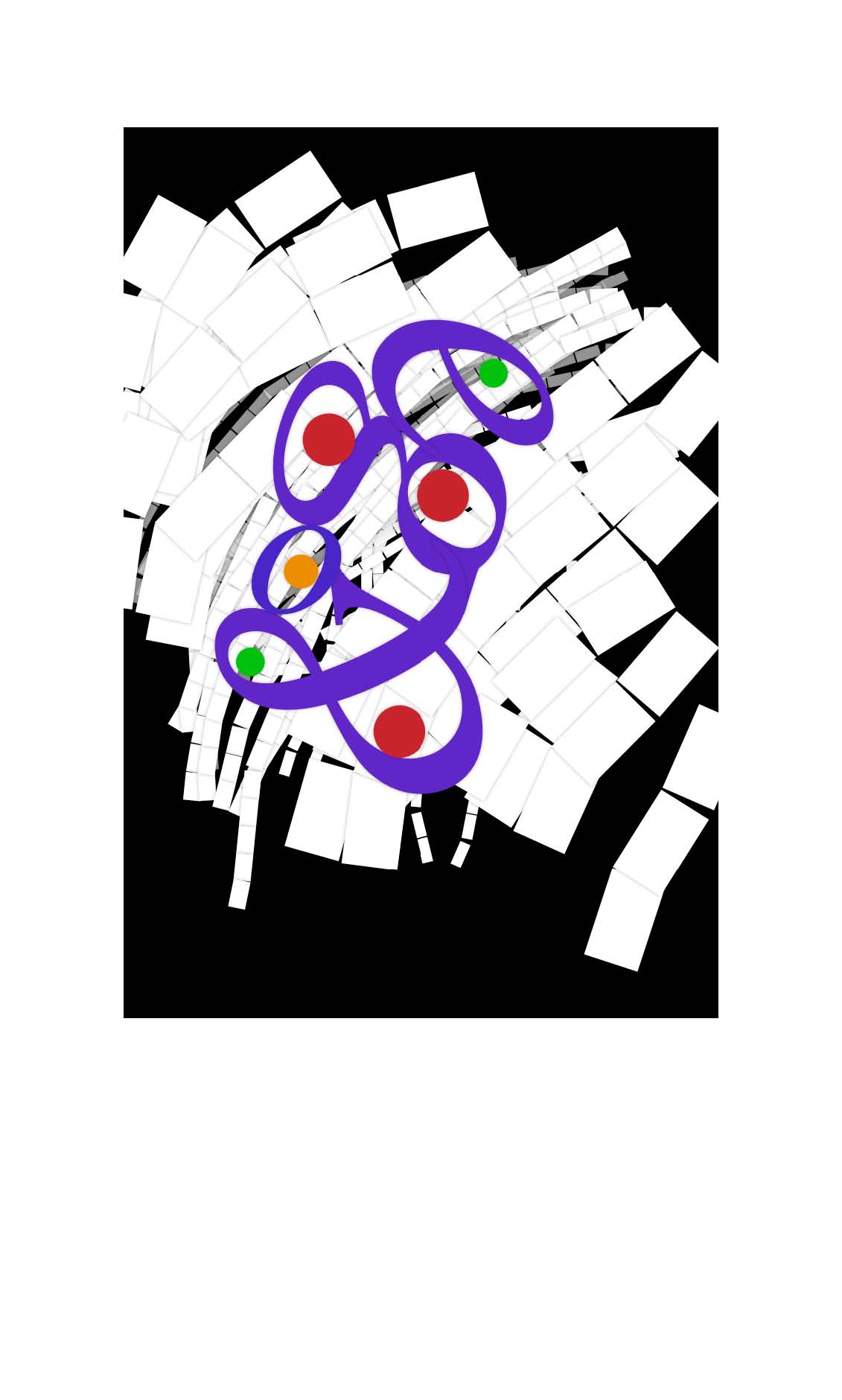
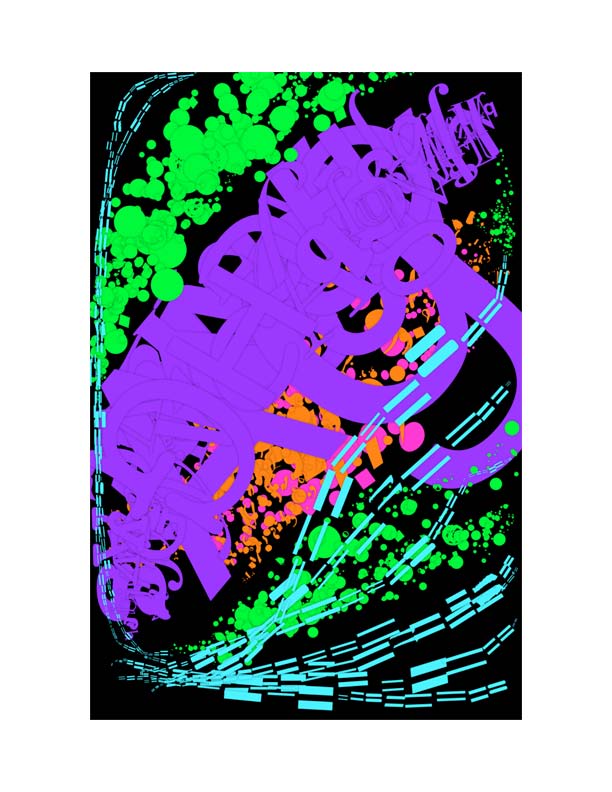
VSK CHAPBOOK PAOLO JAVIER AND MATT JONES: FROM THE OCCULT DIARY OF HOSNI MUBARAK

In Uncategorized on December 18, 2011 at 11:41 pm


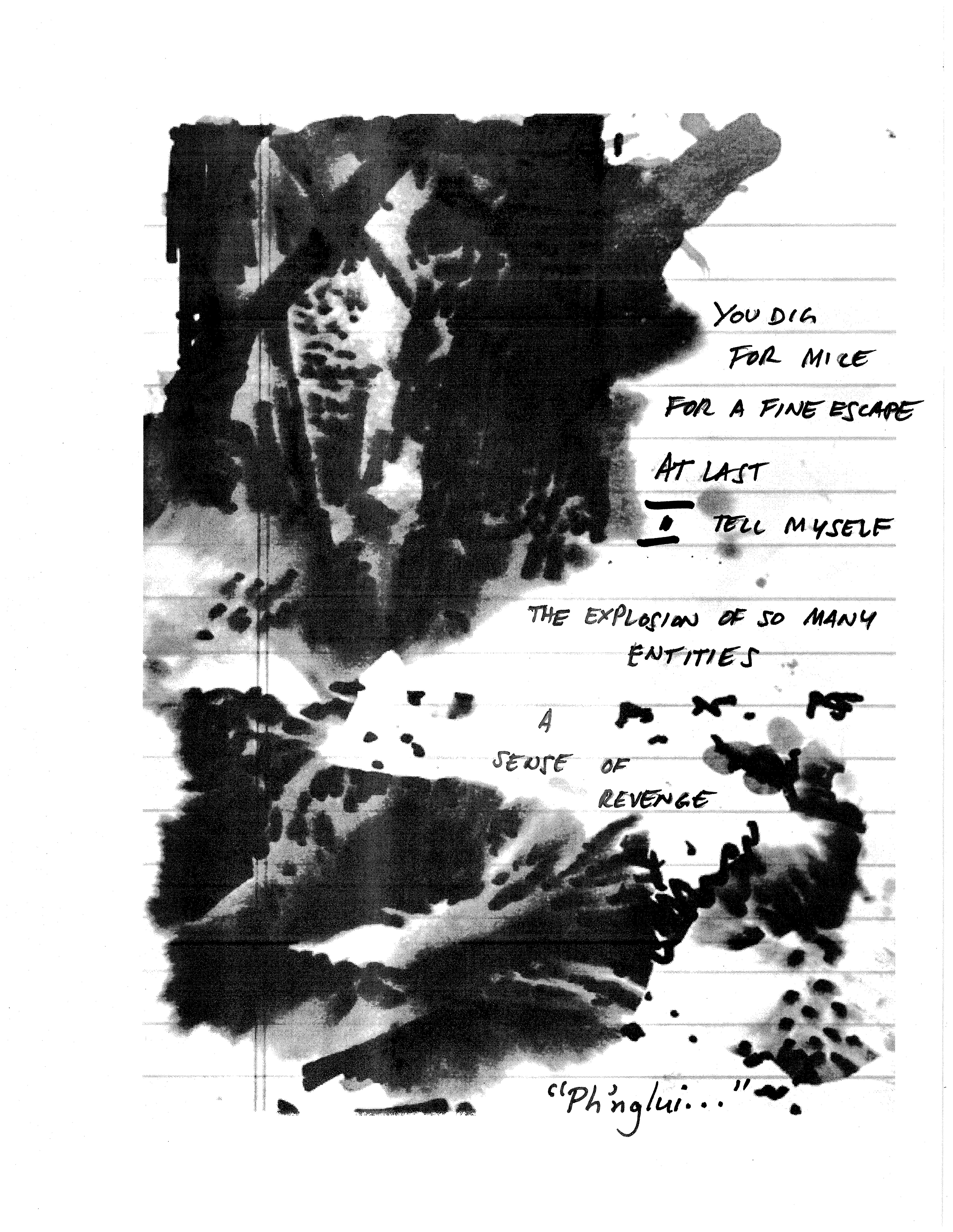
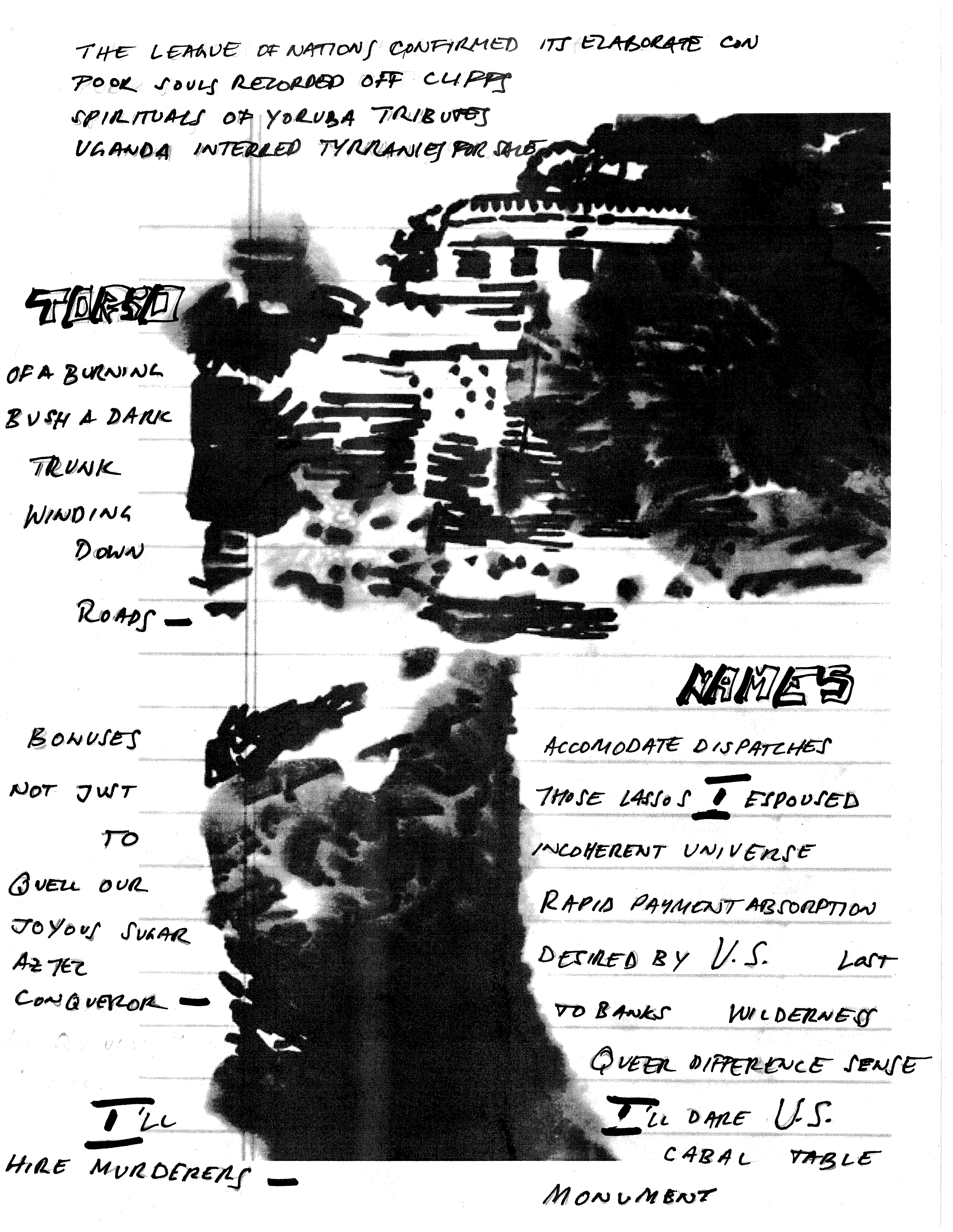
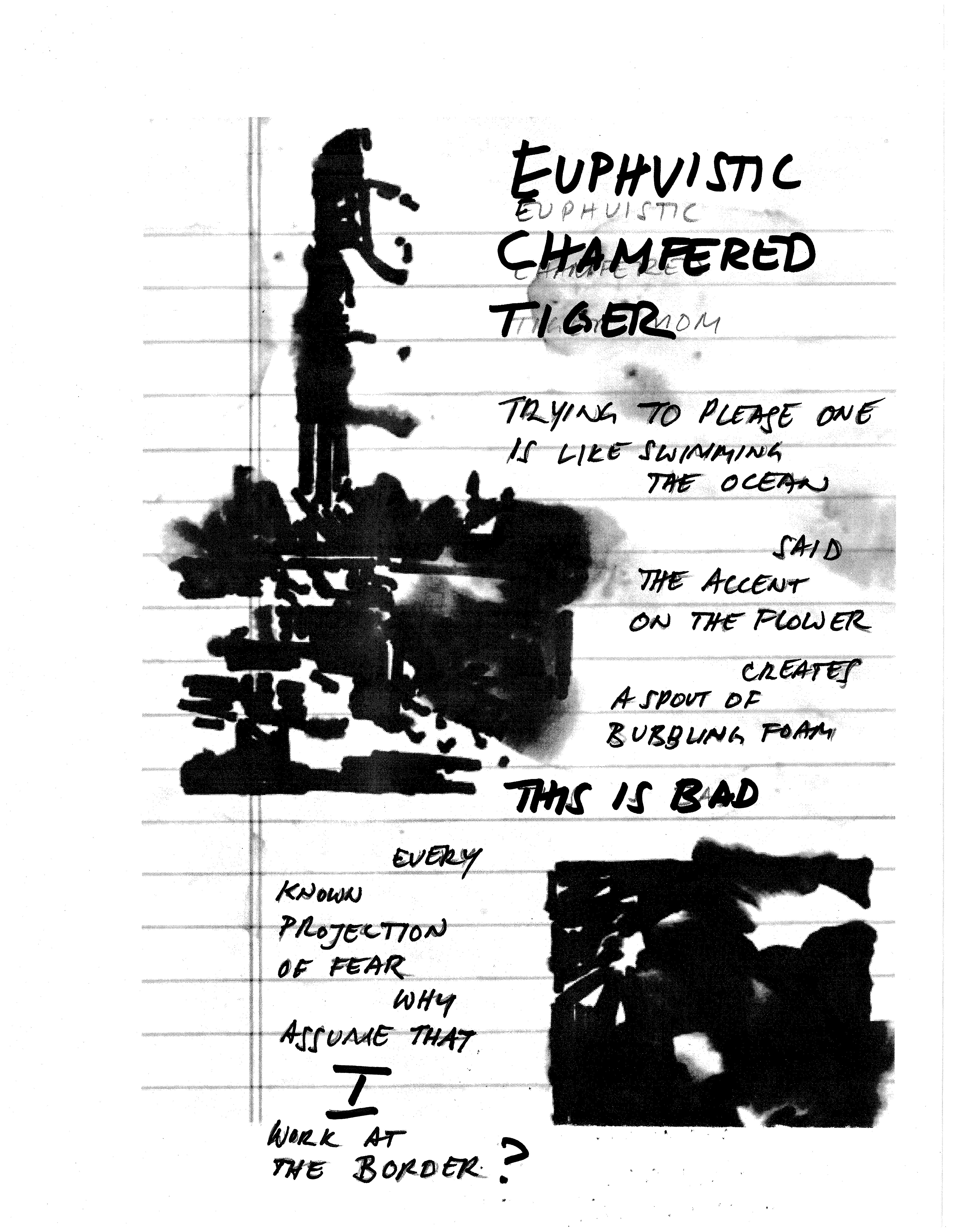
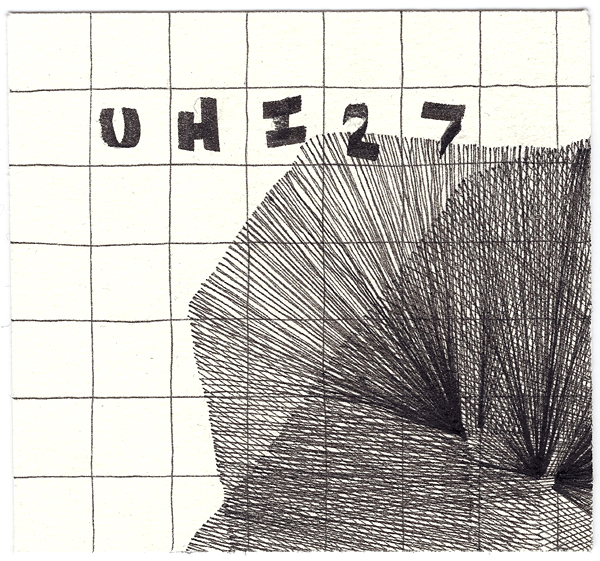
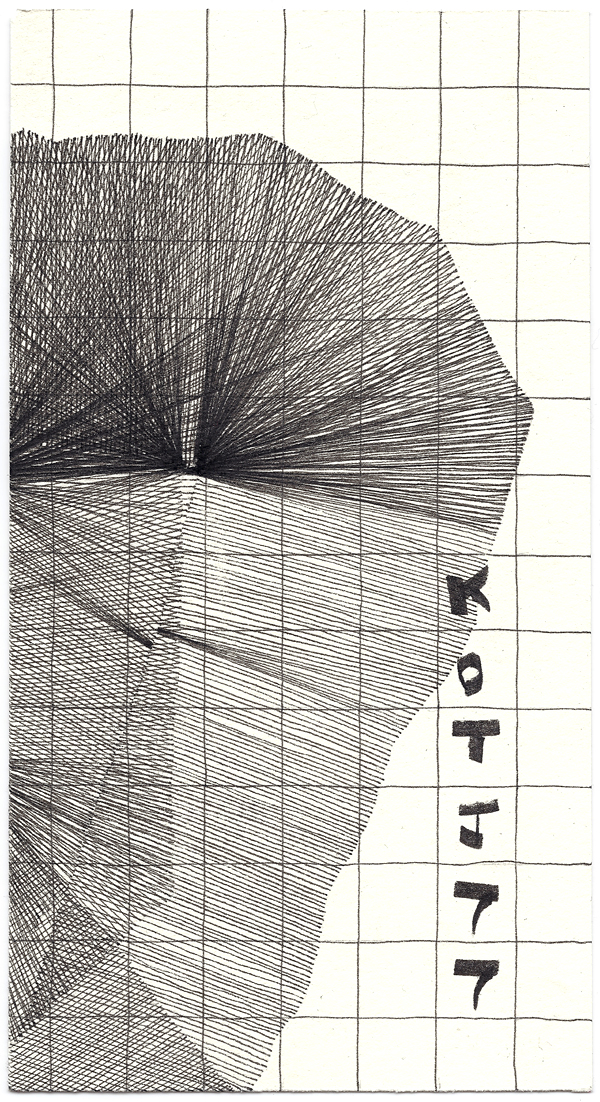
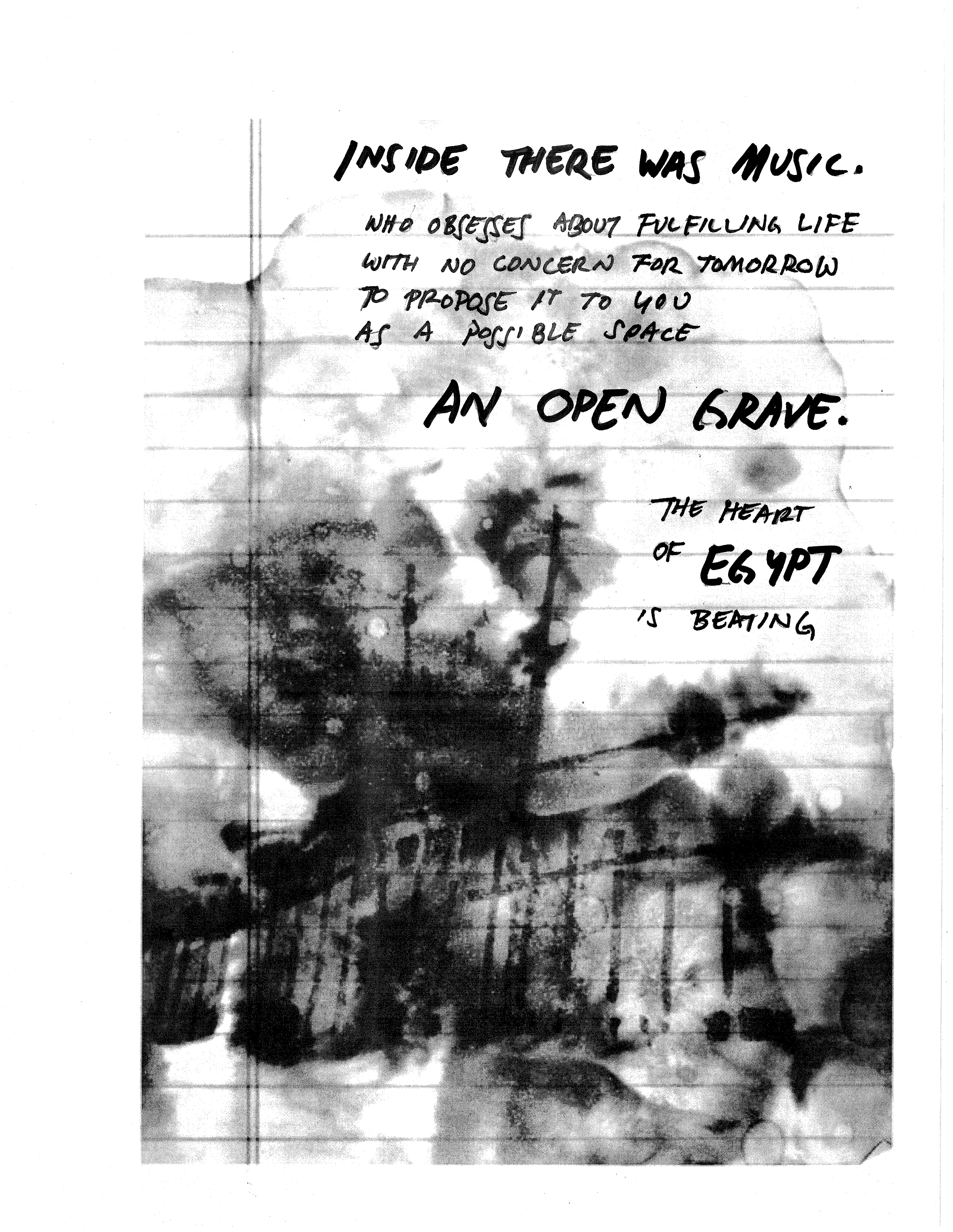
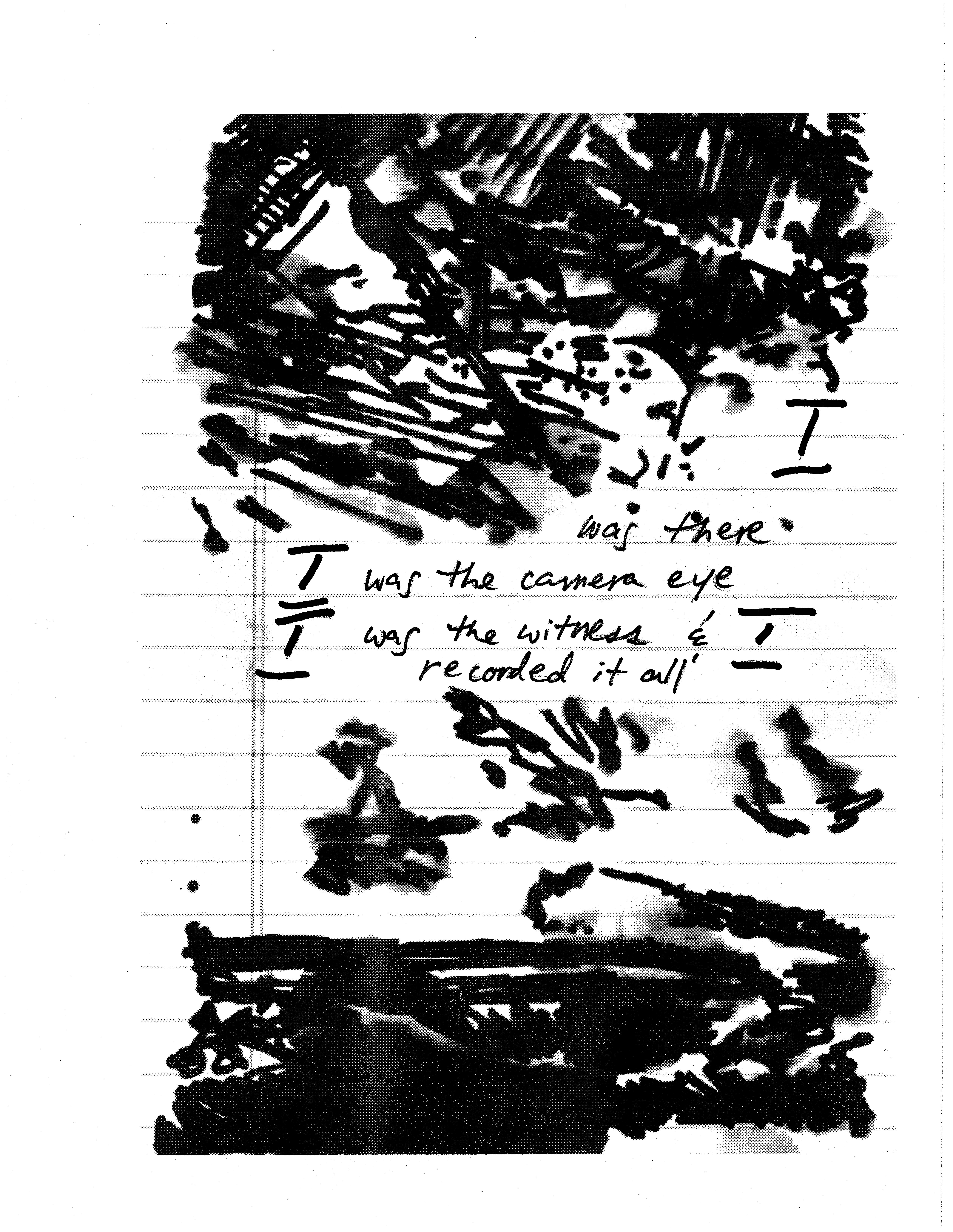
The latest VSK Chapbook is  FROM THE OCCULT DIARY OF HOSNI MUBARAK by Paolo Javier and Matt Jones.  It is available for PDF download here.


*


The authors provide the following information about themselves:

Paolo Javier is the current Queens Borough Poet Laureate. The recipient of grants from the Queens Council on the Arts and New York State Council on the Arts, he is the author of four chapbooks and three full-length poetry collections, including The Feeling Is Actual (Marsh Hawk Press, October 2011).

Matt Jones was born and raised in a suburb of Rochester, New York. He received his BFA in art from the Cooper Union for the Advancement of Science and Art in 2002.

He has had a half dozen solo shows and participated in numerous group shows over the last eight years. He lives and works in Williamsburg, Brooklyn. He’s also read every book on UFOs, the paranormal, ancient astronaut theory, the Knights Templar, and quantum mechanics he can get ahold of.

Ghostbusters is his favorite movie.


*


Paolo was previously artist in residence for VerySmallKitchen’s DEPARTMENT OF MICROPOETICS at the AC Institute in New York. Details of that project is here.

One starting point for collaboration here was Matt Jones Occult Drawings in 2nd Avenue.


*


Read FROM THE OCCULT DIARY OF HOSNI MUBARAK here.


VSK PROJECT NEIL CHAPMAN: MEMO SEVEN

In Uncategorized on December 13, 2011 at 12:11 am


Read MEMO SEVEN as a VSK Chapbook here.  More on Neil’s work is here.


VSK RESIDENCY OHAD BEN SHIMON (2): 2 DECEMBER 2011

In Uncategorized on December 6, 2011 at 4:36 pm

“…it is clear that we must trust in what is difficult; everything alive trusts in it, everything in nature grows and defends itself any way it can and is spontaneously itself, tries to be itself at all costs and against all opposition. We know little, but that we must trust in what is difficult is a certainty that will never abandon us; it is good to be solitary, for solitude is difficult; that something is difficult must be one more reason for us to do it.”

(Rainer Maria Rilke, Letters to a Young poet, The Seventh Letter, May 14th , 1904, Rome)


“Ask yourself in the most silent hour of your night: must I write? Dig into yourself for a deep answer. And if this answer rings out in assent, if you meet this solemn question with a  strong, simple ‘I must’, then build your life in accordance with this necessity; your whole life, even into its humblest and most indifferent hour, must become a sign and witness to this impulse.”

(Rainer Maria Rilke, Letters to a Young poet, The First Letter, Feb 17th , 1903, Paris)


2.12.11


It is night-time.
It is winter.
It is cold.

It is difficult.
It is hard.
It is driving you crazy.

Nevertheless.

It is good.
It is for the good.
It is difficult for the good.
It is a difficult time for the good.

Nevertheless.

You will be fine.
You will.

As long as you keep your eyes open no harm will be done to you.

Be aware.
Be brave.
Be funny.
Be consistent.
Be around friends.
Be in big cities.
Be in the country side.

Be sexy.
Be aroused.
Be attracted and attractive.
Be horny.
Be flirty.
Be clever.
Be yourself and not yourself.
Be the different characters of yourself.

Be a literary hero.
Be a movie star.
Be famous.
Be famous.

Be emotional.
Be lost.
Be free.

Be reading books.
Be walking in the forest.
Be riding the bike.
Be and be not-be.

Be someone who cares.
Be honest.
Be a man.

Be a woman.
Be a child.
Be in equanimity.

This poem demands a final ‘Be’ standing alone at the end but I wont do that.

Be-cause,
this poem wants to
be
a
tree.


_


What has not been said?

There must be something that has not been said.

Postmortem.

How can we connect that to Postmodernism?


_


She is on her fours,

I am above her.

She is below me.

She is blowing me.


I am being blown.

I am being blown from below.

I am being blown from below by a beautiful blonde.

I am being blown from below by a beautiful blonde with big breasts.

b(e)-b(e)-b(e)-b(e)-b(e)-b(e)-b(e)-b(e)

Her breasts are dangling in front of me.

I look at them.

They are big.

They belong to a beautiful blonde with big breasts.

I take them in my mouth.

I suck on them.

She sucks on me.

We both suck each other.

We suck and suck and suck.

Then we fuck and go to sleep.


The following is a reconstruction of an email exchange between VerySmallKitchen and Ohad Ben Shimon in response to the above post, which took place Dec 3-4 2011.


OHAD: i have been wanting to write something erotic after reading bataille’ story of the eye for the first time. im aware that it doesnt quite pass by my usual subject matters or ‘style’.

what made the last section definite for me is that it is not at all about desire or the sexual act but only about the one long sentence where i felt like coming up with a lot of words starting with the letter ‘b’ – being blown by a beautiful blonde with big breasts and that that would echo somehow the verb/wish – ‘be’ from the first section, so to have some kind of ‘coded’ message. and in relation to poetry and photography…that they should also just be in the sense that a poem wants to be and a photograph/image wants to be..

i guess im ‘building on’/trusting the contingency of language..in form and in essence in the sense that contingency is something applicable to propositions and i see art as a proposition. maybe that is the necessary link we need in order to come back to our original question – what is the relation between art practice and writing..


VerySmallKitchen: One characteristic of texts that position themselves between art practice and writing seems to be an immersion in the possibilities of a form or genre which is simultaneously a utilisation of its possibilities/effects and a commentary upon those –


Ohad: i do consider all of this discourse as one which is on a meta level yes definitely. i think the kind of poetry i am most interested in is ars poetics and i guess that im interested in connecting poetry as the highest form of literature to a possible highest form of visual art, perhaps that would be painting or some other form of image-language (beeld-taal in dutch)? so im dealing here with comparing these two systems, the system of language to the system of art via a meta connection, yes.


VerySmallKitchen: But these multiple levels of (self-) awareness are not necessarily shared or even identified by a reader.  Perhaps that explains texts that require performance or discussion to be “completed” in some way, either as “afters” or by inviting notions of script and conversation into their own page forms –


Ohad: (thinking out loud) is an incomplete text one that does not have con-text? do we need a text to have a ‘con’ in order to justify it or can it just be without having an antagonist to ‘fight’ against? a preposition (con) to complete the proposition? does a text need a context in order to be self-aware? does its self-awareness require a context in order to be comprehended? does a text need to be comprehended?

maybe this is a quality that we can borrow from visual art which does not necessarily require to be comprehended in order to be enjoyed..maybe such is the form of the ‘artistic’ text? maybe con-text as such is something we can start to imagine doing without. i mean this in the sense that everything is context. everything is going against the text. that is why it wants to be, to be on its own, to exist on its own terms (like the reference by rilke) to exist.

the text is the protagonist and the con-text is the antagonist. maybe that is the duel of literature..that is the pity i find in story of the eye by bataille.. it is followed by an unnecessary ( in my opinion) contemplation by roland barthes and susan sontag who will creep their way into whatever interesting text is out there..

… i think a good way to deal with this is indeed through performance, especially as regarding to voice, and the sound the text and reader make whilst reading it – indeed a more physical form. perhaps that is the reason for all the explicit physicality, stereo-typical sexual representation, i.e the politics of representation at the end. the politics of representation here is in fact a politics of repression in which the voice is being repressed by an all encompassing Über-con-text.

… some final thoughts about things standing on their own..perhaps we are attempting here a challenge to what is believed to be unachievable in contemporary art..an object standing on it own..a self contained object..


VerySmallKitchen: But despite all these processes/ideas the post still concludes with a stereotypical heterosexual male sexual fantasy/ porn image-


Ohad: what is a classic porn image/ male fantasy? im sure there are million different kinds of fantasies. why are we forced to think that there is one iconic, original, solid male fantasy. the nature of fantasy itself is in the multitude not the singular..dreams and fantasies are lucid. maybe we are dealing with challenging the classic definition of a male fantasy?

maybe the ‘pornographic’ section at the end is dealing with the deconstruction of the original/monolithic text/male fantasy as such? maybe that is where porn and poetry meet..? i guess you are right in pointing out that we do have some gender issue on our hands. how to deal with that? maybe in the next post?


VerySmallKitchen: Thinking about blog traffic I was considering the relations of our ideas on language and art practice to “beautiful blonde big breasts sucks” as google search terms… should this be part of our concern?


Ohad: the google search terms is part of our inquiry i believe. google is the all encompassing context which the texts we are dealing with today take their oxygen/raison de etre from.


Post 1 is here. More about Ohad’s work is here.


VSK PROJECT: ALISON BALLANCE OTHER GARDENS – VERSION 12

In Uncategorized on December 1, 2011 at 9:29 pm


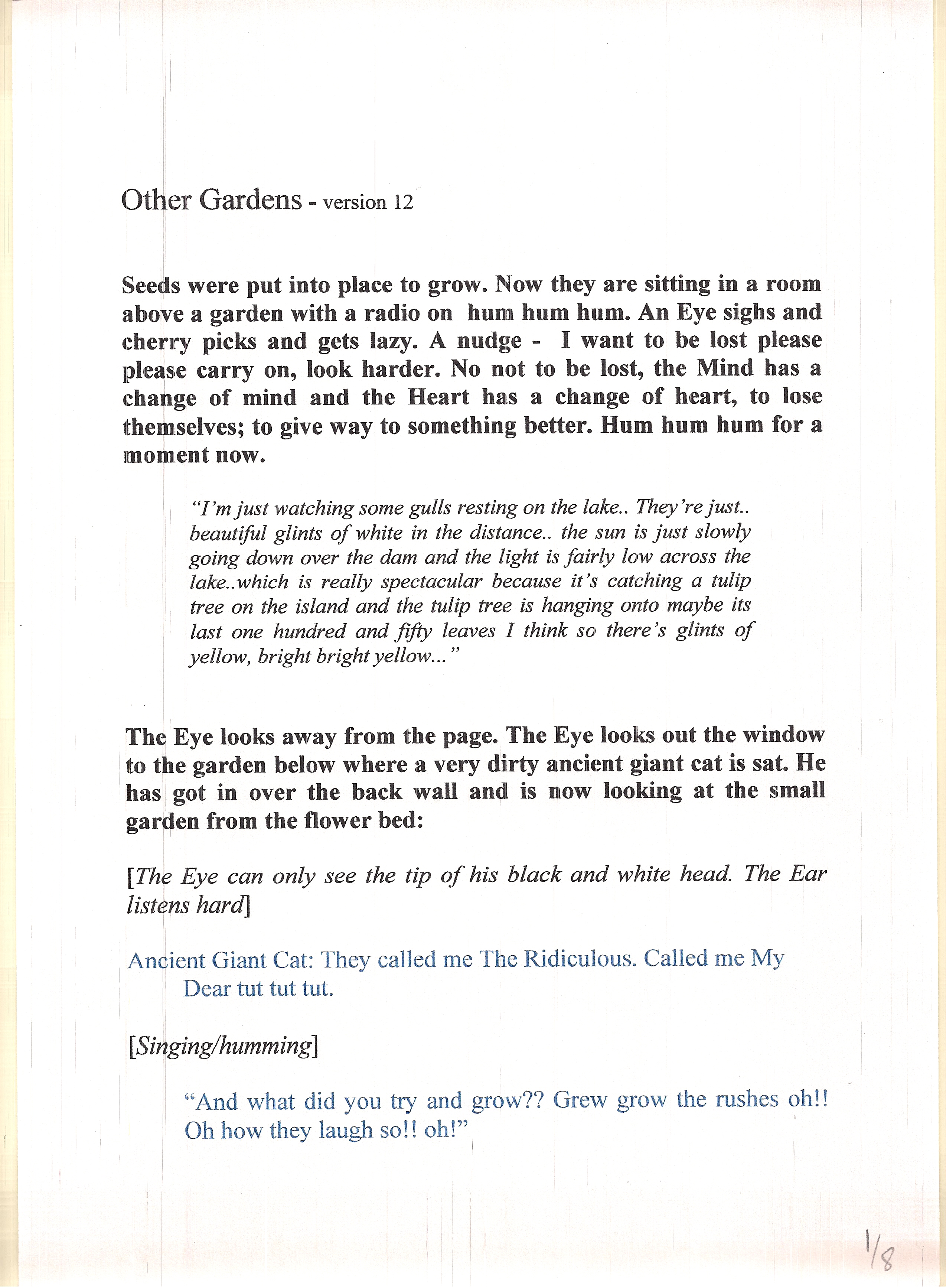
Other Gardens – version 12 is available as a VSK chapbook here.  More on Alison’s work is here.


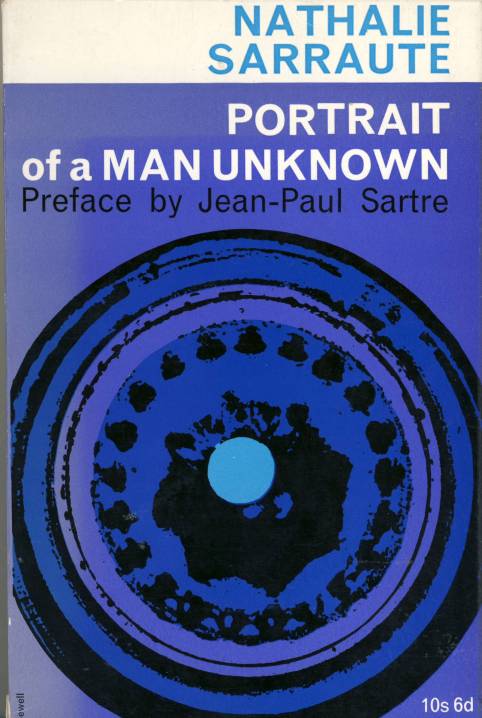
DEMOTIC ARCHIVES OF ART WRITING: THE TROPISMS OF NATHALIE SARRAUTE

In Uncategorized on November 19, 2011 at 11:14 am


VerySmallKitchen writes: This edition of the Demotic Archives focusses on the TROPISMS of Nathalie Sarraute, via (A) a foreword to a joint English language edition of Tropisms (originally published in French 1939) and Sarraute’s essay collection The Age of Suspicion (1956).

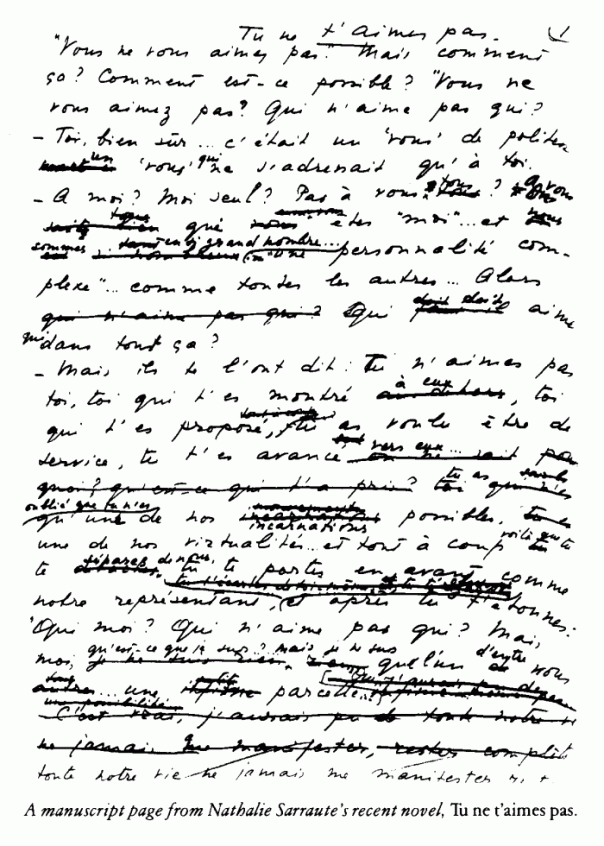
Sarraute’s foreword outlines her understanding of the tropism as the “inner ‘movements’… which are hidden under the commonplace, harmless appearances of every instant of our lives”.  It also serves  to correct misunderstandings about  the relation between these fiction writings (Sarraute’s first) and the theoretical ideas that unfolded from them and which were often considered in relation to the nouveau roman of the 1950s.

This foreword is supplemented here by:  (B) two tropisms from her original collection, selected partly for their engagement with relations of culture and sociality and (C) an extract from Age of Suspicion that discusses tropisms through the figure of the Partner. (D) provides an example of how Sarraute’s ideas became part of the fiction and criticism of Christine Brook-Rose.


SOURCE TEXT: Nathalie Sarraute, TROPISMS and The AGE OF SUSPICION (London, John Calder, 1963. Translated by Maria Jolas).


A.FOREWORD


THE PUBLICATION in one volume of a work like Tropisms – which some considered to be a collection of prose poems – with what, quite obviously, is furthest removed from it: a series of essays on the novel, may cause legitimate surprise.

And yet this proximity is justifiable.

The great interest shown today in discussions of the novel, and especially in the theories advanced by the supporters of what, in France at present, is called ‘Nouveau Roman’, has led many to imagine that these theorising novelists are cool calculators who began by constructing their theories, which they then decided to put into practice in their books. This explains the fact that their novels have been referred to as ‘laboratory experiments.’

If this were the case, it might seem plausible that, one fine day, after having formulated certain opinions on the evolution, content and form of the present-day novel, I sat down at my table and undertook to apply them by writing Tropisms, and the books that followed.

Nothing could be more mistaken than this supposition. For no literary work can be a mere illustration of principles, however convincing. And, in fact, these articles, all of which were written in 1947, are far removed from the conception and composition of my first book.

I started to write in 1932, when I composed my first Tropism. At that time, I had no preconceived ideas on the subject of literature and this one, as were those that followed it, was written under the impact of an emotion, of a very vivid impression. What I tried to do was to show certain inner ‘movements’ by which I had long been attracted; in fact, I might even say that, ever since I was a child, these movements, which are hidden under the commonplace, harmless appearances of every instant of our lives, had struck and held my attention. In this domain, my first impressions go  back very far.

These movements, of which we are hardly cognizant, slip through us on the frontiers of consciousness in the form of undefinable, extremely rapid sensations. They hide behind our gestures, beneath the words we speak and the feelings we manifest, all of which we are aware of experiencing, and are able to define. They seemed, and still seem to me to constitute the secret source of our existence, in what might be called its nascent state.

And since, while we are performing them, no words express them, not even those of the interior monologue – for they develop and pass through us very rapidly in the form of frequently very sharp, brief sensations, without our perceiving clearly what they are – it was not possible to communicate them to the reader otherwise than by means of equivalent images  that would make him experience analogous sensations. It was also necessary to make them break up and spread out in the consciousness of the reader the way a slow-motion film does. Time was no longer the time of real life, but of a hugely amplified present.

These movements seemed to me to be veritable dramatic actions, hiding beneath the most commonplace conversations, the most everyday gestures, and constantly emerging up on the surface of the appearances that both conceal and reveal them.

The dramatic situations constituted by these invisible actions interested me as such. Nothing could distract my attention from them and nothing should distract that of the reader; neither the personality of the characters, nor the plot, by means of which, ordinarily, the characters evolve. The barely visible, anonymous character was to serve as mere prop for these movements, which are inherent in everybody and can take place in anybody, at any moment.

Thus my first book is made up of a series of moments, in which, like some precise dramatic action shown in slow motion, these movements, which I called Tropisms, come into play. I gave them this name because of their spontaneous, irresistible, instinctive nature, similar to that of the movements made by certain living organisms under the influence of outside stimuli, such as light.

This analogy, however, is limited to the instinctive, irresistible nature of the movements, which are produced in us by the presence of others, or by objects from the outside world. It obviously never occurred to me to compare human beings with insects or plants, as I have sometimes been reproached with doing.

The volume entitled Tropisms appeared in 1939, under the imprimatur of Denoël. The present edition, source of this translation, was published by the Editions de Minuit, in 1957. It is a corrected re-edition of the 1939 volume, to which have been added the six last texts, written between 1939 and 1941.

This first book contains in nuce all the raw material that I have continued to develop in my later works.

Tropisms are still the living substance of all my books, the only difference being that they now play a more important role, the time of the dramatic action they constitute is longer, and there is added complexity in the constant play that takes place between them and the appearances and commonplaces with which they emerge into the open: our conversations, the personality we seem to have, the person we seem to be in one another’s eyes, the stereotyped things we believe we feel, as also those we discover in others, and the superficial dramatic action constituted by plot, which is nothing but a conventional code that we apply to life.

My first books: Tropismes, which appeared in 1939, and Portrait d-un inconnu in 1948, passed practically unnoticed in the post-war literary atmosphere, which was dominated by the Behaviourist tendency and by a metaphysics of the ‘absurd.’

As a result, if for no other reason than to seek justification, reassurance or encouragement for myself, I began to reflect upon the motives that impelled me to reject certain things, to adopt certain techniques, to examine certain works of both past and present, and to anticipate those of the future, in an effort to discover an irreversible direction in literature that would permit me to see if my own quest was in line with this direction.

Thus it was that, in 1947, I was prompted to study the works of Dostoievski and Kafka from a particular angle. In the article entitled L’Ere du soupçon, which appeared in 1950, I tried to show the results of the transformations of characters in fiction since Balzac’s time,as exemplified in the contemporary novel. And in Conversation et sous-conversation,  published in 1955, I called attention to the out-moded nature of dialogue as practised in the traditional novel.

In connection with the latter article, I should like to stress the fact that when I spoke of the old-fashioned nature of the works of Joyce and Proust, or the naïveté of Virginia Woolf’s ideas on the subject of the novel, it was quite obviously to poke fun at those who had expressed themselves in this manner about these writers. Taken as a whole, it seems to me that this article is perfectly clear; I insist on this point, however, because it has been a source of occasional misunderstanding.

Lastly, in the article entitled Ce que voient les oiseaux, which appeared in 1956, I tried to show, among other things, the academic, formalist features of a certain type of ‘realism’.

Some of the ideas expressed in these articles have contributed to the essential bases for what, today, us called the ‘Nouveau Roman.’

And so, it seems to me that the present volume, to which two such dissimilar works as Tropisms and The Age of Suspicion may give an appearance of incongruity, by virtue of this very juxtaposition, gives a fair account of my endeavours, as they progressed from my first Tropisms to the theoretical viewpoints that derived from them.


Paris, 1962. (7-11)


B. TROPISMS


XI


She had understood the secret. She had scented the hiding-place of what should be the real treasure for everybody. She knew the ‘scale of values.’

No conversations about the shape of hats and Rémond fabrics for her.  She had profound contempt for square-toed shoes.

Like a wood-louse she had crawled insidiously towards them and maliciously found out about ‘the real thing’, like a cat that licks its chops and closes its eyes before a jug of cream it has discovered.

Now she knew it. She was going to stay there. They would never dislodge her from there again. She listened, she absorbed, greedy, voluptuous, rapacious. Nothing of what belonged to them was going to escape her: picture galleries, all the new books… She knew all that. She had begun with ‘Les Annales’, now she was veering towards Gide, soon she would be going to take notes, an eager, avid gleam in her eye,  at meetings of the ‘Union for Truth’.

She ranged over all that, sniffed everywhere, picked up everything with her square-nailed fingers; as soon as anyone spoke vaguely of that anywhere, her eyes lighted up, she stretched out her neck, agog.

For them this was unutterably repellent. Hide it from her – quick – before she scents it, carries it away, preserve it from her degrading contact… But she foiled them, because she knew everything. The Chartres Cathedral could not be hidden from her. She knew all about it. She had read what Péguy had thought of it.

In the most secret recesses, among the treasures that were the best hidden, she rummaged about with her avid fingers. Everything ‘intellectual’. She had to have it. For her. For her, because she knew now the real value of things. She had to have what was intellectual.

There were a great many like her, hungry, pitiless parasites, leeches, firmly settled on the articles that appeared, slugs stuck everywhere, spreading their mucus on corners of Rimbaud, sucking on Mallarmé, lending one another Ulysses or the Notebook of Malte Laurids Brigge, which they slimed with their low understanding.

‘It’s so beautiful,’ she said, opening her eyes in which, with a pure, inspired expression, she kindled a ‘divine spark’. (34-5)


XII


During his very well-attended lectures at the Collège de France, he amused himself with all that.

He enjoyed prying, with the dignity of professional gestures, with relentless, expert hands, into the secret places of Proust or Rimbaud, then, exposing their so-called miracles, their mysteries, to the gaze of his very attentive audience, he would explain their ‘case’.

With his sharp, mischevous little eyes, his ready-tied cravate and his square-trimmed beard, he looked enormously like the gentleman in the advertisements who, with one finger in the air, smiling recommends Saponite, the best of soap-powders, or the model Salamander: economy, security, comfort.

‘There is nothing,’ he said, ‘you see I went to look for myself, because I won’t be bluffed; nothing that I myself have not already studied clinically countless times, that I have not catalogued and explained.

‘They should not upset you. Look, in my hands they are like trembling, nude little children, and I am holding them up to you in the hollow of my hand, as though I were their creator, their father, I have emptied them for you of their power and their mystery. I have tracked down, harried what was miraculous about them.

‘Now they hardly differ from the intelligent, curious and amusing eccentrics who come and tell me their interminable stories, to get me to help them, appreciate them, and reassure them.

‘You can no more be affected than my daughters are when they entertain their girl friends in their mother’s parlour, and chatter and laugh gaily without being concerned with what I am saying to my patients in the next room.’

This was what he taught at the Collège de France. And in the entire neighbourhood, in all the nearby Faculties, in the literature, law, history and philosophy courses, at the Institute and at the Palais de Justice, in the buses, in the métros, in all the government offices, sensible men, normal men, active men, worthy, wholesome, strong men, triumphed.

Avoiding the shops filled with pretty things, the women trotting briskly along, the café waiters, the medical students, the traffic policemen, the clerks from notary offices, Rimbaud or Proust, having been torn from life, cast out from life and deprived of support, were probably wandering aimlessly through the streets, or dozing away, their heads resting on their chests, in some dusty public square. (36-7)


C.PARTNER


Those who have followed him [Gide] and have wanted to try and make these subterranean actions re-live for the reader as they unfold, have met with certain difficulties. Because these inner dramas composed of attacks, triumphs, recoils, defeats, caresses, bites, rapes, murders, generous abandons or humble submissions, all have one thing in common: they cannot do without a partner.

Often it is an imaginary partner who emerges from our past experiences or from our day-dreams, and the scenes of love or combat between us, by virtue of their wealth of adventure, the freedom with which they unfold and what they reveal concerning our least apparent inner structure, can constitute very valuable fictional material.

It remains nonetheless true that the essential feature of these dramas is constituted by an actual partner.

For this fresh and blood partner is constantly nurturing and renewing our stock of experiences. He is pre-emionently the catalyser, the stimulant, thanks to whom these movements are set in motion, the obstacle that gives them cohesion, that keeps them from growing soft from ease and gratuitousness, or from going round and round in circles in the monotonous indigence of ruminating on one thing. He is the threat, the real danger as well as the prey that brings out their alertness and their suppleness; the mysterious element whose unforeseeable reactions, by making them continually start up again and evolve towards an unknown goal, accentuate their dramatic nature.

But at the same time that, in order to attain to this partner, they rise up from our darkest recesses towards the light of day, a certain fear forces them back towards the shadow. They make us think of the little grey roaches that hide in moist holes. They are ashamed and prudent. The slightest look makes them flee. To blossom out they must have anonymity and impunity.

They consequently hardly show themselves in the form of actions. For actions do indeed develop in the open, in the garish light of day, and the tiniest of them, compared with these delicate, minute inner movements, appear to be gross and violent: they immediately attract attention. All their forms have long since been examined and classified; they are subject to strict rules, to very frequent inspection. Finally, very obvious, well-known, frank motives, thick, perfectly visible wires make all this enormous, heavy machinery work.

But lacking actions, we can use words. And words possess the qualities needed to seize upon, protect and bring out into the open these subterranean movements that are at once impatient and afraid. (106-108)


D. COMMENTARY


Interviewed by Lorna Sage, Christine Brooke-Rose notes “I was influenced by her [Sarraute’s] critical ideas in L’Ère  du soupçon, which attacked certain realist conventions, but not by her novels, though I admire them.” (172) Elsewhere she writes specifically of the infliuence of Sarraute’s “the age of suspicion” essay and Sarraute’s emphasis on “suspicion of fiction and the demand for “le petiti fait vrai”” (13)

Brooke-Rose discusses Sarraute as part of her own interest in the precise nature of speech and authorial voice in the novel. Of “tropisms” and “sub-conversation” Brooke-Rose writes:  “Clearly these are not dialogue, yet they are in speech form; as conversation, however “sub,” they do seem to be “inner speech,” and they did lead Sarraute to the theater, and not necessarily inner theater.” (149) Brooke-Rose tells Sage:

She explores what she calls sous-conversations, which grow and shrink like tropisms in biology. So we’re closes to interior monologue, though she would have hated to hear that, and it’s much more finely modulated. (172)

In discussing the essays of L’Ère  du soupçon (1956) Brooke-Rose expresses a frustration that Sarraute’s discussions never focus on the “how” but remain wedded to the same content summary to be found in traditional criticism of the novel:

In practice, despite Sarraute’s claimed interest in technique, which she prefers to call method, and her superb reversal of the Formalist/ Realist opposition, [1] she discusses every problem she mentions, and every author, purely in terms of content. That may result from her curious way of exposing the problems as summary of critical thought, as if she were inside another, more traditional critic’s mind… (11)

But even when this kind of critical summary is disentangled from her own more direct views in the critical present tense Sarraute never seems to pass from abstract feelings to what I call the how… In a later chapter on conversation and subconversation (the technique she made so very much her own), Sarraute can only talk of “subtle, barely perceptible, fleeting, contradictory, evanescent movements… timid appeals,” and so on, without once analyzing how in fact she creates,  or as she would prefer to say, captures these. That was “not done.”  (12)

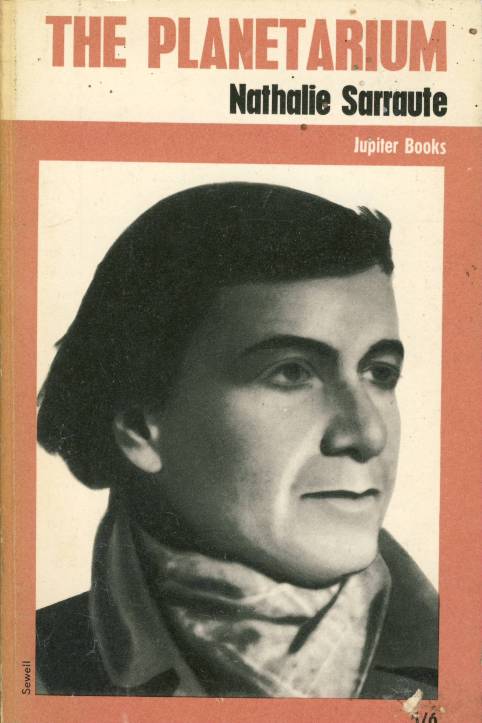
Brook-Rose focusses on the how of Sarraute by considering usage of the present tense in Le Planétarium (1959) alongside examples by Beckett, Duras and Robbe-Grillet that all contribute to ridding the novel of the dominant past tense “which has always been used as a reassuring guarantor of real events.” (132).  Analysing the opening of Le Planétarium Brooke-Rose observes:

With Sarraute, we are plunged into speech forms (various tenses), but inside the consciousness of someone… As in Robbe-Grillet we do not know whose mind we’re in, there is no “je” (in the opening), but (as in James or Woolf) that mind is represented by the third person… getting more and more excited, gushing internally, but not narrating. (137)


SOURCE TEXT: Christine Brooke-Rose, Invisible Author: Last Essays (Columbus, The Ohio State University Press,  2002).


NOTES


[1] Brooke-Rose writes: “Sarraute in a way goes back to Hegel, though without the decorative implication, by brilliantly reversing his opposition, insisting that the true realists are those who look so hard at a changing reality that they have to invent new forms to capture it, whereas the formalists are the epigones who come afterwards, taking over these once unfamiliar but now ready-made forms  and pouring them into a perfectly familiar reality anyone can see… When Sarraute said this, she was in a sense still part of an old dispensation that regarded reality as pre-existent and merely to be “captured” by art rather than as a new reality created by the artist (or anyone) through language. (40-41).


FURTHER READING


An essay on Sarraute’s The Age of Suspicion – that also highlights a disjunction of theory and practice – is Susan Sontag’s “Nathalie Sarraute and the Novel” included in Against Interpretation (1966).  See also an interview in The Paris Review here.

Some aspects and locations of Sarraute’s contemporary influence is suggested by a 2010 reprint of her The Use of Speech by Counterpath Press.


VSK RESIDENCY OHAD BEN SHIMON (1): 14 NOVEMBER 2011

In Uncategorized on November 17, 2011 at 6:44 pm


-You shall not look through my eyes either, nor take things from me,
You shall listen to all sides and filter them from your self.

-I have heard what the talkers were talking, the talk of the
beginning and the end,
But I do not talk of the beginning or the end.

-These are really the thoughts of all men in all ages and lands, they
are not original with me,
If they are not yours as much as mine they are nothing, or next to nothing,
If they are not the riddle and the untying of the riddle they are nothing,
If they are not just as close as they are distant they are nothing.

(Walt Whitman, from Song of Myself, 1855)


I am at a park.
I am at the queen’s park.
I am at the park of the queen,
but I don’t see the queen.
I am told she is in the palace.
I see the palace.
I see the palace garden.
I see the guards of the palace.
I see the gardeners of the palace
garden.


I see the birds in the park.
I see the flowers in the park.
I see the winter trees in the
park.
I even see the mist in the
queen’s park.


But I don’t see the queen.


The Queen’s Painter Prize is about obscurity.
It is about the obscurity of the queen and the obscurity of the painting, {and the relation (indexical)
between the queen and the painter}.


Am I the obscured writer?
Am I a Camera Obscura?
Am I in the obscured kamer?
Is the kamer obscured from the rest of the world?
Is it a hidden room?
It is.
And from the darkness of the room comes light.
And the light is right.
And ‘the right’ writes.
And ‘the wrong’ remains obscure.
The obscured writer is ‘the wrong’ writer.
And ‘the wrong’ writer is always right. Always.
The obscured writer writes
with an obscured pen.
The pen is obscure.
The whole trick of writing is how to obscure the pen.
The whole ____ of _____ is how to obscure the ___.


See?


VerySmallKitchen writes:  The following notes are edited from emails between Ohad and VerySmallKitchen in November 2011.


OHAD: I have been playing with a few ideas in my head about my possible contribution to VerySmallKitchen..they center around my desire to figure out/’re’-search (even though I am a bit skeptical of the term ‘research’) the space between writing and contemporary art practice (including mainly performance and photography).

(Thinking out loud)

As a starting point I would situate the discourse involving writing and art practice, on the issue of Categorization at large..I mean to say..I think both writing and art practice as fields of interest, have a kind of dialectical character which begs the question of the attraction between them. Writing as a category may refer to 2 main ‘things’ – Writing as a noun, the ‘thing’ that is written, and Writing as a verb, which designates the ‘activity’ of writing…and of course the ongoing debate regarding genres, cross-genres, etc.

Contemporary art practices are also obsessed with categorization, with art historical references, art movements, mapping-outs, delineating, etc…and also in the more traditional artistic practices the obsession with object oriented art production…hence the connection I would speculate between thing (writing) – object (art practice).

A question to myself – Is writing really a medium or is it an inscription onto a medium?


I’m not exactly sure I understand what it means to be an artist in residency on a website…but I could tackle that question in my writing in a kind of self reflexive manner..For each post I would write a diary entry from a very specific and limited time/space…it would then be a kind of performance which I’m writing from… image and text as two separate and yet parallel language systems…

another more interesting option I’m thinking of now is to limit the space even more.. down to the level of an object… investigating how my presence on the object influences my writing..suggesting a diffusion of the subject-object dichotomy..how my physical contact with the object influences my writing… You could see it as a taxonomy of a sort.


I see these texts as drafts in the sense that they are instantaneous, like a sketch, of the moment. Usually drafts would mean something on the way to somewhere else, but for me this kind of drafting is more of the present, its not leading anywhere, only to its own reason to be.


More about Ohad’s work is here.

VSK RESIDENCY PAUL ANTONY CARR: NATHANIEL’S PERPETUAL MOTION (4)

In Uncategorized on November 4, 2011 at 9:32 pm


“He has yet to complete a single pushup, though he has been attempting for a while without interruption to perform one from start to finish. Embarrassingly, his arms seem content to maintain an involuntary shuddering motion that only affects the rest of his body along a horizontal plane, rather than aid in accomplishing the task at hand. Is this uncontrollable vibration in fact a perpetual motion, or is it a friction? It resists progression, yet remains ceaselessly frenetic (or so it seems to Nathaniel, who cannot currently conceive of a conclusion to his discomfort and toil).”

2011. Ink on paper. 3.75 x 3.5 in.


*


“All the while his pet project (still a work in progress) is playing through the terminal’s speakers. The sounds of double bass, trumpet, and xylophone are completely unrecognizable as they play overlaid but artificially extended chords. The track reaches the point that exceeds the portion Nathaniel has been manipulating, and immediately the playback returns to its native and unaltered tempo. This sudden change of melodic flow steals Nathaniel’s focus from the perceived almost-eternity of wobbly exertion, and he drops limp-armed a few inches down to the ground (his body would have given up right about now even if he hadn’t been distracted by the music).”

2011. Ink on paper. 3.75 x 7 in.


*


“He is lying on his stomach again for the second time this evening. To the left of his head is a glob of saliva half-absorbed into the carpet. It fell there from his mouth while his efforts were absorbed in defying the gravity tugging at his entire body – under the circumstances, oral spillage was a necessary concession. Once he stops feeling so weak in the arms, he will get up, find his shit sponge, and clean up the little, watery mess on the floor.”

2011. Ink on paper. 3.5 x 3.75 in.


*


This is the fourth and final post of Paul Antony Carr’s 3-month residency in the VerySmallKitchen. This followed on from Paul’s VSK Project here, which presented one aspect of the ongoing  EXCERPTS.

Nathaniel’s Perpetual Motion was a new strand of this project, and a series of image-text pairs have appeared on VerySmallKitchen since August. See part one here, part two here, and part three here.


VSK PROJECT NICO VASSILAKIS: STARING APPENDIX PART ONE

In Uncategorized on November 2, 2011 at 9:33 am


How looking at atomics informs the celestial is how parts of letters construct a word. The keyboard as periodic table, as stillness and value assigned to each button. Accelerated molecules go streaming out the mouth. Elements are floating everywhere. A sub-atomic splice of Q caught in an asterisk. The mega volume of billboard words being staved with a diligent stare. To confound the dictionary by purposefully eroding cohesion between the letters that form a word. Like a word, like biscotti snapped in two, in four parts, into crumbs. Then there are aspects of an erupted B dangling off a row of commas.

Morton Feldman said of Philip Guston’s abstract expressions that he was taking snapshots of Time Undisturbed. What is staring but that, Time Undisturbed, until the fidgeting subsides, until the pace is realized, until thought is cleared out enough to allow the material to enter. A repurposing of the given till new possibilities emerge.

What can you say about seeing? It’s wonderful, well, that’s not nearly enough. Try as you might, and thousands have, to describe the joyous nature of seeing. Some of it romantic, some of it informative, but all of it detached. It’s removed, if you will, from the very moment of sight. An image getting, not so much lost in the translation parts of the vision system, but diluted through distance. That distance or measurement where content is vulnerable to corruption. It’s a passage from the thing through the eye into the brain. Seems like a fantastically long journey where anything can happen. And it does. And no one ever seems to really be there. No one ever gets it right, so we continue to look, to stare.

SEGUE LISTE


a)there is nothing to cut loose from

b)the goal is ecstasy

c)now is supreme, break the stiff neck of habit

d)the constant baptism of newly created things

e)the white fertilizing ray

f)motion leaks everywhere

g)the god is inside the statue

h)the rest is ease, pause, grace

i)between above and below can be no mirrored reflection

j)i am talking from a new double axis

k)the mystery remains – an open reality and each reality is endlessly
            multifaceted and polyhedral

l)i am to build a house of ice/because it is more liquid

m)I was visited nearly every day by the Superior of the birds named
Loplop, my private phantom, attached to my person. He presented me with
a heart in a cage, the sea in a cage, two petals, three leaves, a flower
and a young girl. Also, the man of the black eggs and the man with the
red cape. On a beautiful autumn afternoon he told me that one day he had
invited a Lacedemonian to come and listen to a man who imitated the
nightingale quite perfectly. The Lacedemonian replied: “I have often
heard the nightingale herself.”  One evening he told me some jokes which
didn’t make me laugh: “Joke: it would be better not to reward a
beautiful deed at all than to reward it badly. A soldier had lost both
arms in a battle. His colonel offered him a five dollar bill. The
soldier responded: “No doubt you think, sir, that I have lost only a
pair of gloves.”

n)Book I.


definitions.

1.    A point is that which has no part.

2.    A line is breadthless length.

3.    The extremities of a line are points.

4.    A straight line is a line which lies evenly with the points on itself.

5.    A surface is that which has length and breadth only.

6.    The extremities of a surface are lines.


13.  A boundary is that which is an extremity of anything.

14.  A figure is that which is contained by any boundary or boundaries.


a)gertrude
b)kerouac
c)dh lawerence
d)lorca
e)kandinsky
f)fenollosa
g)pound
h)zukofsky
i)klee
j)olson
k)malevich
l)schwitters
m)ernst
n)Euclid

These pieces were created using the TypeDrawing app for iPod.


*


VerySmallKitchen writes: Nico Vassilakis’ staring@poetics began as a presentation at the Avant Writing Symposium 2010 in Colmbus, Ohio, comprising a written text and a series of images (the later created whilst in attendance at the conference).

Images and essay intertwine in the book published by XeXoXial EdiTions in 2011, in which Nico observes:


“The initial act of reading is staring. When you add saccades you initiate movement. Text itself is an amalgam of units of meaning. Words, right. As you stare at text you notice the visual aspects of letters. As you stare further meaning loses its hierarchy and words discorporate and the alphabet itself begins to surface. Shapes, space relations, visual associations emerge as you delve further. Alphabetic bits or parts or snippets of letters can create an added visual vocabulary amidst the very text you’re reading.”


which I relate to Susan Sontag’s observation in “The Aesthetics of Silence” (from Styles of Radical Will, 1969):


“Consider the difference between “looking” and “staring.” A look is (at least, in part) voluntary; it is also mobile, rising and falling in intensity as its foci of interest are taken up and then exhausted. A stare has, essentially, the character of a compulsion; it is steady, unmodulated, “fixed.”

Traditional art invites a look. Art that’s silent engenders a stare. In silent art, there is (at least in principle) no release from attention, because there has never, in principle, been any soliciting of it. A stare is perhaps as far from history, as close to eternity, as contemporary art can get.”


*


Nico’s “silent art” is vispo and his text unfolds staring as the strategy for both its practice and its discussion:


“How to speak about vispo? For one, the relatable denominator is how we see. How language affects us visually, how staring at language is essential to reaping functionality out of vispo. In this case, we’d consider a stare to be an elongated gaze, and staring the hyper-focused verb from which we gain further insight.”

Also, this text/talk tells: “When staring bores an opening it defines the border where breathable atmosphere and relentless space meet.” “Staring at textpo creates the potential for vispo.” On several occasions such considerations become list and litany, document and invocation:


Staring at simple shapes
Staring at alphabetic division
Staring at new logic
Staring at elegant contraption
Staring at destruction
Staring at evasive composition
Staring at annihilation of word
Staring at newer logic
Staring at the seed of looking


For more information on STARING POETICS see here.

VSK PROJECT MATTHEW MACKISACK: (A COMEDY OF) DANGER

In Uncategorized on October 15, 2011 at 1:30 pm


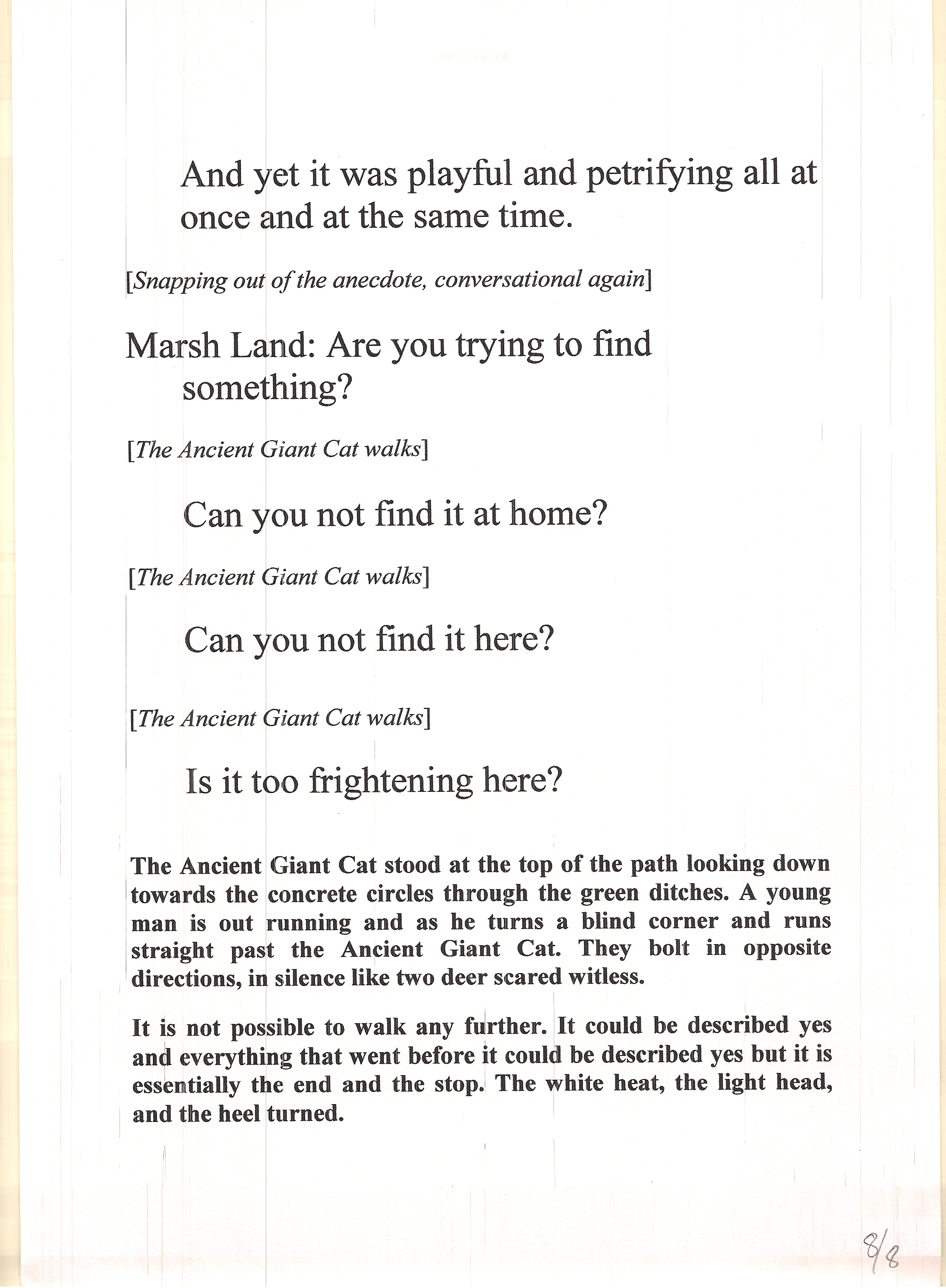
Matthew MacKisack, Initial & Reprise installation view, 2010


Matthew MacKisack writes: The Radio of the Future – the central tree of our consciousness – will inaugurate new ways to cope with our endless undertakings and will unite all mankind. … The main Radio station, that stronghold of steel, where clouds of wires cluster like strands of hair, will surely be protected by a sign with a skull and crossbones and the familiar word “Danger”, since the least disruption of Radio operations would produce a mental blackout over the entire country, and temporary loss of consciousness. [1]
The first play written for British radio was Richard Hughes’ Danger (1924), a one-act melodrama set in an unlit and flooding coal mine. As the author later remarked,

Our audience were used to using their eyes; this was a blind man’s world we were introducing them to. In time they would accept its conventions but how would they react on this first occasion? Better make it easy for them, just this once. Something which happens in the dark, for instance, so the characters themselves keep complaining they can’t see. Perhaps we could get the listener to turn out his lights and listen in the dark. [2]

‘Listen in the dark’ is exactly what the Radio Times advised its readers to do. In an attempt to foreground the ethics of making it ‘easy for them’, of the naturalistic illusion, and in the spirit of a Khlebnikovian ‘flight from the I’, Richard Hughes’ original script has been revised and edited according to contemporaneous Russian formalist theories – themselves a response to Futurist aesthetics – of ostranenie, or defamiliarization.


[1]  Velimir Khlebnikov, The Radio of the Future, 1921
[2] Richard Hughes, The Birth of Radio Drama, B.B.C. Home Service, 1956


(A COMEDY OF) DANGER


Cast:

A, B,C


Scene:

A gallery in a Welsh coal mine.


A. [sharply] What’s happened?

B. The lights have gone out!

C. Where are you?

A. Here.

B. Steps stumbling.

C. Where? I can’t find you.

A. Here. I’m holding my hand out.

B. I can’t find it.

C. Here!


[pause]


A. [startled] What’s that?

B. It’s all right: it’s me.

C. You frightened me, touching me suddenly like that in the dark. I’d no idea you were so close.

A. Catch hold of my hand. Whatever happens, we mustn’t lose each other.

B. That’s better. – But the lights! Why have they gone out?

C. I don’t know. I suppose something has gone wrong with the dynamo. They’ll turn them on again in a minute.

A. I hate the dark!

B. It’ll be alright in a minute or two.

C. It’s so dark down here.

A. No wonder! There must be nearly a thousand feet between us and the daylight.

B. I didn’t know there could be such utter darkness as this, ever. It’s so dark, it’s as if there never was such a thing as light anywhere. It’s like being blind!

C. They’ll turn the lights up again soon.

A. I wish we’d never come down this mine! I knew something would go wrong.

B. Where are the others?

C. They’re just on ahead, not far.

A. Suppose we get lost!

B. We can’t get lost.

C. I wish you hadn’t wanted to drop the others! I’m afraid of the dark.

A. It’ll soon be over.

B. And I wish we hadn’t left behind those lamps they gave us! [Pause] Listen!

C. Steps heard.

A. There’s someone coming!

B. [Distant, muttering] Of all the incompetent idiots, turning the lights off just when a party of visitors were seeing the place! Call this a coal-mine!

C. Hello?

A. Hello? Who’s there? Of all the stupid –

B. What’s happened? Is it all right?

C. Is it all right, indeed! Leaving us suddenly in the dark like this!

A. But has there been an accident?

B. God knows! I’d expect anything of a country like this! They’ve got a climate like the flood and a language like the Tower of Babel, and then they go and lureus into the bowels of the earth and turn the lights off! Wretched, incompetent –

C. Well, I suppose the only thing to do is to sit and wait for the lights to go up again.

A. There’s no danger, is there?

B. No, there’s no danger.

C. I’m beginning to think it’s quite fun.

A. Well, if you can find any fun in breaking your shins in the dark –

B. Why, don’t you call it fun, being in a pit disaster?

C. But this isn’t a disaster, it’s only the lights –

A. Of course! You don’t think it would be fun if it were a real disaster, do you? But the lights going out might have meant a disaster – and imagine telling everyone afterward! Let’s –

B. Yes?

C. Let’s pretend it’s serious.

A. What do you mean?

B. Let’s pretend it’s a real disaster, and we’re cooped up here for ever and will never be able to get out.

C. Don’t joke about it.

A. Why not? There’s no real danger, is there?

B. Well of all the morbid –

C. Let’s pretend the roof has fallen in, and they can’t get to us.

A. [Uncomfortably] Very well … [In mock solemnity] Here we are, my dear, buried alive! Alas, they’ll never find us! [Reverting] Well?

B. I’m so frightened!

C. What of?

A. About the roof falling in.

B. But it hasn’t; it’s only pretense.

C. Yes, but when I pretend, it seems so real.

A. Then don’t pretend!

B. But I want to pretend! I want to be frightened!

C. [In mock solemnity again] We shall suffocate, or starve, or both, my dear, in each other’s arms.

A. Even death shall not part us.

B. Don’t! It’s too awful.

C. There’ll be articles in the newspapers.

A. [Delighted] I wish I could read them!

B. You can’t have your funeral and watch it.

C. A distant explosion, with a long echo, swelling in volume.

A. Good God!

B. Let go! You’re throttling me! Let go of me!

C. Another explosion, nearer, followed by the hiss of water.

A. The dust! It’s choking me! I can’t breathe!

B. Stop screaming! How do you expect to be able to breathe if you’re screaming all your breath out?

C. Pull yourself together! We’re alright; we’re not hurt.

A. We’re not hurt. But listen!

B. Water heard louder.

C. Water!

A. [Sotto voce] Be quiet. Don’t let her hear!

B. What’s that roaring?

C. It’s only the echo.

A. Can’t we find the others?

B. I don’t think we could; it wouldn’t be much use to us if we did.

C. [quietly and sharply]. Oh, good God! Good God!

A. They’re no better off than we are.

B. Listen! That must be them!

C. Voices heard singing.


A, B and C:


Hlaha! Uthlofan, lauflings!
Hlaha! Ufhlofan, lauflings!
Who lawghen with lafe, who hlaehen lewchly,
Hlaha! Uflofan hlouly!
Hlaha! Hloufish lauflings lafe uf beloght lauchlorum!


A. That must be the others. They can’t be very far off. Let’s call to them.

B. Sound carries a long way in a tunnel.  But listen.

C. The roar gets louder.

A. The echo’s getting louder! It isn’t an echo! It’s water! The mine’s flooding! We’re going to drown!

B. The voices are again heard singing, closer this time.


C, A and B:


Hlaha! Loufenish lauflings lafe, hlohan utlaufly!
Lawfen, lawfen,
Hloh, hlouh, hlou! Luifekin, luifekin,
Hlofeningum, hlofeningum.
Hlaha! Uthlofan, lauflings!
Hlaha! Ufhlofan, lauflings! *


C. I wish I had their faith. It’d make dying easy.

A. I don’t want to die yet! I won’t, I won’t!

B. It has got to come some time; isn’t it better for it to happen now, in your lover’s arms? Death might have parted you – but instead he’s joining you closer together.

C. I want to live!

A. Do you think I don’t? Do you think they don’t? They’re singing hymns!

B. Look, instead of talking like this, let’s do something; let’s make some sort of an attempt at escape!

C. What do you propose?

A. Look for some way out. We can’t stay here and drown, like rats in a cage.

B. But if you start to walk, you’ll start to run; and if you start to run, you’ll panic, and go mad in the dark. I’d rather die with my wits about me!

C. I’d rather not die at all!

A. Keeping still is the only thing for us, if we don’t want to lose our heads. Remember how far into the side of the hill we are. What earthly hope do you thinkthere is of finding our way out?

B. Here it comes! Listen!

C. Rush of water quite close now.

A. Yes, it will be on us in another five minutes.

B. Pray Heaven it finishes us off quickly.

C. Think of dying somewhere out in the open, in the sunlight! Me able to see you, and you able to see me! What bliss it would be!

A. It’s strange how little we wonder what will happen to us. In five minutes we’ll know ourselves, all three of us. I’ve always wanted to travel. Now I’m going to.

B. My poor dear!

C. I’m beginning to feel excited about it, like a child going to the seaside for the first time. Aren’t you?

A. I never looked at it like that.

B. The water’s coming! It’s over my feet!

C. Courage, courage.

A. I don’t want to die – I hate it! I want to live!

B. Don’t make it harder.

C. Only for an hour more! There was something I wanted to say to you, and I can’t remember it … I must remember… it’ll be too late soon.

A. Do you think you’re the only one dying before his time? I tell you, every man dies before his time, even if he lives to be as old as Methuselah!

B. It’s up to my knees!

C. [Very quietly] Don’t clutch at me like that, it won’t do any good.

A. But the water – the current’s washing me away –

B. I’ve got you! And I’ve got my other arm round the wooden thing!

C. Hold tight then!

A. If only I could see you!

B. Just think of the things I had meant to do!

C. Shut up about the things you had meant to do! Will you realize we’re all in the same boat, and it’s as hard on me as you – or worse, a thousand times worse!

A. You hoary old sinner, why can’t you prepare to get out of the world?

B. Let’s pray.

C. Pray if you like – I can’t.

A. [Hoarsely] Help! Help!

B. Hold your self in.

C. It’s so close.

A. Help me!

B. It’s no good; no one can possibly hear us. The only thing is to keep calm. It won’t be long now.

C. Tapping heard.

A. What’s that? Listen!

B. Help!

C. Shut up. We need to listen.

A. Tap, tap.

B. It’s up to my waist now.

C. My God! It’s someone tapping. [Shouts] We’re here! Further along!

A. [Calmly] Is it? They’ll find our bodies, that’s all.

B. They’ll find us if they’re quick enough! [Shouts] Further along – that’s right!

C. They can’t possibly be quick enough.

A. Help! Dig quicker! We’re drowning!

B. Stop it; they won’t be in time.

C. [Quietly] I won’t leave you.

A. How do you know they’ll let you stay with him? What do you know about death? I tell you death isn’t heaven and it isn’t hell. Death’s dying. Death’s being nothing.

B. Knocking grows louder.

C. It’s up to my chin! Help me!

A. Let me lift you.

B. [In a childlike voice] Say it isn’t true, what he’s been saying.

C. Hurry up – smash your way in! We’re drowning!

A. They must be nearly through! God, this suspense! How much longer?

B. Look! There’s a light! A hole in the roof! Quick, quick!

C. Sound of strong blows, then sound of coal falling; sound of cheering.

A. They’re though!

B. Quick, below there! Catch on to the rope!

C. I’m an old man!

A. There’s a girl here!

B. I’ve got the rope.

C. She’s fainted.

A. Pass her up – she’ll be alright.

B. Pass the bight of the rope round her shoulders!

C. All right up there? Have you got her?

A. Got her. Now the next.

B. Up you go – the water’s still rising!

C. No, after you; you’re more value in the world than I am.

A. Nonsense, you first! Quick, or there won’t be time!

B. You’ve got her to think of – now, haul away up there!

C. No, no! Lower me!

A. We’ll have you up first; there’s no time to waste. Right?

B. I’m all right. Lower away again. Down there, catch hold! Have you got it? [Pause] Hey! [Pause]  Have you got it? [Pause] He’s gone!


* Velimir Khlebnikov, Incantation by Laughter, trans. Paul Schmidt (1910 / 1985)


Script based on Richard Hughes’ A Comedy of Danger, written and first broadcast 1924, published as Danger in ‘Plays’, London: Chatto and Windus, 1966; revised by Matthew MacKisack for performance in October 2011 at Soundfjord, Unit 3B – Studio 28, 28 Lawrence Road, London, N15 4ER .  Performed by Carla Espinoza,  Lauren McCullum and Leo Ashizawa as the Opening Event of Cast & Figment: Radio as Metaphor & As Such.


*


More about Matthew’s work is here.

THETEXTISTHETEXT: VISUAL POETRY VS TEXT ART AN EXHIBITION MATCH

In Uncategorized on October 14, 2011 at 2:05 am


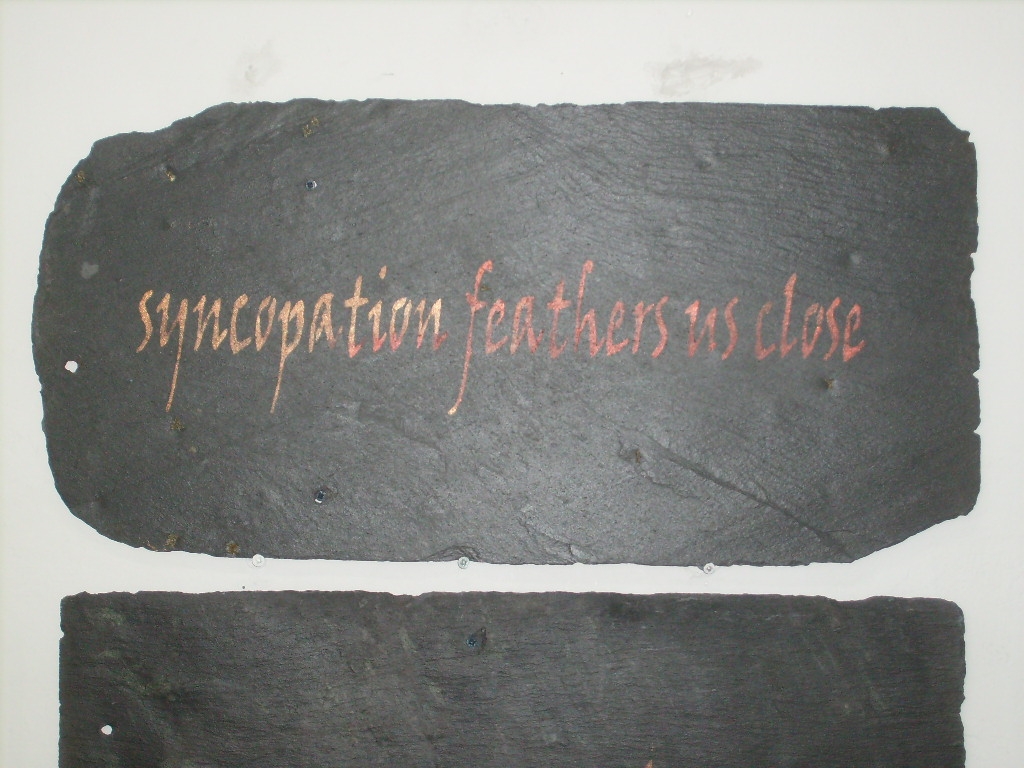
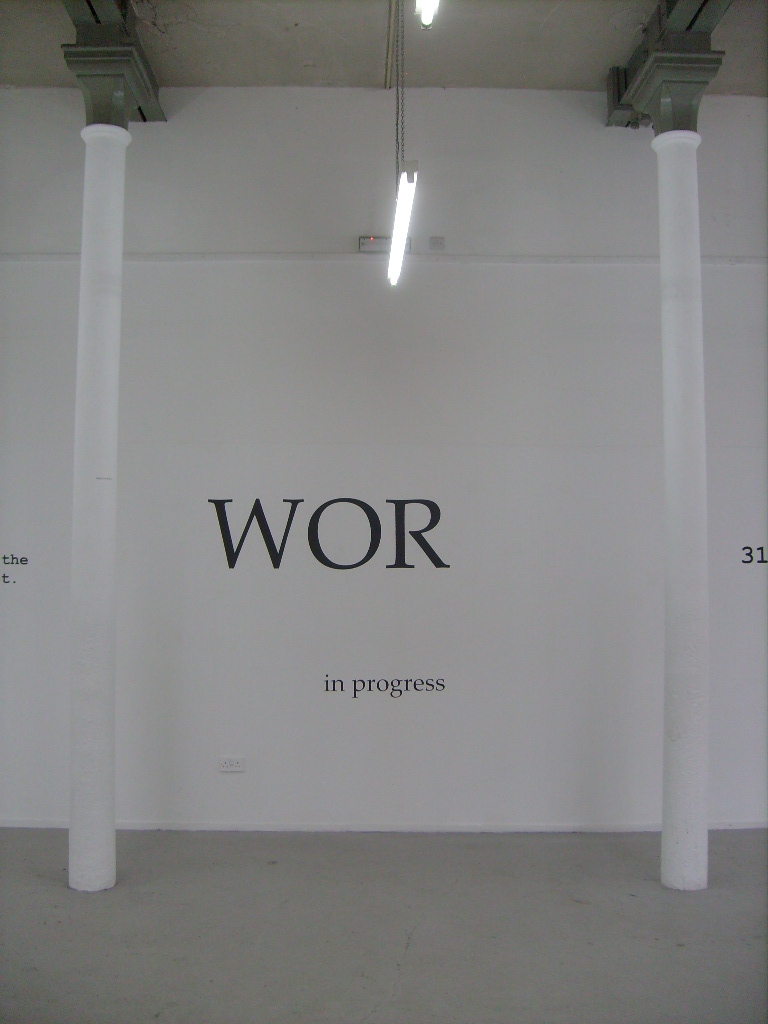
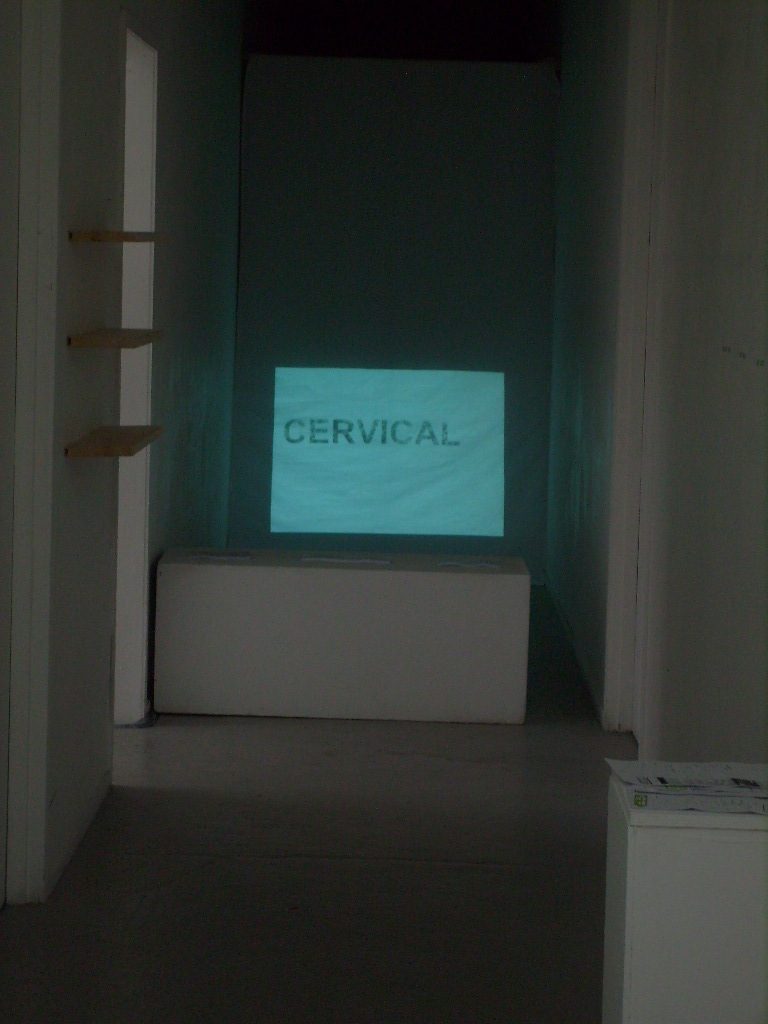
thetextisthetext: an exhibition of word images, a self-styled smith/melville mash-up, is taking place at Patriothall Gallery, Edinburgh 8-18th October 2011.  Asked about the origin of the project Gerry Smith writes:


There was no original (written)proposal as such, just a series of events… Tom Leonard  put me in touch with nick-e melville, much in common but coming at it from different positions, and I mention the possibility of doing a text show.: around that time, Catherine Sargeant left a positive note in my comments book at the MFA degree show ( I had known her work from seeing it over the last few years at the SSA Annual Exhibitions, and I had been impressed with it) and I decided that if we were doing a text show she would have to be on board – so I contacted her…


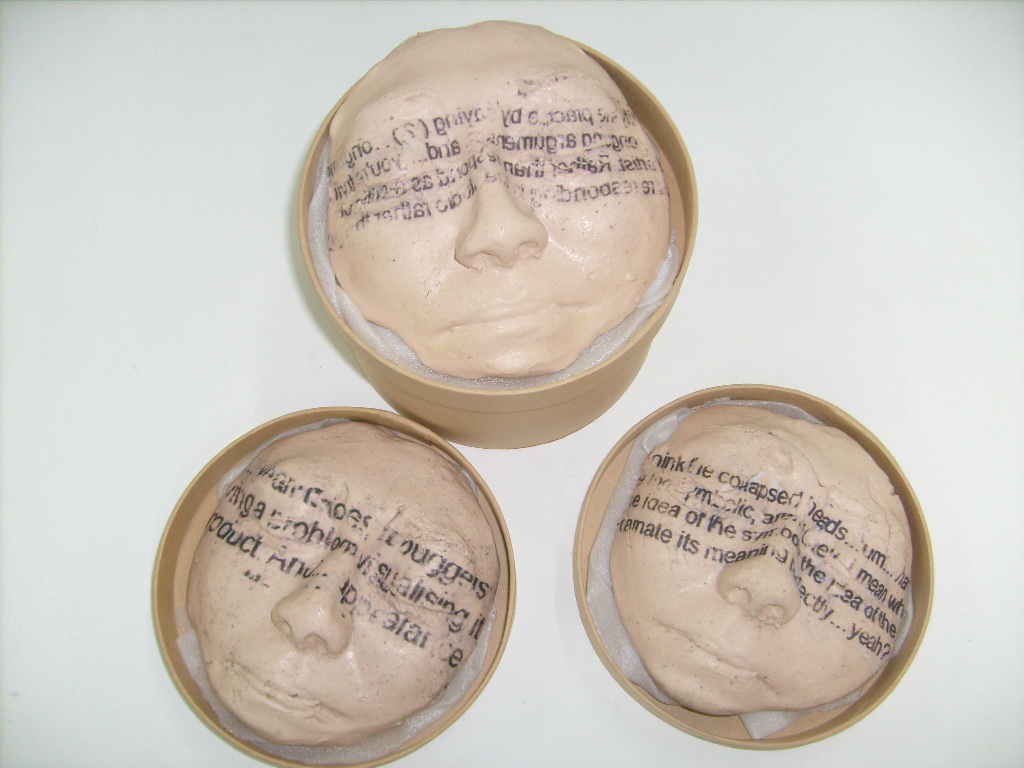
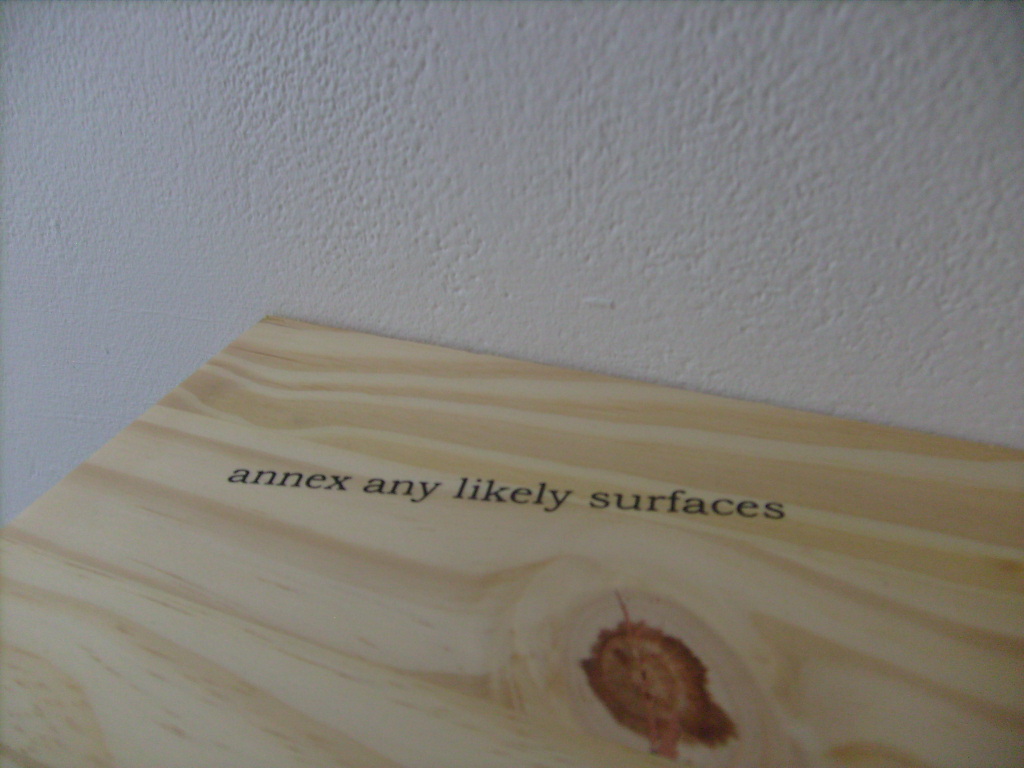
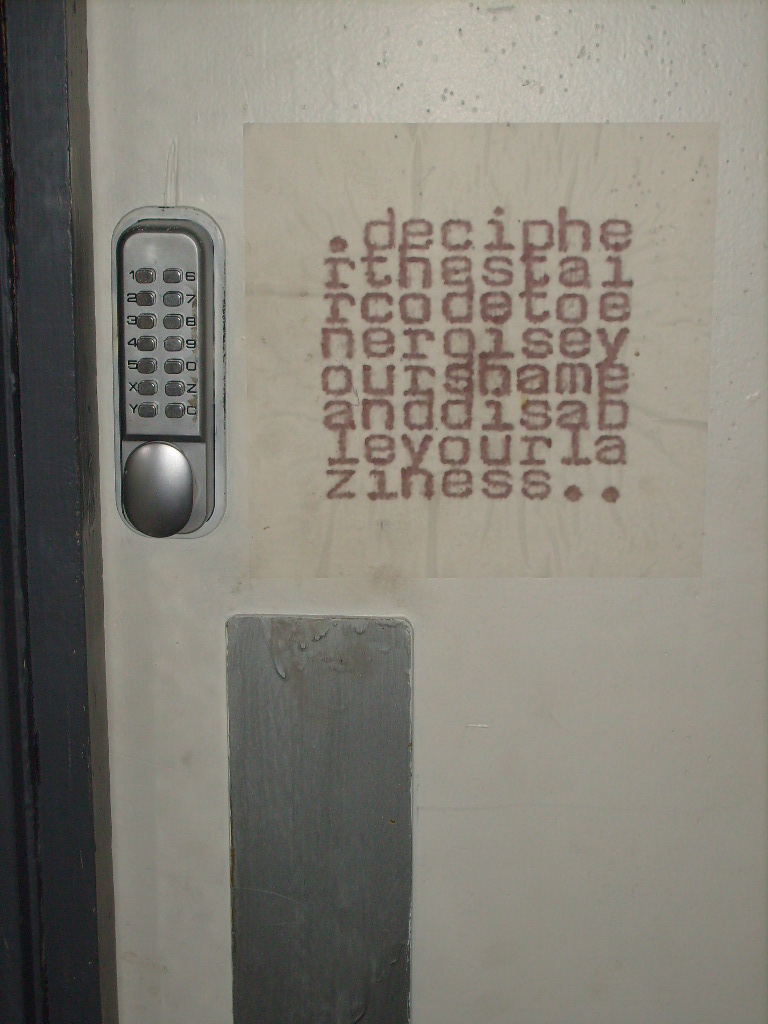
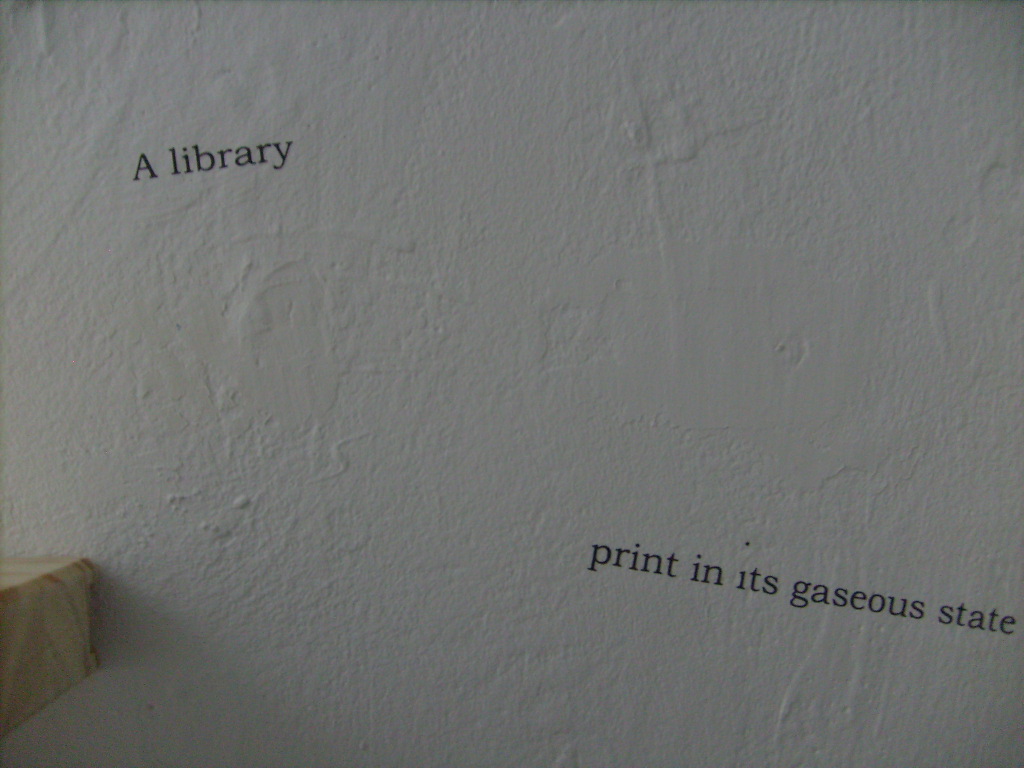
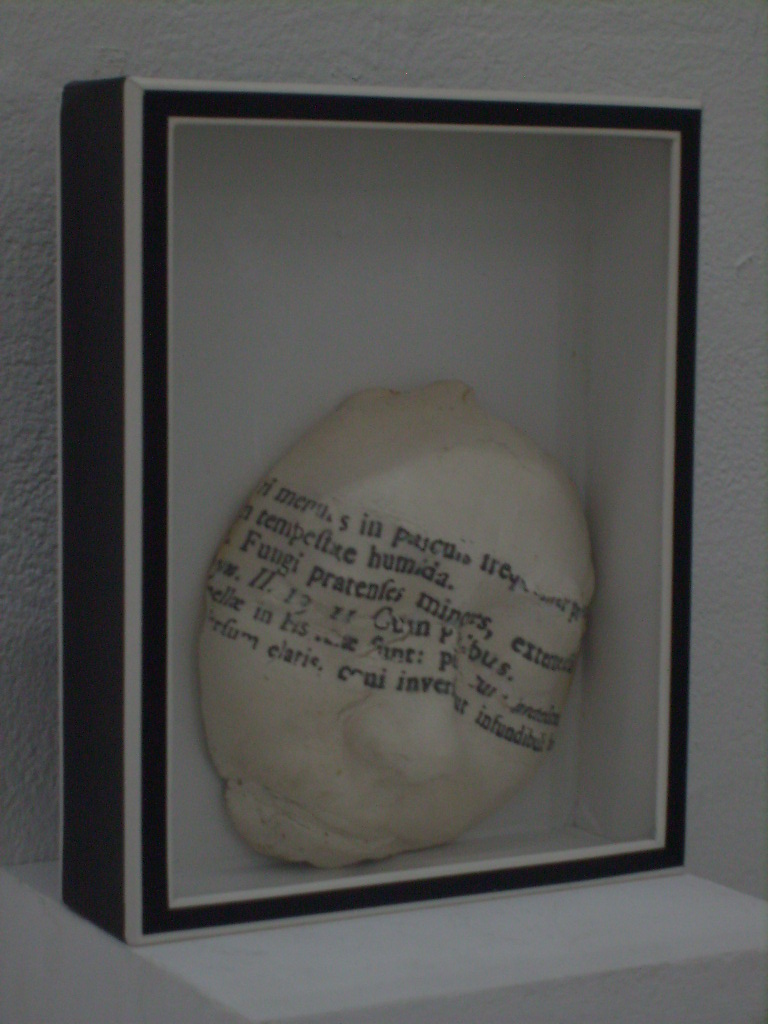
From top: Lisa Temple-Cox, Moulages; Gerry Smith A Library Is Print In Its Gaseous State; Catherine Sargeant/ Dorothy Alexander, Lift Riffs.


… nicky and I drew up a list of who we should invite to participate and a series of meetings took place /invites were sent. Once I final secured a venue, we all met to discuss our work and what we could do – the criteria for the show was that it was to be experimental; either collaborations or working outwith or normal media (which is why I chose to do an animation piece). The only person who wasn’t working with text in some way was Becky Campbell – I happen to like the work that she was doing and thought it might be interesting to see what she could do with text ( a few years ago, my Art School Lift – see website – was an attempt at a text-based work adopting an “unobtrusive” approach similar to her own ).

Over the duration, a couple of people dropped out and they were replaced with Shandra Lamaute and Greg Thomas.  I’ve taken a somewhat organic approach to the project, letting the collaborations and works develop… I helped out with some practical things regarding the use of PVC texts, but that was about it


VerySmallKitchen writes: Thetextisthetext is reconfigured here through materials supplied by Gerry Smith. Experiencing the exhibition in this way prompts a realignment of relationships between art work, artist statement, email, press release, and installation. Some works and ideas of the exhibition at Patriothall are lost as the show fits into this new format, whilst others attain new form and prominence…


*


a series of commas – arranged almost like parenthesis (in response to the question “what is it like to be stationary?”)

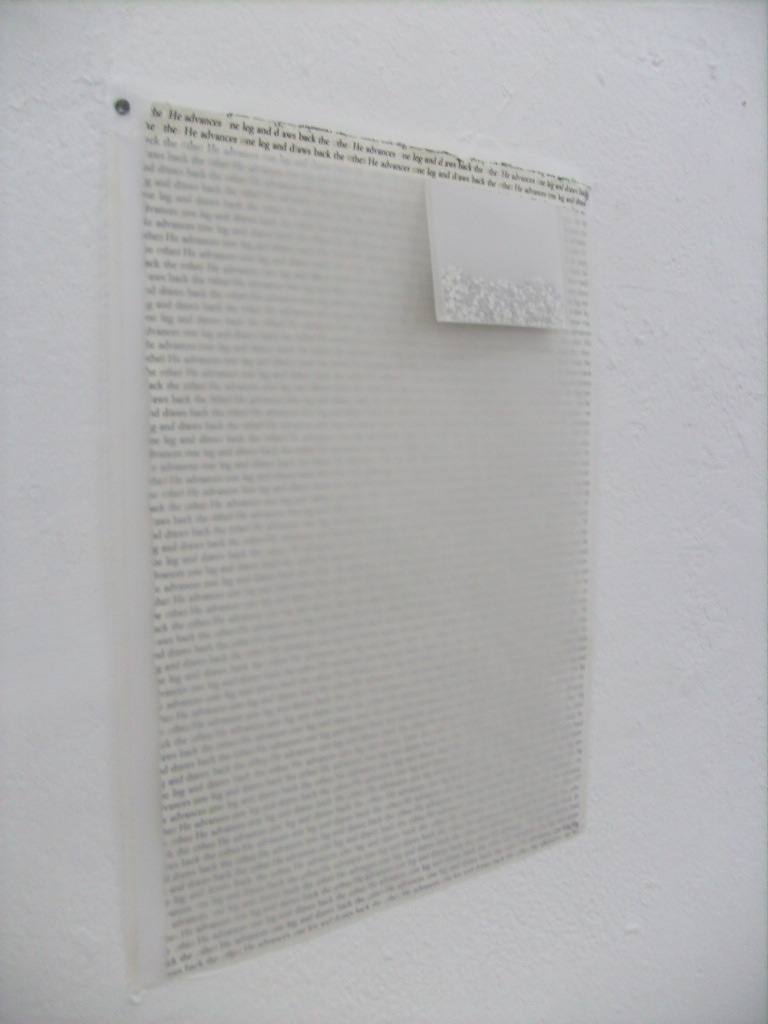
an Arabic phrase: he advances one leg and draws back the other (in response to question “or or or?”)


Shandra Lamaute, Belong

show & untell

The collaboration between Becky Campbell and Shandra Lamaute is about process, communication, and interpretation. The project involved a series of dialogues, in person and by post, which finally culminated in a question that each person asked of the other. The display of the answers to these questions represents the process of their correspondence.

The project was developed as an exploration of how they could connect and collaborate with each other while still retaining their own artistic autonomy and identity. They approached the work with an understanding that they each came from different places (Scotland and the United States, respectively), they each have different modes of representation, and they explore different conceptual bases/subject matter. Through all these differences, there was a thread that connected both of their practices to one another: process.
It is through the similarities of their modes making that enabled them to create and allow their collaboration to manifest. Once they explored this connection, they decided to push the boundaries further, at the same time solidifying the concept and act of a collaboration, by allowing the other person to decide how their final letter should be presented within the show.


*


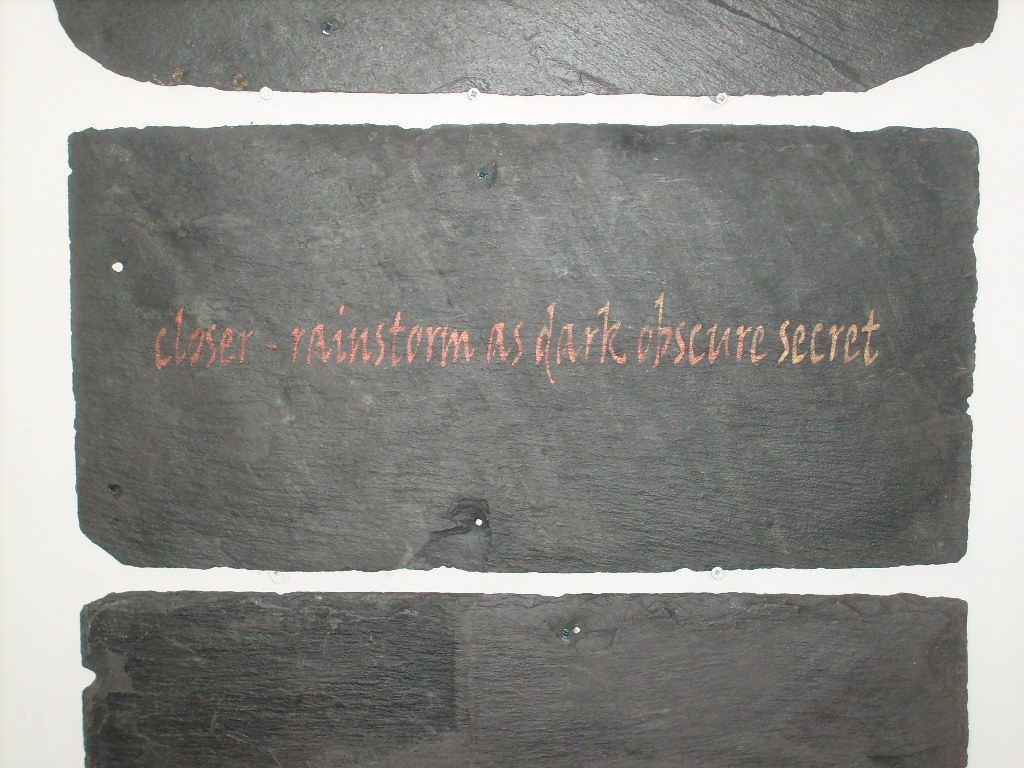
Catherine Sargeant and Dorothy Alexander write: Patriothall Stanzas are a collaborative work by Catherine Sargeant and Dorothy Alexander. The words/phrases used in these stanzas are taken from notes that artists in Patriothall leave to themselves around their studios.  Notes are left for many reasons: reminders of what is stored in a place, potential titles for paintings, things to do before leaving the studio at night etc.
Catherine gathered together this bizarre collection of words, which Dorothy turned into poetry.  Catherine then used found materials, slate and mirror to complement the poems.  These were chosen to imply the presence of the studio as a place of protection and also introspection.


*


Dorothy Alexander writes: FINAL WARNING is a series of poems in which techniques developed out of found poetry have been applied to an extract from the front page of a national newspaper. Poems were constructed from vocabularies formed by searching along and down through the paragraphs of the newspaper article. Letters, words, lines were then ‘re’placed in direct relation to their original positions within the base text.

Found is posited here as an ecopoetic, not only because of its inbuilt credentials as a recycler, but, more pertinently, for the non-hierarchical and inclusive nature of its processes. It invites acts of multiple attention (down to the smallest detail). It encourages heightened responsibility, in both writer and audience, for engagement with larger issues and strengthens resistance to notions of outside agency.


A PDF version of Sermons Hurt Curb Me from FINAL WARNING is here.


*


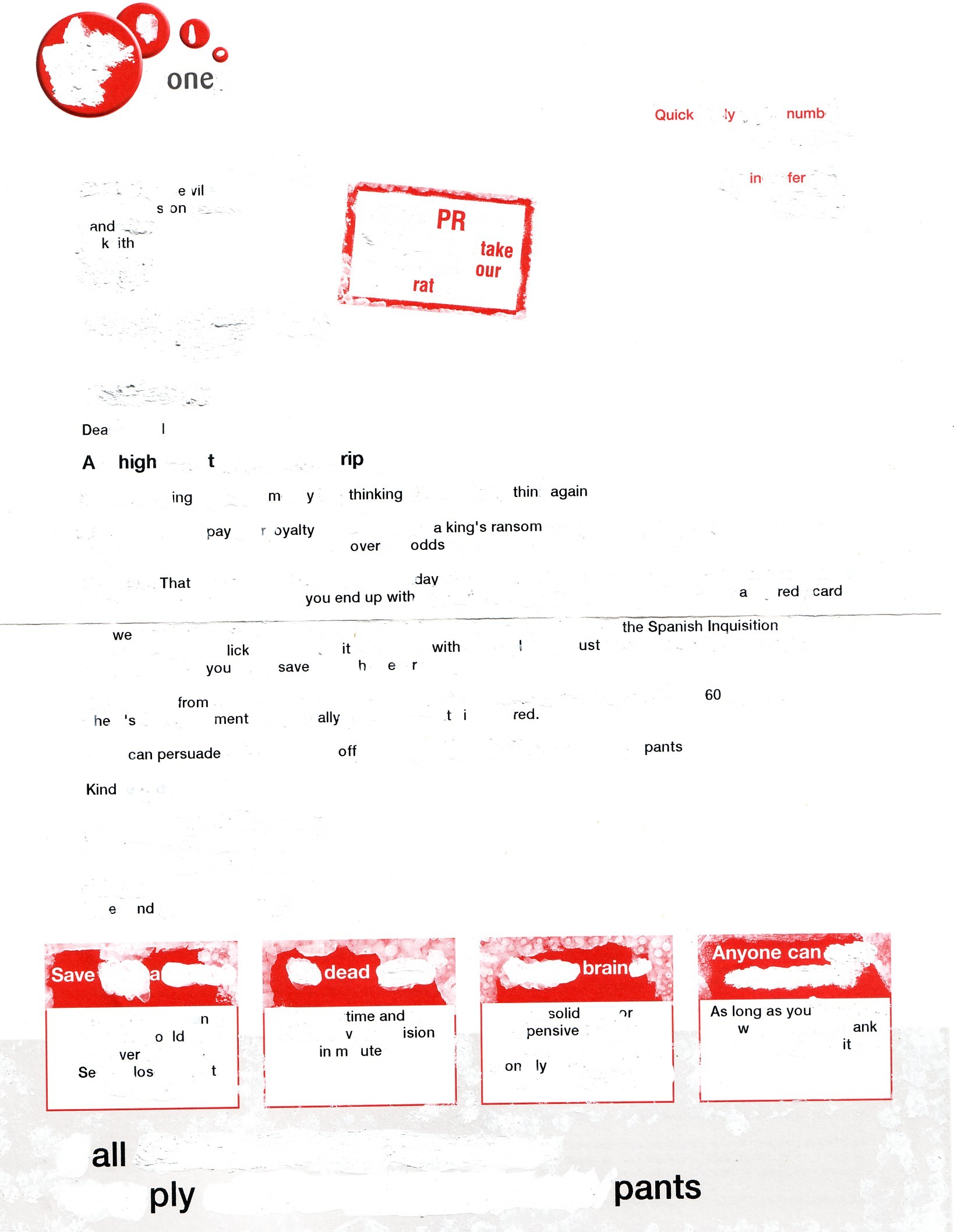
the pieces in this show typify what melville likes to do: erase, enlarge and examine.

there is a sentence, a bigger (incomplete) word, and an even bigger fragment.

he has also attempted to make worthless junk mail into commodities, with other tippex work available for closer scrutiny.


*


Greg Thomas writes: Articulation arranges the names of every bone in the human body by syllable count and stress position. It is concerned with the analogy between skeletal and phonetic articulation – consonants are bones, vowels are sinew, or blood or bile – and the idea that every act of naming and containing the body creates another body in sound, just like no act of social or cultural definition can defuse the essentially radical potential of being anything in time. Sing it to yourself.

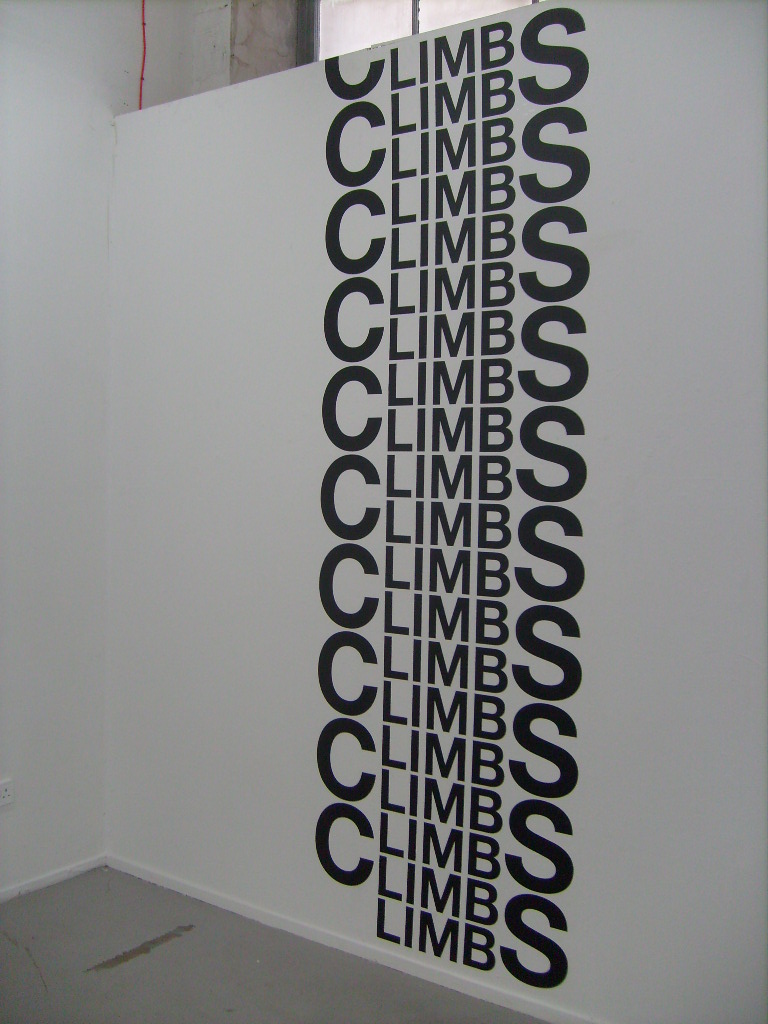
Limbs Climb is a neat, clean poem. It shows what it says (except it could be a tree or a tendril or a leg). This might make you happy.

BodyinsOUND; Liminalanimal; Virtue and Sinew (card poems) are the titles for other poems that didn’t need to be written.


*


Alexa Hare writes: Embers is a new work for “The Text Is The Text” which sets text/lyrics from some of the artists involved in the show to a piece of music written and performed by Hare.

Gerry Smith writes: Alexa Hare’s Embers is a vocalisation of text extracts I sent her. They were taken from Roubaud’s The Great Fire Of London (English translation of). Her original intention was to create a piece of music from texts supplied by all those taking part, but in the end she opted to do Embers as apiece on its own.


*


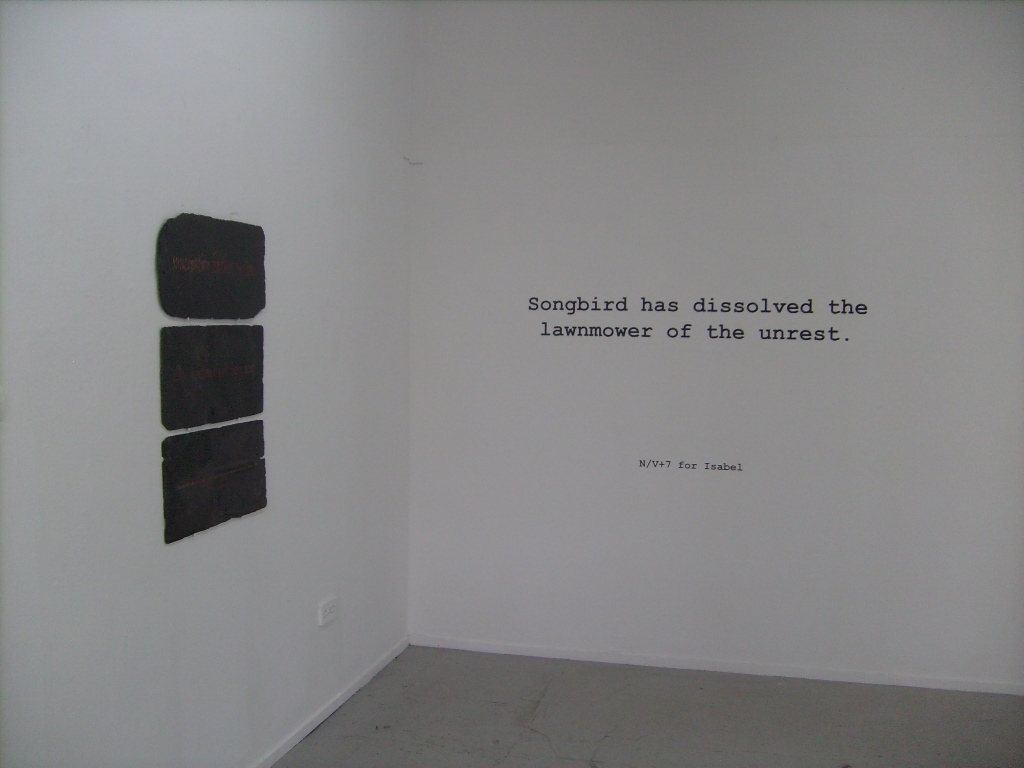
… The text used in NV+7 for Isabel, before the structured substitution of its nouns and verb, originally read: “Something has disrupted the laws of the Universe” (Kelly, The Book of Lost Books, p426). December 2009 was the last time two full moons appeared within the same calendar month. Finally, if Lost in Translation gets the better of you, Yahoo’s “Babel Fish” might come in handy!

Noise is a concrete poem which attempts to represent computer noise.


*


Lisa Temple-Cox writes: The work made for this exhibition is part of a series of experiments derived from a process of self-portraiture as medical specimen. Derived from the didactic cast, or medical moulage, still used in teaching hospitals today, they seek to explore notions of identity as seen through part-features or disembodied faces.

The language of self-implied in the masks is made explicit by the snippets of text: conversations, references, reversals. The language of self is written on the skin: the closure of the eyes blurs the boundaries between the living and the dead. These things are of us, but not us, and piece-meal are encapsulated, half-hidden before the medical gaze.


*


thetextisthetext is at Patriothall Gallery, 1 Patriothall (off Hamilton Place), Stockbridge, Edinburgh, 8th-18th October 2011. Tue-Sun 12noon-5.30pm (Closed Mondays).